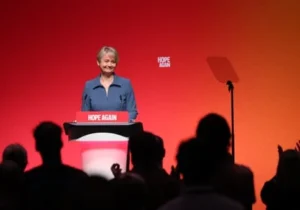
WASHINGTON — In a high-stakes press briefing at the White House, Attorney General Todd Blanche stepped forward on Tuesday to defend President Donald Trump’s blistering public attacks on the United States Supreme Court. The administration’s top lawyer sought to reassure the public that ongoing federal voting investigations would proceed unaffected, even as the executive branch grapples with a series of major judicial setbacks ahead of the November midterm elections.
The defense follows a landmark Supreme Court ruling that struck down President Trump’s executive order intended to restrict mail-in voting nationwide. The high court’s decision, which saw only conservative stalwarts Justices Clarence Thomas and Samuel Alito dissent, triggered immediate fury from the Oval Office. President Trump took to social media platform Truth Social to denounce the judiciary, claiming the court had "let our Country down" and describing certain justices as "petrified of these crazed and depraved Democrats" and "merely a shell of their original selves."
Addressing reporters in the Rose Garden, Blanche validated the president’s right to express public discontent with the nation’s highest judicial body.
"He is very frustrated," Blanche told the press corps. "He has every right, and indeed he should communicate his concerns with the supreme court whenever he has them. This isn’t the first time that he’s done it, and it won’t be the last… The idea that President Trump shouldn’t be allowed to communicate to the American people his frustration, I—I don’t share that."

Despite the administration’s stinging defeat on the mail-in ballot front, Blanche insisted that the Department of Justice’s focus on election integrity remains absolute. He stated unequivocally that the ruling would not hamper "ongoing criminal investigations into illegal voting," emphasizing that federal efforts to guarantee secure elections would persist well beyond the midterm cycle.
A Broad Legislative and Judicial Flashpoint
The clash over mail-in voting is merely one theater in a multi-front conflict involving the White House, Capitol Hill, and the federal courts. The political friction has escalated dramatically as both parties jockey for position ahead of the 2026 midterm elections, where control of Congress hangs in the balance.
Just hours before Blanche’s briefing, the Department of Justice trumpeted what it framed as a major breakthrough in combating non-citizen voting. US Attorney for the Northern District of Texas Ryan Raybould announced criminal charges against six lawful permanent residents (green card holders) and one undocumented immigrant for casting ballots in federal elections over the past eight years.
However, the practical impact of the Texas crackdown was quickly questioned by legal analysts and election experts. Six of the individuals charged had cast ballots in the 2024 general election—an election in which over 11.3 million Texans voted, and which Donald Trump carried by a margin of more than 1.55 million votes over Kamala Harris. Furthermore, two of the disputed ballots were provisional votes that were never counted. Of the four votes counted in error, three originated from green card holders—hailing from Nigeria, India, and Mexico—who investigators suggested may have mistakenly believed they possessed voting rights.
Despite the statistically negligible impact on election outcomes, the administration utilized the arrests for maximum political impact, inviting a Fox News crew to film the apprehension of a 27-year-old Nigerian green card holder who allegedly voted in 2018.

The Kennedy Center Name Dispute Deepens
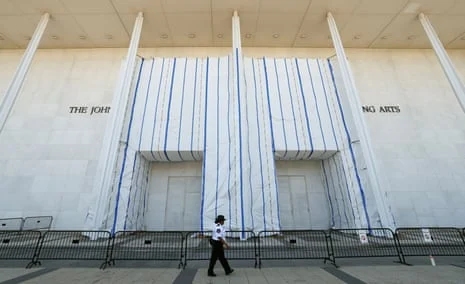
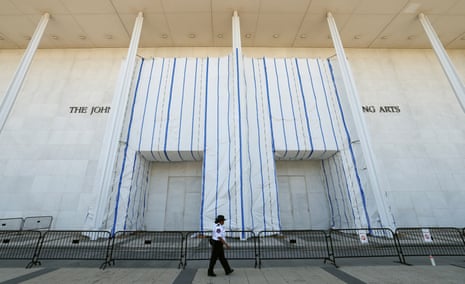
Simultaneously, the administration found itself locked in a separate judicial battle in Washington, D.C. US District Judge Christopher Cooper issued a definitive ruling on Tuesday blocking the Trump-appointed board of the John F. Kennedy Center for the Performing Arts from adding the president’s name to the institution’s exterior facade or renaming the surrounding plaza "President Donald J. Trump Plaza."
Judge Cooper, nominated by former President Barack Obama, reiterated that federal law explicitly designates the cultural monument solely for President John F. Kennedy, citing a 1983 congressional amendment prohibiting additional memorials or plaques in public areas without legislative approval.
President Trump responded with characteristic defiance on social media, declaring that the performing arts center—which his administration’s appointed leaders claimed was facing imminent bankruptcy—would be closed immediately and that a planned multimillion-dollar renovation would be canceled entirely unless the Supreme Court intervened to overturn Cooper’s injunction.
Legislative Stalemate on Cryptocurrency and Sanctions
On Capitol Hill, legislative gridlock dominated proceedings as Senate Democrats successfully blocked the advancement of the CLARITY Act, a major bipartisan cryptocurrency regulation bill. The measure, which aimed to establish the first comprehensive regulatory framework for digital assets, failed on a 49-50 vote after all Democrats and three Republicans united in opposition.
Democrats argued that the bill failed to place sufficient guardrails on Donald Trump and other federal officials profiting from digital assets. Financial disclosures released earlier in the summer revealed that the president had amassed substantial wealth through crypto ventures while his administration pursued industry-friendly policies. Senator Ruben Gallego of Arizona criticized the measure bluntly, stating that it lacked the robust ethics provisions necessary to prevent executive branch profiteering.

Meanwhile, a high-stakes legislative battle began taking shape over foreign policy. Lawmakers prepared to vote on the Lindsey O. Graham Sanctioning Russia Act of 2026, a bipartisan bill co-authored by the late South Carolina senator. The legislation would grant President Trump sweeping new authority to levy up to 100% tariffs on major purchasers of Russian oil, such as China and India, while targeting Russia’s defense sector and its "shadow fleet" of oil tankers.
While proponents view the bill as an essential economic lever to aid Ukraine before the winter months, it has drawn rare bipartisan pushback. Progressive and moderate Democrats, alongside several Ukraine-sceptic Republicans, expressed alarm over expanding the president’s unilateral tariff powers, warning that such measures could be weaponized against American allies and drive up consumer prices at home.
Bipartisan Alarm Over Artificial Intelligence
Away from fiscal and electoral battles, a striking bipartisan consensus emerged in Washington regarding the rapid advancement of artificial intelligence. At the Pro-Human Assembly, independent Senator Bernie Sanders of Vermont and populist commentator Steve Bannon delivered sharp warnings about the existential and societal risks posed by unbridled AI development.
Sanders criticized Congress for being "asleep at the wheel" and denounced President Trump’s dismissal of AI safety warnings as a "hoax." Sanders called for binding international safety rules rather than voluntary industry pledges, warning that current AI systems represent the least capable iterations humanity will ever witness.
Echoing these concerns from a different political vantage point, Bannon called for an immediate economic and technological "quarantine" of China’s tech sector, demanding strict curbs on capital flows and academic exchanges to prevent Beijing from closing the technological gap.
As the autumn legislative session presses forward, the convergence of fierce judicial resistance, looming midterm elections, and profound technological and geopolitical debates guarantees that the administration will continue to face intense scrutiny across every branch of government.