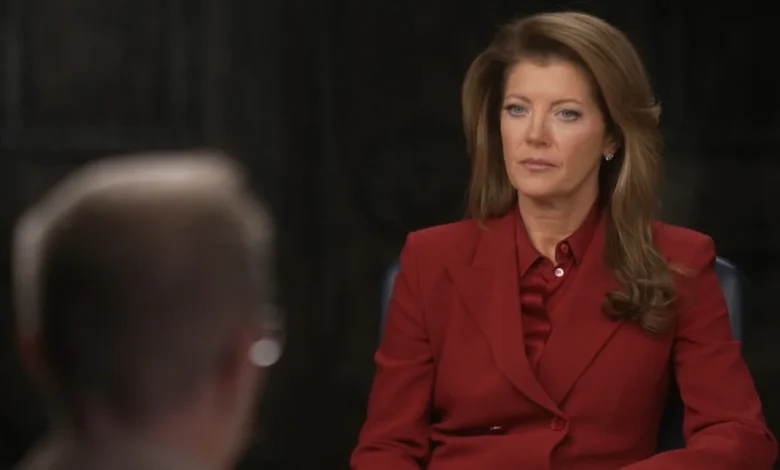
The 59th season premiere of 60 Minutes arrived this past Sunday under a microscope of intense public and industry scrutiny, facing a complex landscape of structural internal changes and shifting broadcast television dynamics. According to Nielsen data, the long-running CBS newsmagazine drew 7.94 million on-air viewers for its September 13 broadcast. This figure represents a notable contraction of approximately 21 percent compared to the show’s 2025 season premiere, which commanded an audience of 10.03 million. While the premiere served as a litmus test for the new editorial direction implemented under CBS News leadership, the raw linear television numbers highlight the broader challenges facing legacy media in an increasingly fragmented digital ecosystem.
A New Era of Editorial Leadership
The September 13 premiere served as the official public debut of the program’s revamped identity. The broadcast followed a period of significant upheaval within CBS News, characterized by a comprehensive restructuring led by editor-in-chief Bari Weiss. This overhaul involved the termination of several veteran correspondents and producers, a move that sparked significant debate regarding the future editorial tone of the network’s flagship program.
The transition also saw the appointment of Nick Bilton as the new executive producer. Tasked with modernizing the program’s appeal while maintaining its investigative roots, Bilton’s tenure began with a clear mandate to pivot toward a more contemporary style of storytelling. The on-air talent roster was similarly refreshed, with the introduction of new correspondents and contributors designed to broaden the show’s intellectual and demographic reach. However, the first episode remained largely conservative in its implementation of this new talent, with only one of the new hires—former New York Times columnist Ross Douthat—receiving significant screen time during the hour.
The Impact of NFL Lead-Ins and Scheduling
To understand the 21 percent decline in viewership, analysts point to the critical role of the NFL lead-in. Traditionally, 60 Minutes relies heavily on the "halo effect" of Sunday afternoon football games to bolster its ratings, particularly in the fall. The program’s performance is historically tethered to the size and engagement of the preceding broadcast.
On Sunday, September 13, the lead-in broadcast—a matchup between the Green Bay Packers and the Minnesota Vikings—drew 18.6 million viewers. While this remains a substantial number, it reflects a 22 percent decline from the 23.77 million viewers who tuned into the lead-in game for the 2025 premiere.
Beyond simple year-over-year comparisons, the 2026 NFL schedule introduced a unique competitive factor. For the first time since 2023, the NFL opted to schedule opening Sunday doubleheaders on both CBS and Fox. Previously, the networks would rotate the responsibility, effectively concentrating the football-viewing audience on one channel. By splitting the audience across two major networks, the total reach for the late afternoon window remained robust, but the specific benefit to the CBS primetime lineup was diluted. Consequently, the smaller audience retention for 60 Minutes is as much a function of scheduling strategy as it is of viewer sentiment regarding the show’s recent changes.
Digital Expansion and Evolving Metrics
While linear television metrics showed a decline, CBS News officials have emphasized that the brand’s total footprint is expanding through non-traditional channels. In a statement addressing the premiere’s performance, the network noted that video views on the program’s social media platforms—excluding YouTube—reached 116.7 million. This figure represents a tripling of the engagement recorded during last year’s premiere, suggesting that while the "water cooler" effect of live television is diminishing, the program’s content is successfully finding a home in the social media feed.
Furthermore, YouTube engagement metrics showed a doubling of watch time compared to the previous season’s debut. These figures are particularly significant in light of YouTube’s recent recalibration of what constitutes a "view." By focusing on higher-intent consumption metrics, the network is attempting to demonstrate that the 60 Minutes brand remains vital, even if its traditional delivery mechanism is undergoing a slow-motion transformation.
Historical Context and Chronology
The evolution of 60 Minutes is a story of adaptation. Since its inception in 1968, the program has served as the gold standard for broadcast journalism, surviving changes in network ownership, shifts in political climates, and the rise of 24-hour cable news.
- 2023: The NFL and CBS/Fox continue their dual-broadcast strategy, establishing the baseline for modern football viewership.
- September 2025: The 58th season premiere draws 10.03 million viewers, bolstered by a 23.77 million-viewer lead-in game.
- Spring/Summer 2026: CBS News undergoes a significant editorial transition under Bari Weiss, leading to the departure of legacy staff and the appointment of Nick Bilton as executive producer.
- September 13, 2026: The 59th season premiere airs, marking the first broadcast of the new era.
- Post-Premiere: Industry observers begin assessing whether the program’s new editorial voice will alienate its core older demographic or successfully attract a younger, digital-native audience.
Implications for the Future of News Magazines
The challenges faced by 60 Minutes are representative of the "Great Unbundling" of American media. As audiences move away from appointment viewing, the pressure on programs like 60 Minutes to remain relevant is twofold: they must continue to produce high-stakes, investigative journalism that justifies their production costs, while simultaneously retooling their distribution strategies to favor platforms where younger audiences congregate.
The decision to move away from legacy correspondents is a gamble. By shifting the editorial tone, the network risks losing the trust of a loyal, older base that has viewed the program as a Sunday night ritual for decades. Conversely, the increased social media engagement figures suggest that the "brand" of 60 Minutes carries enough weight to survive the migration to digital platforms.
For Nick Bilton and the team at CBS News, the immediate future will likely be defined by a balancing act. If they lean too heavily into a "disruptive" editorial style, they may face further declines in their primary revenue stream—linear advertising. If they remain too rooted in the past, they risk irrelevance in a media environment that increasingly values speed and platform-specific content over the traditional, long-form magazine format.
Looking Ahead
The data from the premiere suggests that the show is in a transitional phase. While the decline in linear numbers is undeniable, it is occurring within a context of altered sports scheduling and a systemic decline in broadcast television usage. The long-term success of the 59th season will not be measured by the ratings of a single night, but by the ability of the program to sustain its high-quality investigative standards while translating that value into the modern digital economy.
As the season progresses, industry analysts will monitor the performance of the remaining new contributors and whether the program can bridge the gap between its traditional broadcast base and its growing digital audience. For now, the verdict remains out: 60 Minutes remains a powerful force in journalism, but its ability to command the Sunday night audience is no longer guaranteed, requiring a renewed focus on content that demands attention in an era of infinite distraction.