The ongoing legal confrontation between the American Broadcasting Company (ABC) and the Federal Communications Commission (FCC) has escalated, with the network formally pushing back against the agency’s attempt to dismiss a lawsuit regarding the early renewal of eight broadcast station licenses. At the heart of the dispute is an unprecedented regulatory action that ABC contends is not a matter of procedural oversight, but a calculated effort by the federal government to stifle speech through the weaponization of bureaucratic authority. The network’s latest legal filing argues that the FCC has failed to provide a credible, non-retaliatory justification for its departure from standard licensing practices, suggesting instead that the move was directly influenced by animus from the Trump administration toward the network’s editorial output.
The Genesis of the Dispute
The conflict centers on eight television stations owned and operated by ABC, which were subjected to a sudden and rare mandate for early license review. Typically, the FCC manages license renewals on a standard, predictable cycle. When the agency signaled that these stations would be required to undergo an early review, ABC’s legal team identified the timing and nature of the order as highly irregular.
In August, ABC filed a First Amendment lawsuit against the FCC, alleging that the order was an unconstitutional effort to "chill" the network’s news coverage. The complaint highlights a pattern of rhetoric from then-President Donald Trump, who frequently targeted ABC News and its late-night programming—specifically the satirical commentary provided by Jimmy Kimmel—as biased or unfair. ABC argues that the nexus between these public attacks and the subsequent regulatory action is too strong to be coincidental.
A Chronology of Regulatory Friction
The timeline of this dispute underscores the intersection of political criticism and administrative oversight. For years, the network has been a frequent subject of criticism from the Trump administration, which often labeled mainstream outlets as purveyors of "fake news."
- Heightened Rhetoric: Throughout the administration’s term, President Trump frequently took to social media and public rallies to criticize ABC’s reporting. Jimmy Kimmel’s monologues, which often focused on the administration’s policies, were also noted as a source of friction.
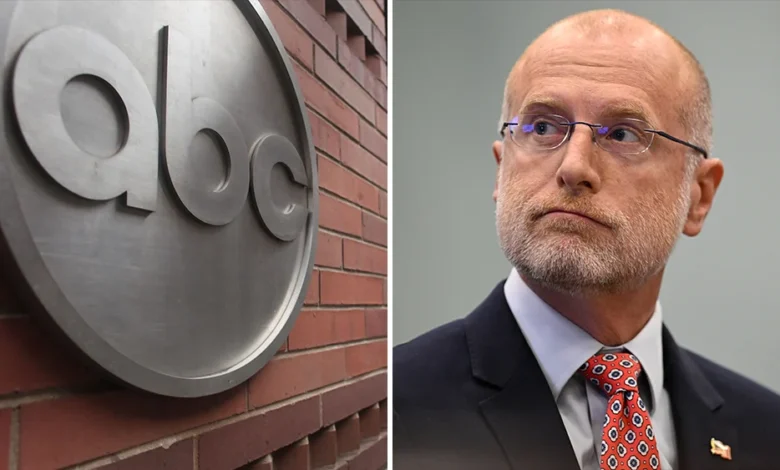
- Appointment of Brendan Carr: The appointment of Brendan Carr as FCC Chairman, a move championed by the administration, signaled a shift in the commission’s posture toward media regulation. Carr has been vocal about his concerns regarding media consolidation and corporate governance within the broadcast industry.
- The Early Renewal Order: The FCC initiated the early renewal proceeding, citing, among other factors, concerns over the Disney-owned network’s adherence to certain diversity, equity, and inclusion (DEI) standards.
- The Legal Filing: ABC responded with its First Amendment suit in August, asserting that the FCC was overstepping its regulatory mandate to punish the network for its content.
- The Motion to Dismiss: The FCC moved to dismiss the lawsuit, arguing that the early renewal was a routine administrative act and that the court lacked jurisdiction to intervene in the agency’s regulatory oversight functions.
- The Current Rebuttal: ABC’s latest filing directly addresses the FCC’s motion, arguing that the agency is attempting to conflate the technicalities of licensing with the constitutional question of retaliatory motive.
Legal Arguments and the First Amendment
ABC’s legal team has been precise in its framing of the case. They contend that the court does not need to rule on whether ABC violated any specific FCC broadcast rules. Rather, the central question is one of intent. In their most recent brief, the network’s attorneys emphasized that the FCC has failed to refute the "substantial evidence" of a retaliatory motive.
"The Commission ordered an unprecedented early license renewal proceeding to punish Plaintiffs for media coverage that the Administration dislikes," the filing states. The network argues that if the government is allowed to use its licensing power to penalize media organizations based on their content, the First Amendment’s protection of a free press becomes effectively unenforceable.
The FCC, conversely, maintains that its early renewal orders are consistent with its authority to review licensee qualifications. The agency has previously suggested that its scrutiny of Disney’s DEI practices is relevant to the "public interest" standard that broadcast stations must meet to hold a license. By linking the investigation to corporate internal policies, the FCC attempts to move the conversation away from the political sphere and into the realm of administrative compliance.
Analysis of Implications for Broadcast Regulation
The outcome of this case carries significant weight for the future of broadcast regulation in the United States. Should the court side with ABC, it would set a major precedent, affirming that the FCC’s licensing powers are not immune to constitutional scrutiny when there is evidence of viewpoint discrimination. This would effectively place a check on the agency’s ability to use its authority as a tool for political pressure.
If, however, the court accepts the FCC’s argument for dismissal, it could embolden future administrations to use regulatory agencies to exert influence over media organizations. The power to grant or deny a broadcast license is the ultimate leverage the federal government holds over television networks. Even the threat of an "early renewal" or an investigation can lead to self-censorship, as networks may fear the high costs of legal defense or the existential threat of losing their broadcast rights.
The Role of the FCC and Administrative Independence
The FCC is intended to be an independent regulatory body, tasked with managing the airwaves in the "public interest, convenience, and necessity." This mandate is intentionally broad, allowing the commission to adapt to changing technology and media landscapes. However, the inherent tension in this mandate is that it grants the FCC significant discretion—discretion that can be exploited by political appointees.
Critics of the FCC’s current direction argue that the focus on DEI practices is a pretext for intervention. They point out that for decades, the FCC’s license renewal process has been largely ministerial—a routine process for stations that have not faced significant regulatory complaints. Elevating a routine renewal to a major investigative event, they argue, is an departure from standard operating procedure that necessitates a high burden of proof from the commission.
Stakeholder Perspectives and Public Discourse
The reaction from legal scholars and media advocacy groups has been mixed, reflecting the polarized nature of the issue. Some legal experts argue that the FCC must have broad latitude to investigate the fitness of broadcasters to hold licenses, and that the judiciary should be hesitant to interfere in agency proceedings. Others, including First Amendment advocates, maintain that the "chilling effect" of such actions is a clear violation of the constitutional protections afforded to the press.
For ABC, the stakes are not merely financial. While the cost of early license renewal proceedings is not insignificant, the real threat lies in the potential for the FCC to set a precedent that links editorial content to license eligibility. Disney, as the parent company, has faced increasing pressure from various political factions to alter its corporate and content strategies. This legal battle represents a line in the sand for the company, signaling a refusal to allow regulatory pressure to dictate its editorial or corporate direction.
Looking Ahead
As the case moves forward, the court will likely focus on whether ABC has met the burden of proof required to move past a motion to dismiss. This requires the network to demonstrate that there is a plausible claim of constitutional injury. Given the high-profile nature of the individuals involved—including the former president and the current FCC leadership—the proceedings are expected to draw significant scrutiny from both the legal community and media industry observers.
The FCC’s argument that it is simply conducting an inquiry into Disney’s corporate practices will be tested against the backdrop of the First Amendment’s prohibition against government retaliation. The court’s decision will ultimately hinge on whether the FCC can prove that its actions were motivated by legitimate regulatory concerns, or if the court finds the evidence of a political motive sufficient to warrant a full trial.
For now, the legal skirmish continues, with both sides preparing for what is expected to be a prolonged and complex battle over the boundaries of federal regulatory power and the protection of the press. The resolution of this case will undoubtedly shape the relationship between the government and the media for years to come, serving as a defining test of the resilience of First Amendment protections in an era of heightened political polarization. As the court deliberates, the broadcast industry remains on high alert, watching for a ruling that will establish the limits of the FCC’s influence over the airwaves.