The political landscape in Iowa has shifted significantly since the summer of 2020, a period defined by nationwide civil unrest following the death of George Floyd in Minneapolis. In the wake of protests that occasionally devolved into riots, Republican-led state legislatures across the country sought to bolster protections for law enforcement and increase penalties for rioting and unlawful assembly. Iowa was no exception, culminating in the passage of Senate File 342, colloquially known as the "Back the Blue" law.
Bohannan, who at the time was serving in the Iowa House of Representatives, emerged as a vocal critic of the legislation. During a 2021 virtual legislative forum focused on social justice, she characterized the law as an "exaggerated backlash" and an "overreaction" to the climate of the time. Her comments, which have recently resurfaced, are now serving as a focal point for Republican efforts to frame her as being out of step with the electorate in Iowa’s competitive 1st Congressional District.
A Legislative Flashpoint: Senate File 342
The legislation signed by Gov. Kim Reynolds was designed to address what many conservative lawmakers viewed as a dangerous erosion of public order. Among its primary provisions, the bill increased the severity of penalties for rioting, reclassifying it as a Class D felony punishable by up to five years in prison. Furthermore, the bill introduced stricter punishments for those involved in unlawful assemblies and provided enhanced legal protections for law enforcement officers.
During the debate on the House floor, state Rep. Jarad Klein, the bill’s primary sponsor, framed the vote as a litmus test for support of the rule of law. "If you support law enforcement, truly support law enforcement, you will be voting ‘yes’ tonight," Klein stated. "If you stand up and say you support law enforcement, your words will become meaningless with a ‘no’ vote. Actions speak louder than words."
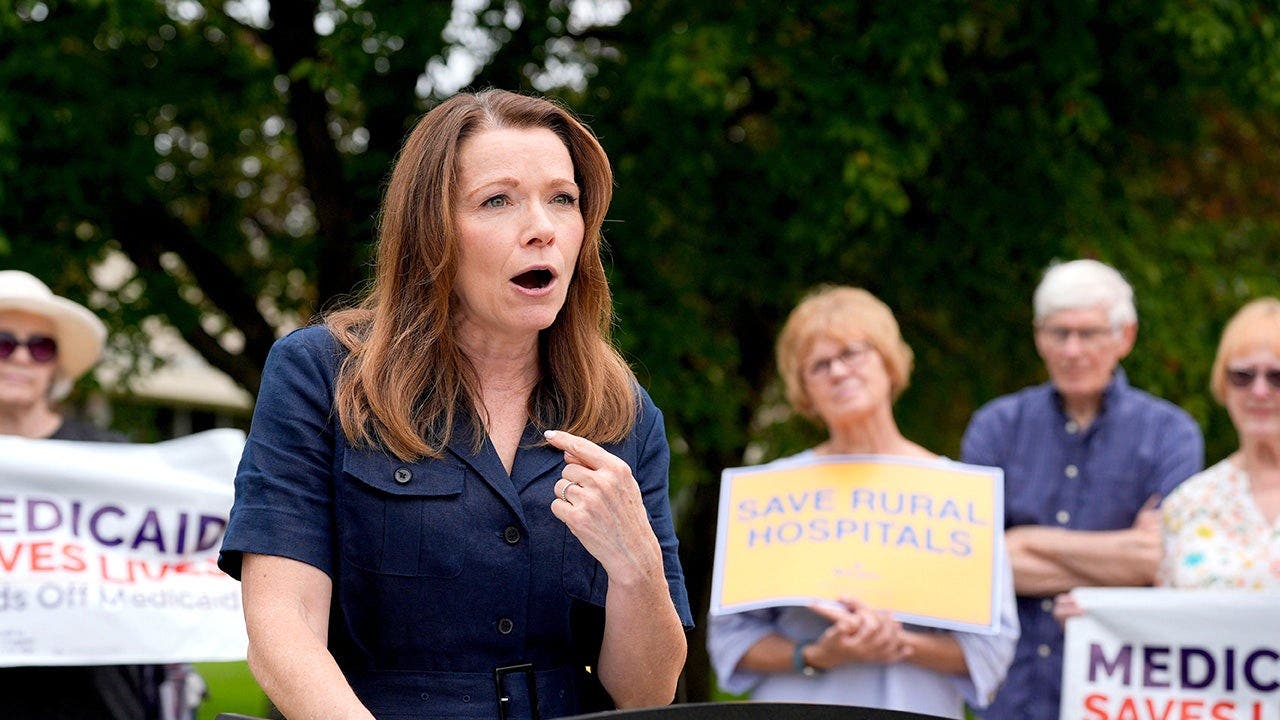
Bohannan’s opposition was rooted in concerns regarding the potential for overreach and the civil liberties of protestors. Specifically, she pointed to provisions within the bill that she argued would grant immunity to drivers who hit protestors. "The bill that’s coming over to the House from the Senate about the protestors actually would make it okay for a person to drive negligently or grossly negligently and hit a protestor and there would be immunity for that," Bohannan said during the forum. "It’s sick. These are kids, mostly."
Legal analysts have noted that the final version of the bill included a provision protecting drivers from civil liability, but with a specific caveat: the immunity only applies to those who are "exercising due care" and who may inadvertently cause injury to individuals engaged in disorderly conduct that obstructs public streets or highways.
The Political Calculus of the 1st District
The re-emergence of these comments arrives at a critical juncture in the 2026 election cycle. Bohannan, a former University of Iowa College of Law professor, has navigated a rigorous path in her bid for Congress. After unseating a long-term Democratic incumbent to win her state legislative seat in 2020, she transitioned to federal politics, challenging Rep. Miller-Meeks in three consecutive election cycles.
The margins in these races highlight the extreme competitiveness of the district. In 2022, Bohannan fell to Miller-Meeks 53.4% to 46.6%. The 2024 cycle saw a much tighter finish, with Miller-Meeks securing victory by a razor-thin margin of 50.0% to 49.8%—a difference of just 799 votes.
Republicans are now leveraging the 2021 footage to widen that margin. Zach Kraft, a spokesperson for the Republican National Committee, issued a sharp rebuke of the candidate, stating, "Christina Bohannan achieved the ultra-rare-final-boss level of woke where police are bad, criminals are good, and anyone who disagrees is racist. There is a reason why this DEI Queen has been rejected twice by voters—she is straight up nuts, and her soft-on-crime agenda would endanger all Iowans."
Implications for Public Safety Discourse
The debate surrounding Bohannan’s rhetoric is emblematic of a broader national trend where law and order serves as a primary wedge issue in suburban and rural congressional districts. For Democrats, the challenge lies in balancing concerns for civil rights and police accountability with the electoral necessity of appearing firm on crime.
The "Back the Blue" rhetoric is not merely a local concern in Iowa; it represents a national strategic pillar for the GOP. As political figures like J.D. Vance and Ted Cruz increase their presence in Iowa to prepare for future cycles, the focus on judicial and law enforcement policy is expected to intensify.
For Bohannan, the challenge is twofold. First, she must address the perception that her academic background—rooted in legal theory—makes her less attuned to the immediate, practical concerns of law enforcement and public safety. Second, she must reconcile her 2021 legislative record with the current expectations of a swing-district electorate that has consistently prioritized stability.
Chronology of the Legislative Conflict
- May 2020: The death of George Floyd in Minneapolis triggers widespread protests, demonstrations, and riots across the United States, including cities within the Midwest.
- January 2021: Gov. Kim Reynolds, in her "Condition of the State" address, signals her intent to prioritize legislation protecting law enforcement and restoring public order.
- June 2021: Senate File 342, the "Back the Blue" act, is passed by the Iowa legislature and signed into law by Gov. Reynolds.
- 2021 (Virtual Forum): Christina Bohannan participates in a social justice forum where she criticizes the legislation, asserting that the political climate has led to an "overreaction" by lawmakers who lack diverse constituent input.
- 2022: Bohannan runs for Congress against incumbent Mariannette Miller-Meeks for the first time, losing by roughly 6.8 percentage points.
- 2024: A second attempt at the seat results in a near-tie, with Miller-Meeks prevailing by fewer than 800 votes.
- 2026: As the campaign for the current cycle begins, the 2021 video footage is circulated by political opponents to highlight her legislative voting record and rhetoric.
Strategic Analysis: The Path Forward
Political analysts suggest that the impact of these resurfaced comments will depend largely on the campaign’s ability to pivot toward current issues. While the GOP is clearly aiming to cast Bohannan as a candidate defined by her past academic stances, her campaign may attempt to refocus the narrative on contemporary economic issues, healthcare, or agricultural policy.
However, the "soft-on-crime" label is notoriously difficult to shake in competitive congressional districts. Because Bohannan missed a significant number of votes in the Iowa House while campaigning for federal office, her opponents have an additional avenue to paint her as disengaged from the legislative responsibilities she held at the time she criticized the bill.
The absence of a direct response from the Bohannan campaign to recent inquiries regarding her 2021 comments suggests a strategy of avoidance or a desire to focus on future-oriented policy rather than re-litigating past legislative battles. Whether this strategy will suffice in an environment where her voting record is under the microscope remains to be seen.
As the race moves toward the final months, the focus on the "Back the Blue" legislation serves as a case study in how historical records are weaponized in modern political campaigns. For Iowa voters, the question will be whether these comments represent a principled stance on the intersection of law and liberty, or a failure to align with the state’s prevailing views on public safety. The outcome of this contest will likely serve as a bellwether for how similar debates on policing and civil rights play out in other Midwestern battleground states.