The Democratic Republic of the Congo (DRC) has advanced an aggressive fossil fuel expansion strategy, opening more than half of its national territory—including 306 million acres of intact tropical rainforest and critical habitats for endangered wildlife—to oil and gas drilling. The move, characterized by a massive auction of 52 new oil blocks alongside three previously awarded tracts, directly threatens 64 percent of the country’s pristine forest ecosystems. According to a comprehensive new report titled Forests to Frontlines: Oil Expansion Threats in the DRC, published by Earth Insight in partnership with local groups such as CORAP, Our Land Without Oil, and Rainforest Foundation UK, this sweeping licensing round jeopardizes global biodiversity hotspots and undercuts international efforts to curb climate change.
The newly designated oil blocks overlap significantly with protected zones, endangering 20.5 million acres of officially protected areas, 21.3 million acres of Key Biodiversity Areas, and 165.1 million acres of primary tropical forest. Furthermore, 72 percent of the recently established Kivu-Kinshasa Green Corridor intersects directly with these oil concessions, raising serious questions from environmental watchdogs regarding the coherence of government policies that simultaneously promote ecological corridors while auctioning off the very lands that sustain them.
Background Context and Chronology of Fossil Fuel Expansion in the DRC
The current licensing push represents a dramatic escalation from previous government initiatives, building upon a controversial foundation laid years prior.
- July 2022: The DRC government launched a contentious auction for 30 oil and gas blocks. This initial offering sparked immediate international backlash due to widespread overlaps with protected natural reserves, peatlands, and Indigenous territories.
- 2023–2024: Despite robust local and international opposition, the administration continued laying the groundwork for hydrocarbon exploration, asserting national sovereignty and the economic necessity of developing natural resources to lift its population out of poverty.
- July 2025: The government significantly widened its scope by initiating a massive new auction round encompassing 52 additional blocks, effectively placing over 53 percent of the entire country under potential oil and gas concessions. Civil society groups immediately condemned the timing and scale of the auction, citing irreconcilable conflicts with national climate targets.
This steady acceleration toward widespread extraction highlights a persistent tension within resource-rich developing nations: balancing immediate macroeconomic pressures against long-term ecological stewardship and international climate finance expectations.
Ecological Significance of the Congo Basin and the Cuvette Centrale Peatlands
To understand the global stakes of the DRC’s leasing decisions, observers must examine the unique ecological architecture of the region. The DRC hosts the second-largest tropical rainforest on Earth, functioning as an indispensable lung for the planet. Towering canopies, intricate river networks, and vast carbon-rich peatlands make the region one of the most ecologically vital landscapes on the globe.
Within these borders lies the Cuvette Centrale, the largest tropical peatland complex in the world. This immense subterranean carbon sink stores an estimated 30 gigatons of carbon—equivalent to several years of total global fossil fuel emissions. Degrading or disturbing these peatlands through seismic testing, road construction, and drilling infrastructure risks releasing catastrophic amounts of stored carbon into the atmosphere, accelerating global heating.
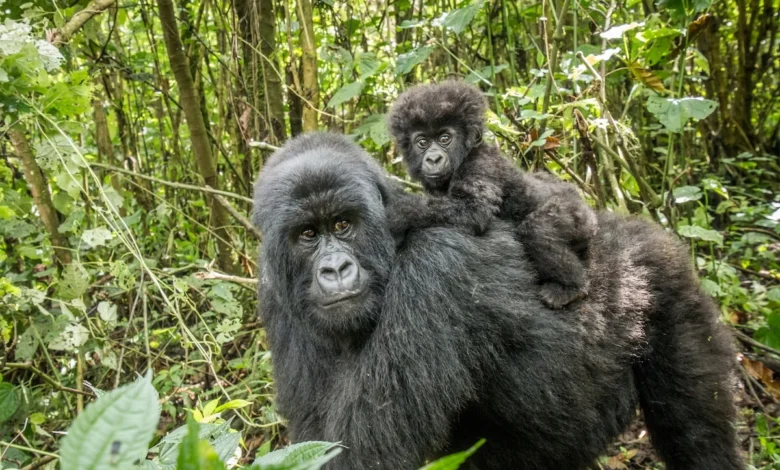
Beyond carbon sequestration, the DRC’s forests shelter an astonishing array of endemic wildlife. The country remains the primary global stronghold for iconic and critically endangered species, including mountain gorillas (Gorilla beringei beringei), eastern lowland gorillas (Gorilla beringei graueri), bonobos (Pan paniscus), African forest elephants (Loxodonta cyclotis), and thousands of unique plant and bird species. Opening these pristine habitats to industrial activities introduces profound disruptions, ranging from forest fragmentation and poaching pressures to chemical pollution of vital watershed systems.
Human Impact and Communities on the Frontline
The environmental implications of the auction are mirrored by severe human and social risks. Earth Insight estimates that the newly auctioned regions are home to approximately 39 million people. This population includes numerous forest-dwelling and Indigenous communities whose traditional livelihoods, cultural identities, and daily survival depend directly on the health of the tropical forests and river systems.

Local advocates argue that the expansion proceeds without adequate free, prior, and informed consent (FPIC), threatening to displace traditional landholders and ignite land-use conflicts. Pascal Mirindi, campaign coordinator for Notre Terre Sans Pétrole, encapsulated local outrage in statements to the press, questioning the logic of promoting ecological initiatives like the Kivu-Kinshasa corridor while simultaneously selling off the nation’s ecological future.
"Imagine: 39 million Congolese people and 64% of our forests could be directly affected by the awarding of these oil blocks," Mirindi noted. "And all this while the government is promoting the Kivu-Kinshasa ecological corridor. Where is the logic? Where is the coherence? We are reminding our leaders that the Congolese people are the primary sovereign. We will not remain silent while certain people organise themselves to sell off our future."
Official Responses and Civil Society Demands
The release of Forests to Frontlines has amplified calls from a united coalition of Congolese civil society organizations and international environmental groups demanding an immediate reversal of government policy.
Researchers and policy analysts emphasize that fossil fuel development in these fragile ecosystems contradicts the DRC’s international commitments under the Paris Agreement and global biodiversity frameworks. Anna Bebbington, an Earth Insight research manager, underscored the global ramifications of the policy, stating that oil and gas development in these regions would deliver devastating impacts on biodiversity, land rights, and the international fight against climate change.
In response to the crisis, the coalition report outlines several core demands addressed to the DRC government and its international partners:
- Cancellation of Licensing Rounds: Immediate suspension and cancellation of the 2025 hydrocarbon licensing round, alongside a definitive halt to all future oil and gas expansion plans within sensitive ecological zones.
- Upholding Human Rights: Strict legal recognition and enforcement of the rights of local communities and Indigenous Peoples, ensuring their land tenures are protected from corporate encroachment.
- Aligned International Financing: Re-evaluation of donor support and international financial assistance to ensure funds align directly with national commitments to biodiversity preservation, human rights, and climate resilience.
- Inclusive Governance: Guaranteed, meaningful participation of local civil society and frontline communities in environmental decision-making, governance, and transparent monitoring processes.
Fact-Based Analysis of Broader Implications
The DRC’s aggressive pivot toward oil extraction places the international climate community at a complex crossroads. On one hand, the international community has repeatedly stressed the absolute necessity of preserving the Congo Basin rainforest as an irreplaceable global climate stabilizer. Programs such as the Central African Forest Initiative (CAFI) were designed to financially reward the DRC for keeping its forests standing.
On the other hand, Kinshasa faces immense socio-economic hurdles, high poverty rates, and pressures to diversify its economy and secure energy independence or export revenues. Government officials have frequently argued that wealthy industrialized nations—historically responsible for the vast majority of cumulative global greenhouse gas emissions—have little moral standing to deny developing nations the right to exploit their natural resources for economic advancement unless substantial, reliable alternative financial incentives are provided.
Nevertheless, experts warn that pursuing short-term petroleum revenues risks locking the DRC into high-carbon infrastructure, potential environmental liabilities, and severe ecological degradation that could permanently impair the nation’s long-term sustainable development potential. Eco-tourism, sustainable forestry, carbon credit markets, and international conservation partnerships offer alternative economic pathways, but they require robust governance, equitable wealth distribution, and institutional transparency to compete with the immediate capital generated by fossil fuel extraction.
As the government evaluates bids and moves forward with its auction schedule, the fate of the Congo Basin hangs in the balance. The decisions made in Kinshasa in the coming months will resonate far beyond national borders, carrying profound consequences for global biodiversity, indigenous livelihoods, and the trajectory of global climate change mitigation.