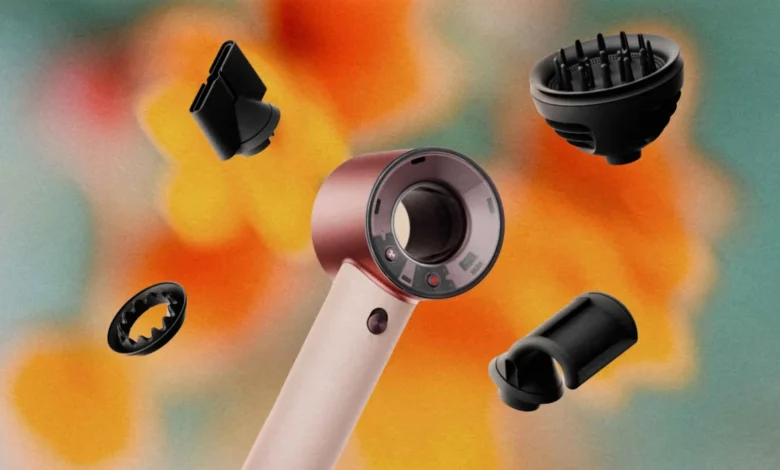
The global travel and beauty tech landscape shifted significantly with the official market rollout of Dyson’s latest engineering feat: the Supersonic Travel Hair Dryer. Priced at $300 and retailed through major distributors including Amazon, Nordstrom, and Sephora, this device targets a persistent consumer dilemma—the compromise between high-performance beauty routines and efficient packing standards. For years, frequent flyers, vacationers, and corporate travelers have faced a frustrating binary choice: rely on inconsistent, often damaging hotel-provided hair dryers, or sacrifice valuable luggage space by packing bulky, full-sized styling systems and their accompanying cords. Dyson’s engineering division sought to eliminate this friction point by introducing a downscaled yet high-powered iteration of its flagship hair care technology, specifically tailored for international transit and domestic weekend getaways alike.
Evolution of the Supersonic Lineage and Development Background
Dyson transformed the personal care appliance market when it launched the original Supersonic hair dryer, shifting consumer expectations away from traditional, motor-in-head designs toward acoustic engineering and digital motor placement in the handle. While revolutionary for home use, the original Supersonic and its multi-styler sibling, the Airwrap, presented logistical hurdles for travelers. Their substantial weight, long barrels, thick power cords, and lack of universal dual-voltage capabilities across all global regions made them impractical for lightweight packers utilizing slim carry-on bags or compact weekender luggage.

Recognizing a distinct market gap for high-end, portable grooming tools, Dyson’s research and development teams initiated a multi-year project to miniaturize the core components of the Supersonic without sacrificing airflow velocity, thermal regulation, or structural durability. The resulting product achieves a 32% reduction in overall size and a 25% decrease in weight compared to the original model. Measuring roughly the footprint of a standard smartphone, the travel-specific device addresses the ergonomic and spatial demands of modern mobility without degrading the user experience.
Technical Specifications and Performance Metrics
At a retail price point of $300, the Dyson Supersonic Travel Hair Dryer positions itself firmly in the luxury appliance tier. However, industry analysts and consumer testing indicate that the hardware justifies its cost through robust technical capabilities. The unit features a dual-voltage system—a critical upgrade from the brand’s legacy tools—allowing international travelers to operate the device safely across various electrical grids abroad without risking catastrophic transformer failures or power surges.
Performance-wise, the downsized motor generates high-velocity airflow that rivals full-sized counterparts, enabling users with long or thick hair to achieve a complete blowout in approximately 10 minutes. The device incorporates three precise heat settings and two speed controls, managed via a streamlined, minimalist interface. Furthermore, the cable length has been optimized to 6.5 feet—shorter than the 8.6-foot cord of the original model—to reduce tangling and save spatial volume inside packed bags. The unit comes equipped with a Styling Concentrator attachment designed to minimize frizz and enhance hair smoothness, while maintaining backwards compatibility with existing attachments from the original Supersonic ecosystem.

Market Impact and Consumer Reception
Since its recent debut, the product has generated substantial discussion within travel, lifestyle, and beauty consumer segments. Chronic overpackers and minimalists alike have praised the product for addressing longstanding luggage constraints. Travel industry surveys consistently highlight packing weight and bag space as primary sources of traveler anxiety; by shrinking the dimensional footprint of a high-end hair dryer to roughly the size of a mobile device, Dyson has effectively targeted a major pain point for frequent flyers navigating increasingly strict airline baggage allowances.
Beauty editors and lifestyle journalists testing the equipment in various environments—ranging from urban boutique hotels in New York City to coastal vacation rentals in Florida—noted that the device maintains consistent thermal output and ergonomic comfort during extended drying sessions. The reduction in hand fatigue, attributed to the lighter frame and balanced center of gravity, has been highlighted as a major advantage over standard hotel-room blow dryers, which frequently cause muscular strain due to awkward weighting and weak airflow.
Industry Implications and Future Outlook
The introduction of a dedicated travel-tier luxury hair dryer reflects a broader trend within the consumer electronics and personal care industries: the miniaturization of high-performance lifestyle technology. As remote work and flexible travel schedules continue to drive global mobility post-pandemic, consumers increasingly demand portable versions of their domestic routines. Premium brands are responding by prioritizing travel-friendly specifications—such as universal voltage compatibility, modular attachments, and lightweight construction—without compromising on power or aesthetic appeal.

While the $300 price tag places the device out of reach for budget-conscious consumers, market analysts suggest that high-end beauty tech operates on brand loyalty and proven performance metrics. For affluent travelers, corporate professionals, and dedicated beauty enthusiasts, the investment offers a reliable solution to a universal travel inconvenience. As Dyson continues to expand its personal care portfolio, the success of the Supersonic Travel Hair Dryer may pave the way for further innovations in ultra-portable, high-efficiency grooming technology, cementing the brand’s dominance in both domestic and international markets.