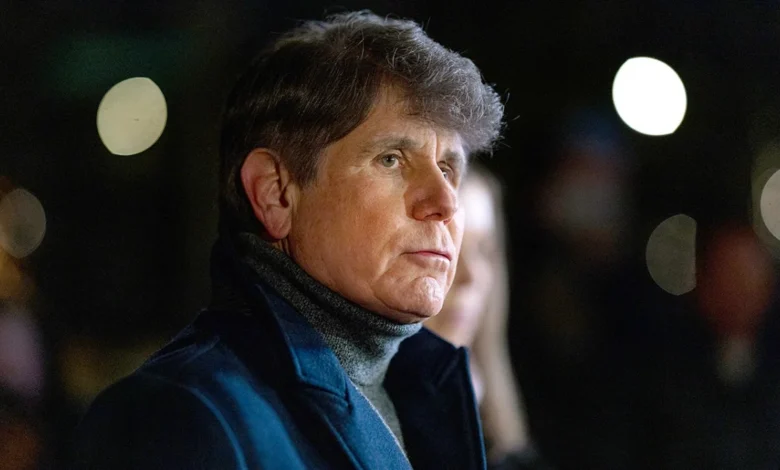
The political landscape of Illinois in late 2008 was defined by a singular, high-stakes vacancy: the United States Senate seat vacated by President-elect Barack Obama following his historic victory. For years, the ensuing legal saga—which saw then-Governor Rod Blagojevich removed from office, impeached, and eventually sentenced to federal prison—has been shrouded in competing narratives. While the federal government successfully prosecuted Blagojevich on corruption charges, including the attempt to leverage the appointment of a senator for personal or political gain, the former governor has consistently maintained his innocence. Now, the release of previously redacted FBI FD-302 reports from the interviews of Barack Obama and his then-chief of staff, Rahm Emanuel, offers a granular look into the frenetic and high-stakes maneuvering that occurred during that transitional period.
A Portrait of Political Maneuvering
The newly available documents detail the inner workings of the Obama transition team as they navigated the delicate task of filling the vacant Illinois seat. The FBI interviews, conducted in December 2008 shortly after the governor’s arrest, confirm that the transition team was in active, ongoing contact with the Blagojevich administration.
According to the records, Emanuel, who would go on to become the mayor of Chicago, served as the primary conduit between the president-elect’s team and the governor’s office. A critical point of discussion in these communications was the potential appointment of Lisa Madigan, the daughter of Mike Madigan, who was then the powerful Speaker of the Illinois House of Representatives. At the time, the elder Madigan held immense sway over the state’s legislative agenda, including the healthcare and budgetary priorities that Blagojevich was attempting to push through the statehouse.
Blagojevich has long contended that his interest in appointing Lisa Madigan was part of a legitimate legislative deal—a political quid pro quo that, while perhaps unseemly, he argues did not constitute the criminal extortion for which he was eventually convicted. The FBI notes suggest that the Obama team was indeed aware of the potential for such an appointment. In an interview conducted on December 18, 2008, President-elect Obama was questioned regarding his knowledge of these discussions. The documentation notes that Obama understood Emanuel had been in dialogue with the Blagojevich administration and that Lisa Madigan was considered an "acceptable candidate" by the incoming president.

The Chronology of a Political Crisis
The timeline of December 2008 remains one of the most volatile stretches in modern American political history. On December 8, a day before the arrests, Rahm Emanuel and senior advisor David Axelrod met with Senator Dick Durbin. During this meeting, the trio reached a consensus that Lisa Madigan would be an effective candidate for the Senate vacancy. Following this meeting, Emanuel contacted John Harris, who was then serving as Blagojevich’s chief of staff, to convey the merits of the appointment.
The very next morning, December 9, 2008, the situation reached a breaking point. FBI agents arrived at the governor’s home in Chicago, taking Blagojevich into custody. U.S. Attorney for the Northern District of Illinois Patrick Fitzgerald held a dramatic press conference, famously declaring, "Governor Blagojevich was arrested in the middle of what we can only describe as a political corruption crime spree."
For Blagojevich, the unsealed documents serve as vindication. "That just proves the Madigan deal was very much front and center. It was something I was about to do," Blagojevich said in response to the disclosures. He maintains that the prosecution’s narrative of a "crime spree" was a hyperbolic justification for an unprecedented federal intervention into the executive branch of a state government.
Internal Dynamics and the Jarrett Factor
Beyond the immediate question of the Senate seat, the FBI interviews provide a rare glimpse into the internal deliberations of the incoming Obama administration. The documents reveal that Valerie Jarrett, a longtime confidante of the president-elect, was initially a leading contender for the seat. However, the files show that Obama ultimately decided he required Jarrett by his side at the White House as a senior advisor.
Emanuel, however, appeared to view the situation through a different lens. According to the interview records, Emanuel expressed interest in seeing Jarrett in the Senate rather than in the West Wing. The reasoning provided was personal and political: because of her close friendship with the president-elect, having her on the White House staff could create perceptions of favoritism or awkwardness. Despite Emanuel’s advocacy, Obama remained "resolute" in his decision to bring Jarrett to the White House. Once that door was closed, the field of candidates expanded to include figures such as Tammy Duckworth, Jan Schakowsky, and Jesse Jackson Jr.

Context and Broader Implications
The legal aftermath of these events was extensive. Blagojevich was convicted in 2011 on 17 counts, including wire fraud, attempted extortion, and conspiracy to solicit bribes. He served seven years and 11 months in federal prison before his sentence was commuted by President Donald Trump in 2020. In 2025, he received a full pardon.
The appointment of Roland Burris, which eventually occurred, ended the immediate vacancy but did little to quell the political instability in Illinois. Burris served only until 2010 and declined to run for a full term, leading to a Republican victory by Mark Kirk, who held the seat until 2016.
The release of these FBI files does not necessarily invalidate the legal outcome of the Blagojevich trials; the courts focused on the specific, often crude, recorded conversations in which the governor explicitly discussed personal benefits in exchange for the appointment. However, the documents illustrate that the "horse-trading" nature of the appointment was not a secret to those operating at the highest levels of the Democratic Party at the time. It highlights the blurred lines between traditional political negotiation and criminal activity, a distinction that has remained a central point of debate for legal scholars and historians alike.
Official Responses and Future Analysis
Fox News reached out to both former President Obama and Rahm Emanuel for comment regarding the newly unsealed documents. As of this report, neither party has provided a response.
The lack of comment from the principals involved leaves much to the interpretation of political analysts. For supporters of the former governor, the files confirm that the "Madigan deal" was a standard, albeit high-stakes, political negotiation that was known to the incoming administration. Conversely, legal observers note that the FBI’s focus during the investigation was not on the legitimacy of the candidate, but on the governor’s demand for personal and financial kickbacks—a factor that remains the cornerstone of the government’s case.
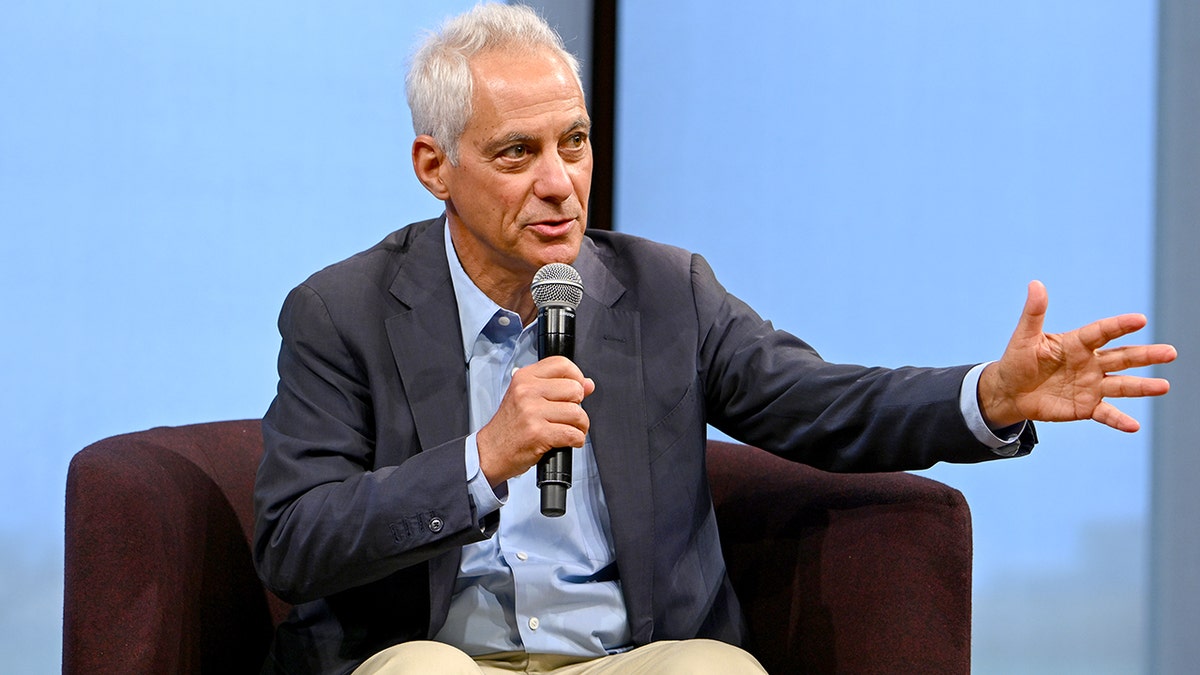
As historical archives continue to yield information about the 2008 election cycle, this episode stands as a case study in the intersection of federal law enforcement and state-level political power. The case of the Illinois Senate seat will likely remain a fixture of political discourse, serving as a reminder of the fragility of institutional processes when they collide with the ambitions of individual actors.
Analytical Summary of the Legal Landscape
The significance of the FD-302 documents lies in their ability to provide a "behind-the-curtain" view of the transition. While the Obama administration attempted to maintain distance from the appointment process—publicly stating that the president-elect did not want to "put his thumb on the scale"—the records demonstrate that the administration was far from a passive observer. By utilizing Emanuel as a surrogate to engage with the governor’s staff, the transition team ensured their preferences were communicated.
The question of whether this communication constitutes an endorsement of the process or a standard attempt to influence a favorable outcome remains open. For the legal system, the distinction is clear: the law is concerned with the intent and the specific requests made by the governor, not the broader context of who the administration preferred. However, for the public, these records offer a more nuanced understanding of how power was negotiated during the transition into the Obama era, reinforcing the reality that even in the highest echelons of government, political pragmatism often operates in a gray area of legality and tradition.
The release of these files ensures that the Blagojevich saga will continue to be re-examined, not just as a story of individual corruption, but as a window into a specific, transformative era of American politics where the pressure to secure legislative victories frequently collided with the constraints of federal law. As more documents from that period potentially surface in the future, the narrative surrounding the 2008 Illinois Senate vacancy will continue to evolve, reflecting the ongoing struggle to define the boundaries of acceptable political influence in a democratic republic.