Edinburgh remains one of the most culturally dense urban centers in the United Kingdom, consistently ranking among the top global destinations for tourism due to its unique juxtaposition of medieval history and neoclassical grandeur. As the city continues to grapple with the complexities of mass tourism—particularly during the peak months of the Edinburgh Festival Fringe—the evolution of its short-term rental market has become a focal point for travelers and urban planners alike. Beyond the standard hotel experience, the city’s Airbnb sector has pivoted toward high-end, character-driven properties that allow visitors to inhabit the very architecture that defines the capital’s skyline.
The Architectural Evolution of Edinburgh Tourism
The city’s built environment is categorized primarily into two distinct zones: the Old Town, characterized by narrow, winding "closes" and medieval tenement structures, and the New Town, a masterpiece of 18th-century urban planning featuring wide, symmetrical Georgian crescents and grand stone terraces.
Recent data from tourism boards indicates that visitor spending in Edinburgh has seen a consistent upward trajectory post-2022, with a growing segment of the market seeking "experiential lodging." Rather than opting for standardized corporate hotel rooms, modern travelers are increasingly gravitating toward heritage-listed properties. This shift has significant implications for property management in the city, where strict planning regulations govern the preservation of facades and internal features. Owners who successfully navigate these regulations to provide short-term stays are effectively acting as custodians of local history, though they must balance this with the modern demand for creature comforts like high-speed internet, climate-controlled heating, and updated sanitary facilities.
A Chronology of Edinburgh’s Short-Term Rental Landscape
The current state of Edinburgh’s visitor accommodation can be traced through a series of regulatory and economic shifts over the last decade:
- 2015–2018: The rise of the "sharing economy" led to a proliferation of short-term lets across the city, resulting in significant friction with long-term residents in areas like the Grassmarket and the Royal Mile.
- 2019–2021: During the global pandemic, tourism in the capital stalled, leading to a period of recalibration. Many property owners pivoted toward long-term rentals before returning to the short-term market as international travel surged in 2022.
- 2022–2024: The Scottish Government introduced new licensing requirements for short-term lets, aiming to manage the density of tourist accommodation in residential areas. This has created a more professionalized market, where the properties remaining on platforms like Airbnb are often those that meet higher safety and quality standards.
Notable Lodgings and Their Cultural Significance
The properties currently defining the high-end Airbnb market in Edinburgh are not merely places to sleep; they are historical artifacts.
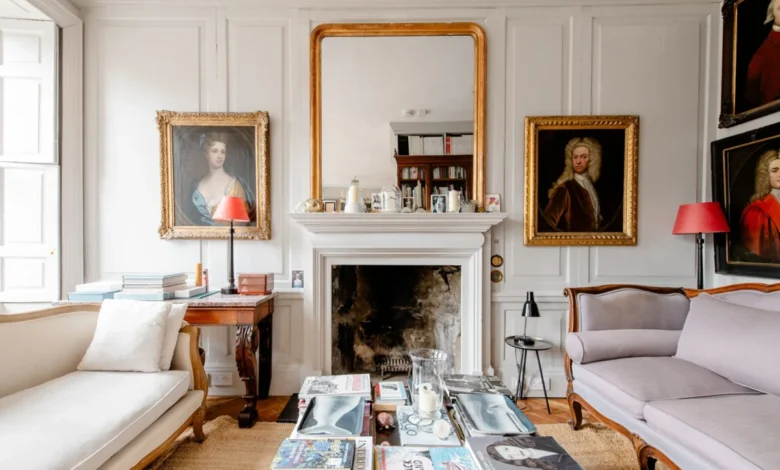
The Laird’s Lodging, situated in a 19th-century Georgian townhome, exemplifies the preservation of the "drawing room" aesthetic that defined upper-class Scottish life two centuries ago. Its crown moldings and sash windows serve as tangible reminders of the city’s Age of Enlightenment. Similarly, the Historic Rock House, located near the iconic Calton Hill, showcases a rare, standalone farmhouse-style structure within the city limits. Such properties are protected under strict conservation laws, ensuring that the visual integrity of the cityscape remains intact while providing luxury experiences to international guests.
In the Old Town, the Ord’s Loft provides a different perspective. Built in 1624, the structure served as the White Horse Coaching Inn. By integrating modern volcanic rock features into a space that has existed for four centuries, property managers are signaling a trend toward "modern-historic fusion," where the goal is to highlight the age of the structure rather than hide it behind modern drywall.

Economic Impact and Local Implications
The influence of these high-end rentals on the local economy is substantial. Analysts note that these properties often draw a "higher-spend" demographic, which in turn supports the local independent businesses surrounding them. For instance, the popularity of the West End Georgian Apartment is directly linked to its proximity to culinary institutions like The Palmerston. This relationship creates a symbiotic ecosystem: the quality of the accommodation encourages longer stays, which allows visitors to move beyond the tourist "hotspots" and contribute to the local economy in peripheral neighborhoods like Stockbridge or Bruntsfield.
However, the proliferation of such rentals is not without critics. Local advocacy groups have long expressed concerns regarding the "hollowing out" of city centers, where housing stock is removed from the residential market to serve the short-term visitor. The current legislative environment, which requires short-term let licenses, is the government’s response to this tension, ensuring that only properties that meet specific building standards and neighborhood compatibility criteria can operate.
Demographic Shifts and Future Trends
Market research suggests that the "work-from-anywhere" phenomenon has changed the nature of the Edinburgh rental market. Many of the properties currently listed, such as the Hidden Warehouse in Stockbridge or the Classic Apartment on the Royal Mile, now emphasize "dedicated workspaces" and "high-end kitchen appliances" as primary selling points. This indicates a transition from the weekend-break model to the "workation" model, where travelers stay for weeks at a time rather than days.
This trend has implications for the hospitality industry, as it necessitates a higher level of service—daily housekeeping, reliable laundry facilities, and stable, high-capacity infrastructure—that mirrors the services of a high-end boutique hotel.
Analysis of the "Experience Economy"
The success of Edinburgh’s most desirable Airbnbs relies on the "curation of charm." A property like the 16th-Century Dovecote Cottage in Bruntsfield is successful because it offers an experience that is impossible to replicate in a hotel. The inclusion of unique design elements, such as glass floors revealing ancient masonry or private walled gardens, creates a sense of exclusivity.
For the city’s future, the challenge will be to maintain this diversity of stock without compromising the quality of life for permanent residents. The current trajectory suggests that the market will continue to consolidate, with smaller, non-compliant operators exiting the market and larger, better-managed, and historically significant properties becoming the new standard for luxury travel in the Scottish capital.
Conclusion: Sustaining the Charm
Edinburgh’s status as a top-tier global destination is intrinsically linked to its ability to preserve its identity. Whether one stays in the grand, high-ceilinged spaces of the Georgian New Town or the cozy, stone-walled corners of an Old Town tenement, the accommodation is an essential part of the narrative. As the city continues to balance the demands of the global tourism industry with the needs of its residents, the focus remains on ensuring that these historical properties are used as vessels to showcase, rather than diminish, the enduring character of the Scottish capital.
For the prospective traveler, the selection of an Airbnb in Edinburgh is an opportunity to participate in the ongoing story of a city that has spent centuries perfecting the art of the welcome. From the morning ritual of a tattie scone to the evening view of Arthur’s Seat from a 17th-century window, these homes provide the necessary context to truly appreciate the soul of the city.