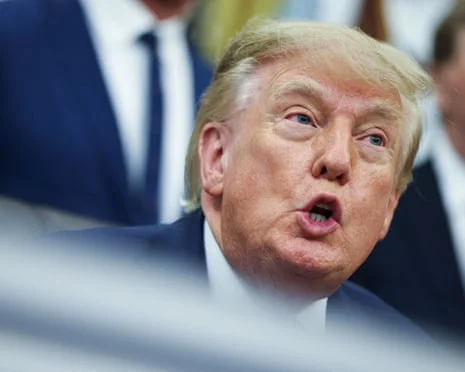
The geopolitical landscape of the Arctic shifted unexpectedly on Friday as United States President Donald Trump, alongside the leaders of Denmark and Greenland, announced an impending security agreement. The diplomatic breakthrough effectively puts to rest, at least for the near term, the administration’s previously threatened annexation of the autonomous Arctic island. According to joint announcements, the pact is slated for formal signing during the upcoming United Nations General Assembly in New York City.
The impending accord represents a delicate compromise born from months of high-stakes diplomatic maneuvering and public posturing. While President Trump has framed the upcoming pact as an unmitigated personal and national triumph—asserting on social media that it grants the United States permanent control over the region’s security architecture—European and Greenlandic officials have offered a distinctly more measured interpretation. The text of the agreement, as outlined by Copenhagen and Nuuk, emphasizes mutual defense and international cooperation while explicitly reaffirming existing sovereign boundaries and the right to self-determination for the Greenlandic populace.
Origins of the Arctic Standoff
The friction over Greenland intensified earlier in the administration when President Trump revived long-standing strategic ambitions regarding the world’s largest island, publicly floating the prospect of an American acquisition. Situated centrally in the North Atlantic and the Arctic Circle, Greenland has long held outsized importance for continental defense, early-warning missile systems, and maritime transit routes.
For months, the rhetoric from Washington provoked sharp pushback from both Nuuk and Copenhagen. Greenland, which operates as a self-governing territory within the Kingdom of Denmark, fiercely guarded its autonomy. Danish Prime Minister Mette Frederiksen repeatedly emphasized that the island was not for sale and that its territorial integrity was non-negotiable.

Despite the initial hostility, strategic realities on both sides ultimately necessitated a diplomatic off-ramp. As Russian and Chinese activities in the Arctic circle have expanded, Washington’s desire for a more robust defense posture found common ground with Copenhagen and Nuuk’s need for enhanced security guarantees against foreign encroachment in the circumpolar north.
Contradictory Interpretations of the Pact
The core tension of the upcoming agreement lies in how its signatories are choosing to define it for their respective domestic audiences.
On Truth Social, President Trump described the framework as an agreement that “gives the United States permanent control over security, and all other needs, in Greenland, completely addressing ALL of our many U.S. concerns.” He further declared that Washington would “immediately begin the process of developing a large Military presence in the appropriate part of Greenland.”
Military analysts were quick to point out that the United States already maintains a strategic footprint on the island—most notably through the Thule Air Base (recently renamed Pituffik Space Base)—and possesses broad rights to expand military cooperation via existing bilateral agreements and the North Atlantic Treaty Organization (NATO).
Conversely, statements released late Friday by Danish Prime Minister Mette Frederiksen and Greenlandic Government Leader Jens-Frederik Nielsen painted a vastly different picture. Frederiksen stated unequivocally that the text “recognizes the sovereignty and territorial integrity of the Kingdom and the right of the Greenlandic people to self-determination.” Nielsen echoed these sentiments, noting that the pact “ensures and strengthens the security of Greenland, the Kingdom of Denmark, the United States and the Western alliance.” Diplomatic observers suggest the final document may ultimately serve as a reaffirmation and modernization of existing NATO frameworks rather than the sweeping territorial takeover implied by Washington’s rhetoric.

Broader Geopolitical and Domestic Context
The Arctic security pact announcement coincides with a volatile period of domestic and international friction for the White House. The upcoming United Nations General Assembly in New York is expected to serve as a high-profile stage where the administration will attempt to project diplomatic strength amidst a backdrop of rising global tensions, including the ongoing, protracted conflict in Iran and escalating trade disputes with traditional allies.
Concurrently, the administration’s broader foreign policy decisions—such as the recent approval of advanced military hardware sales to Middle Eastern partners and the implementation of sweeping sanctions legislation targeting Russia—have drawn intense scrutiny from lawmakers on Capitol Hill. Observers note that securing a high-profile Arctic agreement provides the administration with a much-needed diplomatic narrative as the domestic political calendar hurtles toward the closely contested midterm elections.
As delegations prepare to travel to New York City for next week’s signing ceremony, attention will inevitably turn to the fine print of the document itself. While the leaders have successfully averted a rupture in transatlantic relations over the future of Greenland, the divergence in their public messaging suggests that the debate over sovereignty, security control, and the true scope of the agreement will continue long after the ink is dry.