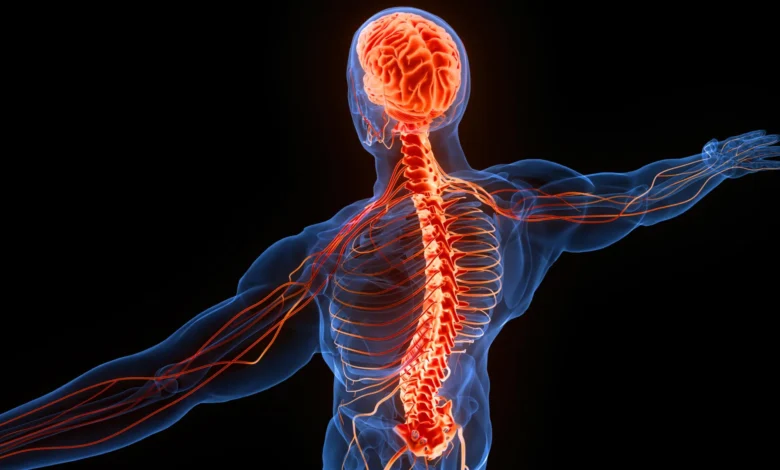
For generations, physiologists, neuroscientists, and evolutionary biologists have wrestled with one of the most persistent anatomical puzzles of the human body: why the left hemisphere of the brain controls the right side of the physique, and vice versa. This contralateral organization—where sensory inputs and motor commands cross the body’s midline—has long eluded a definitive functional justification. However, a comprehensive new study published in Frontiers in Neuroanatomy posits that this curious configuration is not a modern design for optimal computational efficiency, but rather an ancient evolutionary inheritance tracing back over 500 million years to the earliest vertebrate visual systems.
Spearheaded by Dr. Martin Wessendorf, a neuroscientist and associate professor emeritus at the University of Minnesota renowned for his work on spinal cord neuronal regulation, alongside Daniel Wang, a specialist in cognitive neuroscience and neurodegenerative disorders, the research offers a fresh paradigm. Rather than viewing crossed neural pathways as a direct survival adaptation, the investigators suggest that the layout of modern nervous systems is the result of evolution bootstrapping newer neural circuits onto pre-existing, ancient architectural templates.
The Architectural Puzzle of Contralateral Control
To understand the scale of this anatomical paradox, one must examine how the central nervous system manages physical interaction with the environment. When an individual walks, types, or reacts to external stimuli, the instructions originating in the cerebral cortex are routed across the midline. Sensory data—ranging from the subtle texture of an object touched with the fingertips to sharp pain—similarly crosses over before being consciously perceived by the brain.
Historically, researchers attempted to explain this phenomenon through functional optimization theories, suggesting that contralateral wiring might improve computational processing speeds, enhance spatial calculation, or streamline reflex arcs. Yet, physical and behavioral evidence for these advantages has remained remarkably sparse. Why natural selection would universally favor a wiring scheme that requires long axonal tracts to cross paths—introducing potential vulnerabilities and metabolic costs—has remained a central debate in neurobiology.
Wessendorf and Wang shifted the investigative focus away from modern functional utility and toward evolutionary archaeology. By examining neural circuits across diverse tetrapod lineages—including mammals, birds, reptiles, and amphibians—the researchers mapped how disparate sensory and motor systems intersect. Their findings indicate that the blueprint for crossing the midline was established long before the emergence of advanced mammalian brains, deeply rooted in the foundational layout of primitive vertebrate sensory processing.
Visual Origins: The Cambrian Foundation
The cornerstone of the researchers’ hypothesis rests on the mechanics of vision and the evolution of the vertebrate eye. When light traverses the cornea and lens of a vertebrate eye, the resulting projection on the retina undergoes inversion. Light originating from the right visual field strikes the left side of the retina, while data from the left visual field projects onto the right.
To make sense of this inverted world, early organisms developed an optic chiasm—a neurological crossroads where optic nerve fibers partially cross so that visual data from the right visual field is routed exclusively to the left side of the brain. These signals ultimately converge upon an ancient midbrain structure known in non-mammalian vertebrates as the optic tectum, and in mammals as the superior colliculus.
Because the optic tectum is present across virtually all living vertebrate species, comparative neurobiologists classify it as one of the most archaic components of the central nervous system. Fossil evidence and cladistic modeling suggest that the foundational structures of the vertebrate head—including primitive versions of the optic chiasm and optic tectum—were already fully functional during the Cambrian Period, roughly 538 to 486 million years ago.
According to Wessendorf and Wang’s hypothesis, this ancient visual apparatus established a primary template for spatial mapping. As successive generations of organisms evolved, newly emerging neural circuits—whether dedicated to somatosensory touch, auditory tracking, or motor control—did not invent novel wiring strategies from scratch. Instead, they accommodated and aligned themselves with the pre-existing topographic maps established by the ancient visual system.
Tracing Sensory and Motor Pathways Through Deep Time
The breadth of this crossed organization becomes strikingly apparent when examining the major sensory tracts that ascend from the body to the brain. Consider the dorsal column pathway, which transmits high-resolution tactile information, vibration sense, and proprioception (body awareness). In tetrapods, sensory signals ascend through the dorsal spinal cord, synapse within the brainstem, and subsequently cross the midline to reach higher processing centers. While absent in modern bony fish, this pathway appears robustly conserved across amphibians, reptiles, birds, and mammals, highlighting its early appearance during the land-transition era of tetrapod evolution.
Similarly, the spinothalamic tract—responsible for conveying nociceptive signals such as pain and temperature—crosses the midline much lower in the central nervous system, directly within the spinal cord itself, before ascending to the thalamus. This configuration is observable not only in tetrapods but also in select cartilaginous fish like sharks and rays, indicating an even deeper evolutionary origin stretching back to early
jawed vertebrates.
Beyond sensory input, motor control pathways exhibit the exact same contralateral hallmark. The tectospinal pathway, which mediates rapid, instinctive orientation responses to sudden visual, auditory, or tactile stimuli, originates in the deep layers of the optic tectum and projects to the opposite side of the spinal cord. Likewise, the rubrospinal pathway, originating from the midbrain’s red nucleus, crosses the midline to regulate limb movements across the vertebrate lineage.
Even the corticospinal tract—the quintessential pathway for human fine motor control, precise manual dexterity, and intricate finger movements—reveals an evolutionary history of adaptation rather than novel creation. While all vertebrates possess a telencephalon, only mammals boast a true six-layered neocortex capable of advanced cognitive processing and complex motor planning. In most mammals, the corticospinal tract primarily modulates incoming sensory data at the spinal level. However, in primates and select manual species, evolution co-opted this ancient tract, extending its projections directly to motor neurons to support sophisticated dexterity.
Rather than engineering a separate, uncrossed pathway for fine motor skills, human evolutionary history demonstrates a pattern of conservative repurposing: utilizing an ancient, cross-wired structural foundation for modern computational demands.
Chronology of the Evolutionary Hypothesis
To contextualize how neuroscientists have arrived at these conclusions, the timeline of vertebrate neural evolution unfolds across key geological epochs:
- Ediacaran to Early Cambrian Period (approx. 550–500 Million Years Ago): Emergence of the earliest chordates and primitive jawless fish. Development of basic photosensitive spots and early optic architectures, establishing the initial inversion of visual projection fields.
- Cambrian Period (538–486 Million Years Ago): Maturation of the optic chiasm and the optic tectum. The spatial mapping of visual fields creates the first standardized framework for sensory-motor coordination across opposite sides of the neural axis.
- Devonian Period (419–359 Million Years Ago): The rise of early tetrapods and cartilaginous fish. Conservation and expansion of crossed sensory pathways (such as the spinothalamic tract and dorsal column precursors) alongside early motor circuits like the tectospinal and rubrospinal tracts.
- Mesozoic Era (252–66 Million Years Ago): Diversification of mammals and the evolutionary elaboration of the six-layered neocortex, leading to the refinement of the corticospinal tract for sensory modulation and, eventually, fine motor control.
- Modern Era: Contemporary neuroanatomical studies, utilizing advanced tractography and comparative genomics, begin to decode these ancient morphological footprints, moving away from functional optimization theories toward evolutionary developmental biology (evo-devo) models.
Implications for Modern Neurobiology and Medicine
The implications of this historical perspective extend far beyond theoretical evolutionary biology. By reframing contralateral wiring as an inherited architectural constraint rather than an optimal design, researchers gain critical insights into how the central nervous system repairs itself following traumatic injury or neurodegenerative disease.
Modern clinical neurology frequently confronts the consequences of the brain’s crossed wiring. Stroke victims experiencing hemiparesis—weakness or paralysis on one side of the body—suffer functional deficits precisely because the damage to a cerebral hemisphere interrupts these long-distance, crossed tracts. Understanding that these pathways were cobbled together over hundreds of millions of years helps explain why axonal regeneration in the mammalian central nervous system is notoriously difficult; the complex developmental cues required to guide nerve fibers across the midline are evolutionary patchworks rather than unified, streamlined systems.
Furthermore, this hypothesis opens new avenues for empirical validation. Wessendorf and Wang suggest that their evolutionary model is testable through paleontological inquiry. By examining exceptionally preserved fossilized neurocrania and endocasts of ancient jawless fish and early vertebrates from the Cambrian and Ordovician periods, paleoneuroscientists can search for structural correlates of the optic chiasm and tectal maps, potentially narrowing down the exact timeline of when contralateral organization became locked into the vertebrate genome.
Challenging Adaptationist Assumptions in Neuroscience
Ultimately, the work by Wessendorf and Wang challenges a pervasive bias in biological sciences: the assumption that every complex anatomical trait must confer an immediate, ongoing survival advantage. In evolutionary biology, not all features are optimized solutions to current environmental pressures. Many are historical legacies—frozen accidents of history preserved because they worked well enough, and because altering them would require dismantling a deeply integrated biological network.
The brain’s crossed wiring stands as one of the most enduring monuments to this principle. The curious reality that human thoughts, sensations, and actions are mediated across a neurological swap-meet is not a masterpiece of modern engineering. It is a 500-million-year-old echo from the prehistoric oceans, preserved in the architecture of every vertebrate that walks, swims, flies, or thinks.