
Slack Introduces Threaded Replies: Revolutionizing Communication and Collaboration
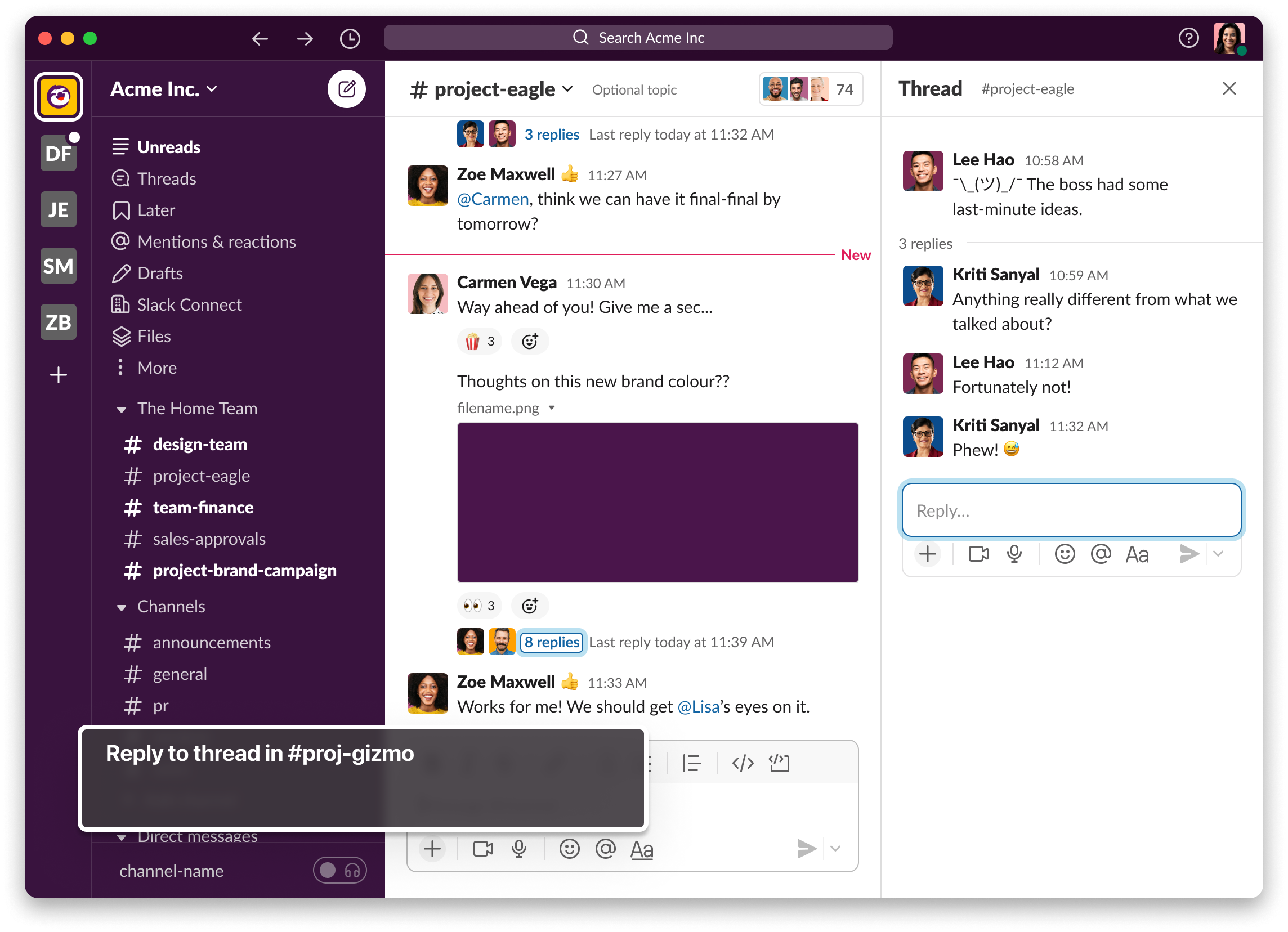
Slack’s introduction of threaded replies marks a significant evolutionary leap in its core functionality, fundamentally altering how teams communicate and collaborate within the platform. Prior to this feature, conversations in Slack channels often devolved into chaotic streams of messages, making it challenging to follow specific discussion points, track decisions, and maintain context. Threads address this inherent limitation by allowing users to initiate and respond to messages in a nested, organized manner, creating self-contained conversational units. This innovation not only declutters the main channel view but also enhances efficiency, clarity, and the overall productivity of remote and distributed teams. The core principle behind threaded replies is to compartmentalize discussions, preventing tangential conversations from derailing the primary flow of information in a channel. When a user replies to a message within a thread, that reply is visually linked to the original message and appears in a separate, dedicated pane, allowing participants to engage in a focused dialogue without cluttering the main channel. This hierarchical structure is crucial for managing complex projects, dissecting technical issues, and facilitating in-depth discussions where multiple sub-topics might emerge. The visual distinction provided by threads is paramount. Instead of scrolling through an endless feed, users can now easily identify and jump into specific conversations. Each thread is typically indicated by a visual cue, such as a "…" or a reply count, prompting users to explore further. Clicking on this cue opens a dedicated thread pane, displaying the original message and all its subsequent replies in a chronological and easily digestible format. This isolation of conversation significantly reduces cognitive load, enabling individuals to focus on the information that is most relevant to them at any given time.
The practical implications of threaded replies for team communication are vast and multifaceted. One of the most immediate benefits is the dramatic reduction in message noise. In busy channels with numerous participants, original messages could easily be lost amidst a barrage of replies, unrelated comments, and quick acknowledgments. Threads allow these acknowledgments and tangential discussions to be neatly tucked away, ensuring that the main channel remains a clear and concise hub for key announcements and project updates. This improved signal-to-noise ratio is invaluable for maintaining focus and ensuring that critical information is not overlooked. Furthermore, threaded replies foster better organization and context retention. When a discussion unfolds within a thread, all related messages are kept together. This means that a new participant joining a conversation, or someone returning to a previous discussion, can quickly catch up by reading the thread without having to sift through unrelated messages in the main channel. This is particularly beneficial for asynchronous communication, where team members may not be online simultaneously. They can easily pick up where others left off, understanding the full context of the discussion. The ability to isolate conversations also contributes to better decision-making. When a discussion involves multiple viewpoints or requires detailed exploration of a specific topic, threads provide a dedicated space for this to happen. This prevents the dilution of important points and allows for a more thorough examination of options before a decision is made. The clarity of recorded discussions within threads also serves as a valuable historical record. Project managers, team leads, and even individual contributors can revisit threads to recall past discussions, confirm decisions, and understand the rationale behind them. This can be instrumental in post-project analysis, onboarding new team members, and resolving disputes.
Beyond the organizational benefits, Slack’s threaded replies significantly enhance collaboration by promoting more focused and efficient interactions. Instead of scattering replies across the main channel, users are guided to engage within the designated thread. This encourages more thoughtful and deliberate responses, as individuals are less likely to interject with brief, isolated comments. The visual cue of a thread also subtly signals to other team members that a specific conversation is ongoing and warrants attention. This can lead to more targeted engagement, with individuals who have expertise or interest in a particular topic being more likely to participate in the relevant thread. The ability to resolve threads is another key feature that elevates their utility. Once a discussion within a thread has reached a natural conclusion or a decision has been made, users can mark the thread as resolved. This visually signals that the conversation is complete and removes it from active view, further contributing to the decluttering of the main channel. Resolved threads remain accessible, so they can be revisited if necessary, but their resolution status helps maintain a clean and current interface. The introduction of threaded replies also indirectly influences team workflows by encouraging more structured communication habits. As teams become accustomed to using threads for specific types of discussions, their overall communication patterns become more organized. This can lead to a proactive approach to communication, where users instinctively know when to initiate a thread versus when a simple channel message is appropriate. This shift towards more intentional communication can have a ripple effect on project management, task assignment, and knowledge sharing within a team.
The impact of threaded replies on knowledge management is also substantial. By keeping discussions organized and contextually relevant, threads create a more accessible and searchable knowledge base within Slack. When a team discusses a specific technical problem and its resolution within a thread, that information is now readily available for future reference. This eliminates the need for individuals to repeatedly ask the same questions or to dig through lengthy channel histories to find answers. This enhanced knowledge discoverability is particularly valuable for onboarding new team members, who can be directed to relevant threads to quickly gain an understanding of past projects, decisions, and problem-solving approaches. The ability to search within threads further amplifies this benefit. Users can not only search for keywords but also refine their searches to specific threads, making it easier to pinpoint the exact information they need. This is a significant improvement over searching the entire channel history, which can often yield irrelevant results. For teams working on long-term projects, the historical context provided by threads is invaluable. Decisions made months ago, the rationale behind them, and the discussions that led to them are all preserved within their respective threads. This can prevent recurring mistakes, ensure continuity in project direction, and provide valuable insights for future planning.
From an SEO perspective, the adoption and effective utilization of threaded replies can indirectly contribute to improved internal discoverability and knowledge sharing, which are crucial for organizational efficiency. While not directly impacting external SEO, the internal SEO of information within Slack is dramatically enhanced. When information is well-organized and easily searchable, it reduces the time team members spend searching for information. This increased efficiency translates to more productive work and a better flow of internal knowledge. The term "threaded replies" itself has become a significant keyword in discussions about communication platforms and workplace collaboration tools. As more organizations adopt and advocate for this feature, content related to "Slack threaded replies," "managing conversations in Slack," "improving team communication with threads," and "organized Slack channels" gains prominence in search results for those seeking solutions to communication challenges. Companies that effectively leverage and document their use of threaded replies in internal best practices will find that this information is more readily accessible to their employees. This can be considered a form of internal search engine optimization, ensuring that valuable information is found quickly and efficiently by those who need it. The ease with which teams can now document and share knowledge through threaded discussions means that this information is less likely to be siloed or lost, leading to a more informed and capable workforce. The impact on productivity and innovation cannot be overstated, as faster access to information and better context for discussions directly fuel these critical aspects of business success.
The technical implementation of threaded replies in Slack has been designed for user-friendliness and intuitive interaction. When a user hovers over a message, a "Reply in thread" option typically appears. Clicking this initiates the creation of a new thread, or allows the user to add to an existing one. The original message remains prominently displayed at the top of the thread pane, providing immediate context. Subsequent replies are stacked chronologically within this pane. Users are often notified when new activity occurs in threads they are participating in or following, ensuring they remain updated without being overwhelmed by constant channel alerts. The ability to "follow" specific threads allows users to receive notifications for all activity within that thread, even if they weren’t directly involved in the initial conversation. This is a powerful feature for stakeholders who need to stay informed about specific project discussions without being active participants. Conversely, users can "unfollow" threads they are no longer interested in, further customizing their notification experience. The integration of threads with other Slack features, such as search functionality and the ability to mention users, further enhances their utility. A search query can now be directed specifically to threads, or threads can be surfaced as part of broader search results. Mentions within threads function as they do in the main channel, ensuring that relevant individuals are alerted to specific points of discussion. The platform’s continuous refinement of the threaded reply interface aims to make it even more seamless and efficient. This includes improvements to notification management, the visual presentation of threads, and the overall user experience of navigating and participating in threaded conversations. The ongoing development of these features underscores Slack’s commitment to providing a robust and evolving communication solution that adapts to the dynamic needs of modern teams.
In conclusion, Slack’s introduction of threaded replies has been a transformative development in the realm of digital workplace communication. By providing a structured and organized way to manage conversations, threads address the inherent challenges of real-time messaging in a collaborative environment. The benefits extend from reducing message noise and improving context retention to fostering more focused discussions and enhancing knowledge management. For businesses seeking to optimize their internal communication, improve team productivity, and cultivate a more efficient and informed workforce, embracing and effectively utilizing Slack’s threaded replies is not merely an option, but a strategic imperative. The ability to compartmentalize discussions, maintain context, and access historical information with ease directly contributes to better decision-making, faster problem-solving, and a more cohesive team dynamic. As remote and hybrid work models continue to evolve, the importance of robust communication tools like Slack, empowered by features like threaded replies, will only become more pronounced. The ongoing evolution of these features and their seamless integration with the broader Slack ecosystem ensure that the platform remains at the forefront of digital collaboration, empowering teams to communicate, connect, and conquer their goals with unprecedented clarity and efficiency. The internal discoverability and organization of knowledge fostered by threads can be viewed as a significant advancement in internal SEO, making valuable information readily accessible to all team members and driving greater overall organizational effectiveness.

