Toasted Sesame Garbanzo Bean Burgers with Crispy Red Onion Straws: A Flavorful and Nutritious Plant-Based Delight
The culinary landscape of plant-based eating has expanded dramatically, offering a kaleidoscope of flavors and textures that rival their conventional counterparts. Among the stars of this evolving food scene are innovative vegetarian burgers, moving beyond simple bean patties to sophisticated creations packed with complex tastes. The toasted sesame garbanzo bean burger, elevated by the contrasting crunch and sweetness of crispy red onion straws, stands as a prime example of this gastronomic advancement. This article delves into the nuances of crafting these exceptional burgers, exploring the ingredients, preparation techniques, nutritional benefits, and SEO strategies to maximize their appeal and discoverability online.
At its core, the toasted sesame garbanzo bean burger is a celebration of earthy, nutty, and slightly sweet flavors, harmonized by the aromatic depth of toasted sesame. Garbanzo beans, also known as chickpeas, form the robust foundation. Their inherent creaminess when mashed, combined with their ability to hold their shape, makes them an ideal candidate for burger construction. The crucial element that distinguishes this burger is the toasted sesame. Toasting sesame seeds unlocks their full nutty potential, transforming them from mild to intensely flavorful. This process, easily achieved by dry-roasting them in a pan over medium heat until fragrant and lightly golden, infuses the burger with a warm, savory dimension. The toasted sesame seeds can be incorporated whole, offering delightful textural pops, or ground into a coarse meal to distribute their flavor more evenly throughout the patty. The ratio of garbanzo beans to toasted sesame is critical, ensuring the sesame flavor is present without overwhelming the subtle sweetness of the beans.
Beyond the primary ingredients, a symphony of supporting players enhances the garbanzo bean burger. Finely chopped onions, whether yellow or red, provide a pungent counterpoint and contribute to the patty’s structure. Garlic, minced or grated, offers its pungent aroma and a foundational savory note. Fresh herbs, such as parsley or cilantro, introduce brightness and herbaceous complexity. For binding and moisture, ingredients like breadcrumbs (whole wheat or panko for added crunch), oat flour, or even a tablespoon or two of tahini (sesame paste) can be employed. Tahini, in particular, amplifies the sesame theme, adding a rich, creamy texture and an even deeper nutty flavor. Spices are essential for building layers of taste. Cumin lends an earthy warmth, paprika adds a touch of smokiness and color, and a pinch of cayenne pepper can introduce a subtle, pleasant heat. Salt and black pepper are, of course, non-negotiable for seasoning. The exact proportions of these ingredients will dictate the final texture and flavor profile, encouraging experimentation and personalization.
The preparation of the garbanzo bean burger patty itself requires a mindful approach. Begin by thoroughly rinsing and draining canned garbanzo beans, or cooking dried beans until tender. It’s important to remove as much moisture as possible from the cooked beans to prevent a mushy patty. This can be achieved by patting them dry with paper towels. Next, mash the garbanzo beans. A fork or potato masher will yield a chunkier texture, while a food processor can create a smoother, more uniform consistency. Avoid over-processing, as this can release starches and lead to a gummy texture. Once mashed, gently fold in the toasted sesame seeds (or ground sesame), finely chopped aromatics, herbs, breadcrumbs or flour, and spices. The mixture should be cohesive enough to form patties without falling apart. If the mixture feels too dry, a splash of water, vegetable broth, or even a beaten egg (if not aiming for a strictly vegan burger) can be added. Conversely, if it’s too wet, more breadcrumbs or flour can be incorporated.
Forming the patties requires care. Aim for a uniform thickness to ensure even cooking. Pressing them slightly thinner in the center can help prevent the edges from burning before the interior is cooked through. Chilling the formed patties for at least 30 minutes before cooking is a highly recommended step. This allows the ingredients to meld and firm up, significantly reducing the risk of the burgers disintegrating during the cooking process.
Cooking methods for the toasted sesame garbanzo bean burgers are varied and forgiving. Pan-frying in a well-oiled skillet over medium-high heat is a popular choice, yielding a beautifully browned and slightly crisp exterior. Ensure the oil is hot before adding the patties to prevent sticking. Baking is a healthier alternative, requiring less oil and allowing for hands-off cooking. Arranging the patties on a parchment-lined baking sheet and baking at around 375°F (190°C) for 20-25 minutes per side, or until golden brown and heated through, is effective. Grilling offers a smoky flavor and attractive grill marks, but requires a bit more caution due to the potential for crumbling. Using a grill basket or ensuring the grill grates are well-oiled and clean is crucial.
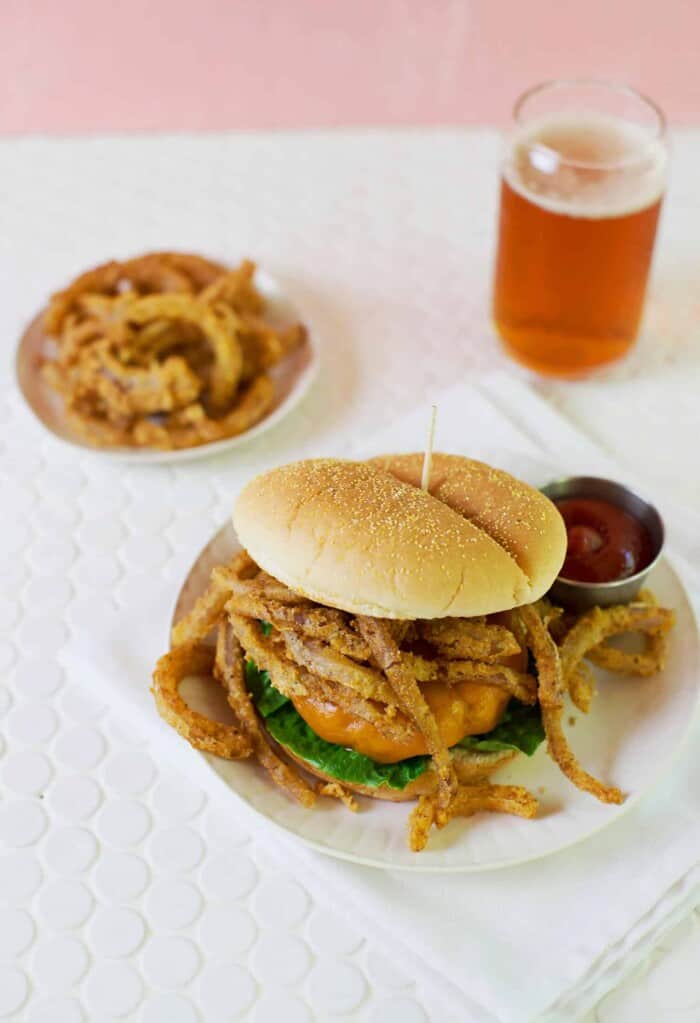
Complementing the savory depth of the garbanzo bean burgers are the crispy red onion straws. These offer a delightful textural contrast and a burst of sweet, slightly pungent flavor. The key to truly crispy red onion straws lies in proper slicing and dehydration. Thinly slicing a red onion, either by hand with a sharp knife or using a mandoline, is essential. The thinner the slices, the crispier they will become. After slicing, the onions need to be separated into individual rings or strands. A technique that often yields superior crispness involves soaking the sliced onions in ice water for at least 30 minutes. This process removes some of the sharpness and also helps to firm up the onion cells, contributing to a better crunch.
After soaking, it’s imperative to thoroughly dry the onion slices. Excess moisture is the enemy of crispiness. Patting them dry with paper towels or even using a salad spinner can be effective. The most common method for achieving crispy red onion straws is deep-frying. Heat a neutral oil (like vegetable or canola oil) in a pot or Dutch oven to around 350°F (175°C). Working in batches to avoid overcrowding the pot, fry the dried onion slices until they are golden brown and crisp. This process is quick, so vigilant attention is required. Remove the fried onions with a slotted spoon and drain them on a wire rack set over paper towels to allow excess oil to drip away. Season them immediately with salt, and optionally, a touch of sugar or a sprinkle of smoked paprika for added flavor.
An alternative to deep-frying, for those seeking a healthier option, is oven-baking. While they may not achieve the same level of shatter-crispness as their fried counterparts, baked red onion straws can still be satisfyingly crunchy. Toss the well-dried onion slices with a small amount of oil, salt, and any desired seasonings. Spread them in a single layer on a parchment-lined baking sheet. Bake at a moderate temperature, around 400°F (200°C), for 15-25 minutes, flipping them halfway through, until they are tender and lightly browned. The key is to cook them long enough to dehydrate and crisp, but not so long that they burn.
The nutritional profile of toasted sesame garbanzo bean burgers with red onion straws is a significant draw for health-conscious consumers. Garbanzo beans are a fantastic source of plant-based protein and dietary fiber, promoting satiety and aiding in digestion. They also provide essential minerals like iron, folate, and manganese. Sesame seeds, even in smaller quantities, contribute healthy fats, minerals like calcium and magnesium, and antioxidants. When made with whole wheat breadcrumbs or oat flour, the burgers gain additional complex carbohydrates and fiber. The red onion straws, while often fried, are primarily composed of vegetables, offering vitamins and antioxidants. Opting for baked onion straws further enhances the healthfulness. This combination creates a meal that is both satisfying and nutrient-dense, aligning with trends in healthy eating and plant-based diets.
From an SEO perspective, optimizing content for this recipe involves strategically incorporating relevant keywords. Phrases such as "garbanzo bean burger recipe," "vegan burger," "sesame burger," "plant-based burger," "vegetarian burger," "crispy onion straws," "homemade burger," and "healthy burger" are crucial. Long-tail keywords, which are more specific phrases that users might search for, can also be highly effective. Examples include "toasted sesame garbanzo bean burger with red onion topping," "easy vegan chickpea burger recipe," or "how to make crispy baked red onion straws for burgers."
The article’s structure should facilitate easy reading and search engine crawling. Clear headings and subheadings break up the text and highlight key topics. Bullet points can be used for ingredient lists or step-by-step instructions, making the information more digestible. High-quality images of the finished burgers and the preparation process are not only visually appealing but also beneficial for SEO, as they can be optimized with alt text containing relevant keywords.
The article’s introduction, or in this case, the immediate dive into the title and content, should establish the topic clearly. The body paragraphs should then systematically address the core components of the recipe, from ingredient selection and preparation to cooking methods and nutritional benefits. Each section should naturally incorporate relevant keywords without sounding forced or repetitive. For instance, when discussing the garbanzo beans, naturally weaving in "garbanzo bean burger" or "chickpea burger" adds value. Similarly, when describing the onion straws, using "red onion straws" or "crispy onion topping" is essential.
The call to action, while not explicitly requested in the prompt, would typically encourage readers to try the recipe, share their experiences, or explore other plant-based creations. In an SEO context, this could involve suggesting they save the recipe or link to related articles on the website.
The inherent appeal of this dish lies in its satisfying texture, complex flavor profile, and wholesome ingredients. The toasted sesame offers a unique nutty depth, setting it apart from more generic bean burgers. The red onion straws provide a delightful textural contrast, adding sweetness and a subtle bite. This recipe caters to a broad audience, including vegetarians, vegans, and omnivores seeking to incorporate more plant-based meals into their diet. The ease of preparation, coupled with readily available ingredients, makes it an accessible and appealing option for home cooks of all skill levels. The emphasis on wholesome ingredients aligns with growing consumer demand for healthy, flavorful, and sustainable food choices. The combination of toasted sesame, garbanzo beans, and crispy red onion straws creates a culinary experience that is both comforting and sophisticated, making it a standout option in the ever-expanding world of plant-based cuisine.

