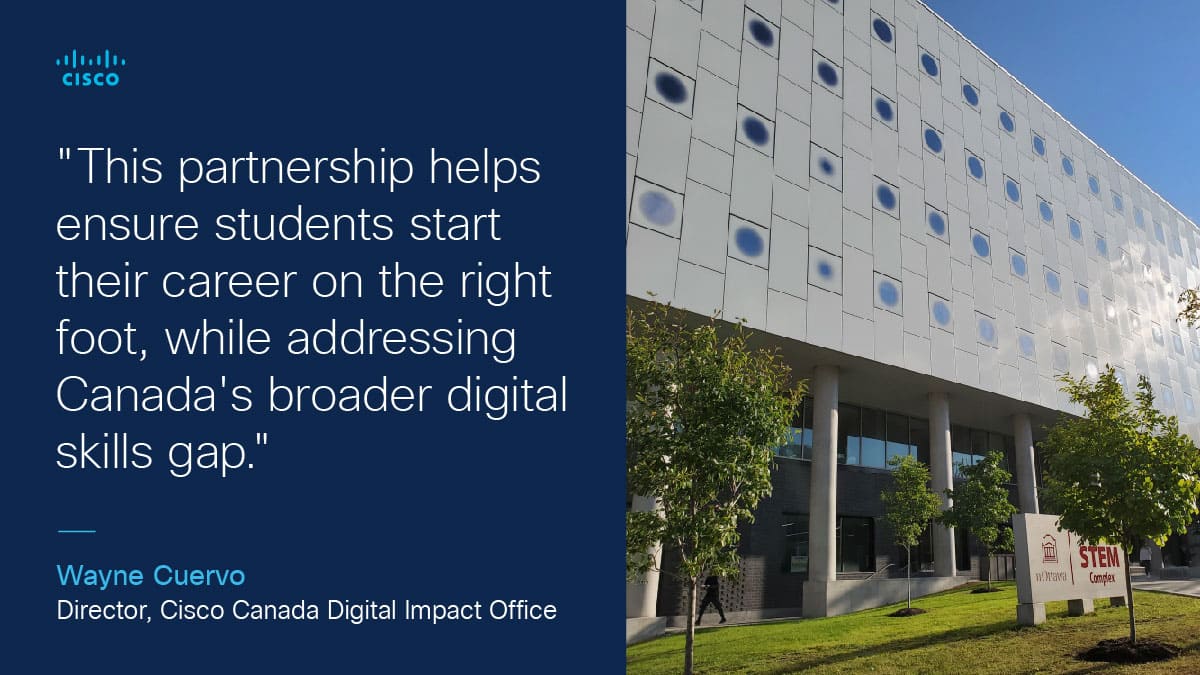

Cisco and University of Ottawa: Forging Job-Ready IT and Cybersecurity Talent for the Digital Economy
The University of Ottawa, in a strategic partnership with Cisco, is actively addressing the burgeoning demand for skilled IT and cybersecurity professionals by equipping its engineering students with the practical, job-ready competencies demanded by today’s rapidly evolving digital landscape. This collaboration transcends traditional academic instruction, integrating industry-leading Cisco technologies, certifications, and real-world problem-solving methodologies directly into the engineering curriculum. The objective is clear: to bridge the gap between theoretical knowledge and the practical application required for immediate impact in the IT and cybersecurity sectors. By leveraging Cisco’s extensive experience in networking, security, and digital transformation, the University of Ottawa is creating a pipeline of highly capable graduates poised to excel in a wide array of technology-driven roles.
At the heart of this initiative lies the integration of Cisco Networking Academy (NetAcad) programs. NetAcad, a global leader in IT skills training, provides a comprehensive curriculum covering foundational networking concepts, advanced routing and switching, network security, wireless networking, and emerging technologies like the Internet of Things (IoT) and automation. Engineering students at the University of Ottawa have access to these structured learning pathways, allowing them to build a robust understanding of how networks function, how to design and implement them securely, and how to troubleshoot common issues. This hands-on approach, facilitated by NetAcad’s virtual labs and simulation tools, ensures that students are not merely learning theory but are actively engaging with the technologies they will encounter in their professional careers. The curriculum is designed to be modular and progressive, enabling students to acquire multiple industry-recognized Cisco certifications, such as CCNA (Cisco Certified Network Associate), CCNP (Cisco Certified Network Professional), and CCNA Security, thereby validating their skills to potential employers.
The cybersecurity component of this partnership is particularly critical. As cyber threats become increasingly sophisticated and pervasive, the demand for skilled cybersecurity professionals has skyrocketed. The University of Ottawa, through its collaboration with Cisco, is embedding cybersecurity principles and practices throughout its engineering programs. This includes specialized courses focusing on threat detection and prevention, incident response, ethical hacking, digital forensics, and secure network architecture. Students gain exposure to Cisco’s security portfolio, including firewalls, intrusion detection systems, and security management platforms. The curriculum emphasizes a proactive security mindset, teaching students how to identify vulnerabilities, assess risks, and implement robust security measures to protect critical infrastructure and sensitive data. The integration of NetAcad’s cybersecurity modules ensures that students are trained on industry-standard tools and methodologies, preparing them to tackle real-world security challenges with confidence.
Beyond technical skills, the partnership fosters the development of essential soft skills and problem-solving abilities. Cisco’s educational philosophy emphasizes critical thinking, collaboration, and communication. Students participating in NetAcad courses are encouraged to work in teams, analyze complex scenarios, and present their findings and solutions. This aligns perfectly with the University of Ottawa’s commitment to producing well-rounded engineers who can not only design and implement technology but also articulate its value and manage projects effectively. The emphasis on practical application means students are often tasked with solving hypothetical but realistic network and security problems, mirroring the challenges they will face in their professional roles. This practical orientation makes them highly adaptable and capable of contributing from day one in their respective positions.
The University of Ottawa’s engineering faculty plays a pivotal role in this collaboration. Academics are actively involved in adapting and integrating Cisco’s educational materials into their courses, ensuring that the content is relevant to the specific learning objectives of each program. Furthermore, faculty members often undergo Cisco instructor training themselves, becoming certified to deliver the NetAcad curriculum. This dual expertise – deep academic understanding combined with industry-recognized Cisco certifications – provides students with a unique and invaluable learning experience. The faculty’s ability to contextualize Cisco technologies within broader engineering principles and research areas further enhances the learning for students, offering a more holistic and advanced understanding.
The benefits of this partnership extend beyond the immediate student experience. It strengthens the University of Ottawa’s reputation as a leading institution for technology education and research. By producing graduates with highly sought-after IT and cybersecurity skills, the university contributes to the growth and innovation of Canada’s digital economy. The partnership also provides opportunities for faculty research collaborations with Cisco, exploring emerging trends in networking and cybersecurity, and contributing to the advancement of the field. This synergy between academia and industry fosters a dynamic environment where cutting-edge knowledge is developed and disseminated.
Moreover, the Cisco NetAcad program at the University of Ottawa is designed to be accessible and inclusive. Efforts are made to reach diverse student populations, encouraging individuals from underrepresented groups to pursue careers in IT and cybersecurity. This commitment to diversity and inclusion is vital for building a robust and representative technology workforce. The program’s flexible delivery options, including online components and hands-on lab sessions, cater to different learning styles and schedules, further enhancing accessibility.
The practical implications for graduates are significant. Holding Cisco certifications demonstrates to employers that a candidate possesses a standardized, globally recognized set of skills. This significantly enhances their employability and earning potential. Many companies, particularly those operating in highly regulated industries or those with extensive IT infrastructure, actively seek out candidates with Cisco credentials. The University of Ottawa’s engineering graduates, equipped with these certifications and practical experience, are well-positioned for roles such as network administrators, network engineers, cybersecurity analysts, security engineers, systems administrators, and IT consultants, among many others.
The integration of Cisco technologies also exposes students to the realities of enterprise IT environments. They learn about the importance of scalability, reliability, and performance in network design, as well as the critical need for robust security measures in protecting valuable assets. The hands-on experience with Cisco’s hardware and software emulates real-world scenarios, allowing students to develop practical troubleshooting skills and understand how to configure and manage complex network devices. This experiential learning is invaluable, reducing the steep learning curve often associated with entry-level IT positions.
Furthermore, the partnership with Cisco provides a direct link to industry trends and future technologies. Cisco is at the forefront of innovation in areas like Software-Defined Networking (SDN), network function virtualization (NFV), and cloud networking. By incorporating these concepts into the curriculum, the University of Ottawa ensures that its students are not only prepared for current job demands but are also equipped to adapt to the future of IT and cybersecurity. This forward-looking approach is crucial in a field that is characterized by constant technological advancement.
The University of Ottawa’s commitment to integrating industry-leading programs like Cisco NetAcad into its engineering education is a testament to its dedication to producing graduates who are not only academically proficient but also immediately valuable to the workforce. This strategic collaboration is an investment in the future, ensuring a steady supply of skilled IT and cybersecurity professionals ready to meet the challenges and opportunities of the digital age. The synergy between academic rigor and industry-specific training, exemplified by this partnership, sets a high standard for engineering education and provides a clear pathway for students seeking successful and impactful careers in the technology sector. The success of this initiative is measured by the tangible outcomes for students: enhanced employability, advanced skill sets, and a direct contribution to the critical needs of businesses and governments in the digital economy.

