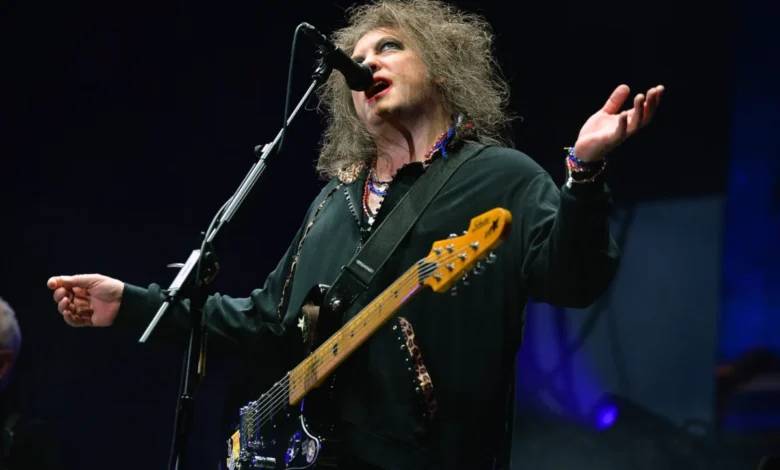
The unprecedented decision by FIFA to introduce a halftime show for the upcoming World Cup final has ignited a firestorm of controversy, with iconic musician Robert Smith of The Cure publicly denouncing the move in a series of impassioned social media posts. The announcement, which marks the first time such a spectacle will accompany the pinnacle match of the global football tournament, has been met with a range of reactions, from exhilaration to outright dismay.
Smith’s initial outburst on The Cure’s official Instagram account was a visceral expression of his disapproval. A single, elongated scream, captured as "AAAAAAAAAAAAAAAAAAGH!" was accompanied by a potent trifecta of hashtags: #Breadandcircuses, #MUGWANK, and #pleasejustfuckoff. This raw display of emotion immediately signaled the depth of his discontent, prompting widespread speculation about the specific targets of his ire.
The highly anticipated lineup for this historic halftime performance, reportedly curated by Coldplay frontman Chris Martin, is a star-studded affair, featuring global music titans Madonna, Justin Bieber, Shakira, and the K-pop phenomenon BTS. This ambitious assembly of artists underscores FIFA’s stated intention to elevate the World Cup final into a more comprehensive entertainment experience, aiming to capture a broader audience beyond traditional football enthusiasts.
FIFA President Gianni Infantino, in a statement released following the announcement, lauded the halftime special as a "groundbreaking spectacle." He articulated FIFA’s vision for the event, stating it would celebrate "football, music and our shared values, ensuring a legacy that transcends the final whistle." This framing suggests a desire to imbue the halftime show with a sense of cultural significance and enduring impact, positioning it as more than just a musical interlude.
However, Smith’s subsequent post offered a crucial clarification, aiming to temper the assumption that his criticism was directed at the individual performers. He emphasized that his objection was rooted in the "MUGWANK I D E A of a football World Cup final half time show." He further elaborated, imploring those who still didn’t grasp his sentiment to "adjust your red cap, your ‘I Janny + Donny + $$$’ t-shirt and… knock yourself out?" This pointed remark seemed to allude to a perceived commercialization or dilution of the sporting event’s integrity, suggesting a clash between the purity of the game and the intrusion of large-scale entertainment.
The implications of this historic halftime show extend beyond the artistic and cultural spheres, touching upon the very regulations and traditions of the sport. Reports from BBC News indicate a potential discrepancy regarding the show’s duration. Sources suggest the halftime entertainment could extend up to 25 minutes, a figure that directly conflicts with established tournament regulations stipulating that players’ breaks should not exceed 15 minutes. This potential breach of protocol raises questions about the logistical challenges and the prioritization of entertainment over the established flow of the match. FIFA representatives have not yet provided an immediate comment on this specific aspect of the controversy.
Adding another layer of complexity to the halftime festivities, Variety exclusively reported that the event will also feature a poignant tribute to Venezuela. Members of the New York Philharmonic and the Simón Bolívar Symphony Orchestra of Venezuela are slated to perform a joint piece honoring the nation, particularly in the wake of devastating earthquakes that have impacted the region. This inclusion introduces an element of solemnity and humanitarian focus amidst the pop spectacle, suggesting a multifaceted approach to the halftime programming.
Historical Context of Halftime Entertainment in Major Sporting Events
The concept of halftime entertainment in major sporting events is not entirely new, though its scale and integration have varied significantly. Historically, American football’s Super Bowl has been the most prominent stage for elaborate halftime shows, evolving from simple marching band performances to extravagant productions featuring global superstars. These performances have become an integral part of the Super Bowl experience, often generating as much pre-game and post-game discussion as the game itself.
The FIFA World Cup, however, has traditionally maintained a more reserved approach to its halftime intervals. The focus has primarily remained on the sport, allowing players a crucial period for tactical adjustments and recovery. While musical performances have occasionally featured at opening and closing ceremonies, a full-fledged, curated halftime show for the final match represents a significant departure from established norms. This shift reflects a broader trend in major sporting leagues to maximize audience engagement and commercial opportunities by integrating diverse entertainment elements.
The Evolution of The Cure and Robert Smith’s Public Persona
Robert Smith, as the frontman and principal songwriter for The Cure, has long been an influential figure in alternative music. Known for his distinctive vocal style, introspective lyrics, and visually striking stage presence, Smith has cultivated an artistic persona that often eschews mainstream conventions. The Cure’s extensive discography, spanning decades, has explored themes of love, loss, alienation, and existentialism, resonating with a dedicated global fanbase.
Smith’s outspoken nature and willingness to challenge established norms have been a consistent thread throughout his career. His recent social media commentary on the World Cup halftime show is not an isolated incident but rather a continuation of a public persona that values authenticity and artistic integrity above commercial pressures. His critiques often stem from a perceived commodification of art or a departure from genuine artistic expression.
Supporting Data and Industry Trends
The decision to introduce a halftime show for the World Cup final can be viewed within the broader context of the evolving media and entertainment landscape. Global sporting events are increasingly recognized as powerful platforms for brand exposure and revenue generation. The integration of music and entertainment aims to:
- Expand Audience Reach: Attracting viewers who may not be dedicated football fans but are drawn to the star power of the performers. This can lead to increased viewership for the broadcast and higher advertising rates.
- Enhance Sponsorship Opportunities: The halftime show provides a prime opportunity for sponsors to gain visibility and associate their brands with a global cultural moment.
- Create Viral Content: Performances by major artists are highly shareable on social media, generating buzz and extending the event’s reach beyond the broadcast itself.
- Globalize the Brand: By featuring a diverse range of international artists, FIFA aims to reinforce the World Cup’s status as a truly global event that transcends geographical and cultural boundaries.
The financial implications of such a spectacle are substantial. Production costs for high-profile halftime shows can run into millions of dollars, but this is often offset by increased advertising revenue and sponsorship deals. For instance, Super Bowl halftime shows have become multi-million dollar productions, with estimates for the production and artist fees often exceeding $10 million. While specific figures for the World Cup final are not yet public, the caliber of artists involved suggests a significant investment.
Broader Impact and Implications
Robert Smith’s vocal opposition, while representing a minority viewpoint, highlights a potential schism in how such events are perceived. For some, the halftime show represents an exciting evolution, a way to make the World Cup final a more inclusive and celebratory event. For others, like Smith, it risks diluting the sporting spectacle, transforming a moment of pure athletic achievement into a more commercialized entertainment product.
The debate also touches upon the inherent tension between sport and entertainment. While they often overlap, the core values can differ. Sport emphasizes competition, skill, and physical prowess, while entertainment often prioritizes spectacle, emotional engagement, and broad appeal. The integration of a major entertainment event into the heart of a championship match forces a consideration of where these two spheres intersect and where they might diverge.
Furthermore, the potential conflict with tournament regulations regarding halftime duration raises questions about FIFA’s governance and its willingness to bend rules for entertainment purposes. This could set a precedent for future events, potentially leading to further adjustments that prioritize spectacle over tradition.
The inclusion of a tribute to Venezuela, while a positive gesture, also adds another dimension to the discussion. It underscores the growing trend of major global events incorporating social and humanitarian messages, aiming to leverage their platform for broader societal impact.
In conclusion, the introduction of a halftime show for the FIFA World Cup final is a landmark decision that has sparked significant debate. While FIFA aims to create a "groundbreaking spectacle" that celebrates shared values and leaves a lasting legacy, figures like Robert Smith voice concerns about the potential impact on the integrity of the sport. As the event draws nearer, the discourse surrounding this historic halftime show will undoubtedly continue, reflecting the complex interplay between sport, entertainment, and cultural expression in the 21st century. The world will be watching not only the players on the pitch but also the artists on the stage and the implications of this bold new direction for the world’s most prestigious football tournament.