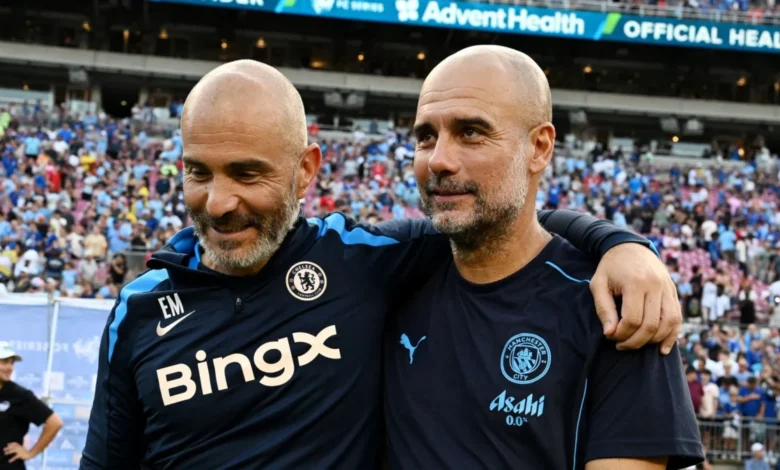
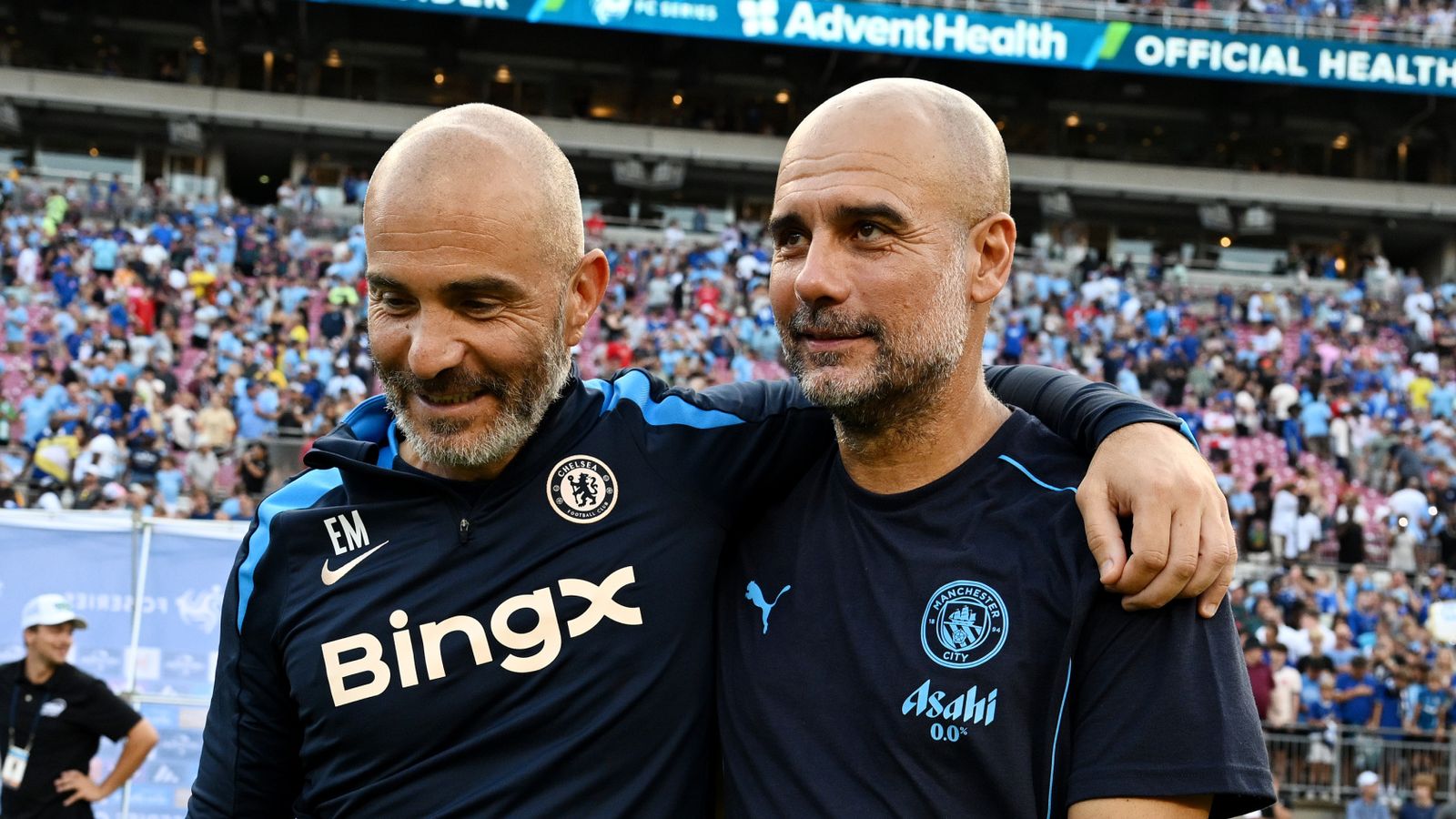
Manchester City embarks on a new managerial chapter, with Enzo Maresca taking the helm following Pep Guardiola’s monumental decision to depart. This marks Maresca’s third tenure at the club, having previously served as an academy coach during the 2020-21 season and as Guardiola’s esteemed assistant throughout the iconic 2022-23 campaign, the season that saw City achieve an unprecedented Premier League, Champions League, and FA Cup treble. While Maresca is intimately familiar with the pursuit of elite silverware, the ultimate responsibility of delivering it on such a grand scale remains a fresh challenge. This analysis delves into Maresca’s readiness to guide Manchester City to continued glory in the 2026-27 season, examining the crucial factors that will shape his initial impact and questioning whether trophies alone will define his success in the colossal shadow of Guardiola’s seismic exit.
A Sympathetic Opening Fixture List for Early Momentum
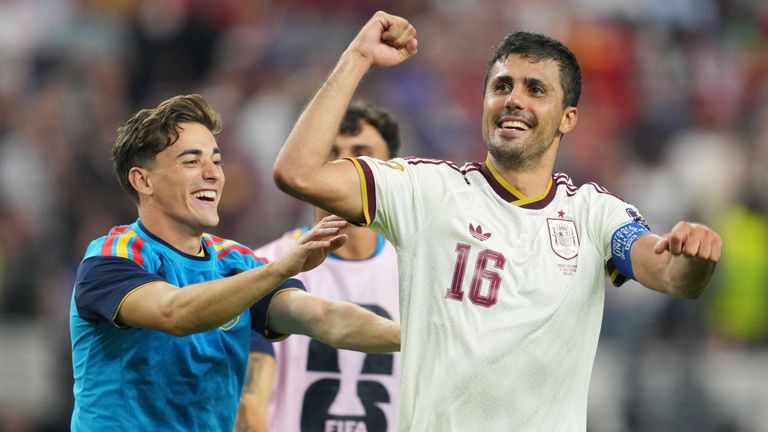
Maresca has been handed a notably favourable start to his managerial reign at the Etihad. The initial schedule pits Manchester City against Bournemouth, Crystal Palace, and Coventry City in their first three outings. This relatively benign run of fixtures provides a crucial opportunity for Maresca to establish an early rhythm and for the squad, particularly those who participated extensively in the recent World Cup, to reintegrate seamlessly. Players like Rodri, who endured nearly every minute of Spain’s arduous World Cup campaign, are particularly susceptible to fatigue. The initial favourable fixtures will allow for a phased return, ensuring key personnel are managed effectively to prevent burnout.
However, this perceived ease of schedule also brings its own pressure. Maresca will be under significant scrutiny to maximize these winnable games and avoid conceding ground in the nascent stages of the season. Any early stumbles could prove costly, especially with challenging encounters against fierce rivals Manchester United and Liverpool looming within the next three fixtures in September. These derby clashes are invariably more than just three points; they carry immense psychological weight and set the tone for the remainder of the campaign.
Upon his appointment, Maresca himself acknowledged the "dream situation" he finds himself in, inheriting a meticulously assembled squad brimming with exceptional talent and depth, a testament to Guardiola’s legacy. He highlighted the "consistency I need to do my job effectively," underscoring the robust foundation laid by his predecessor. The expectation, therefore, remains unequivocally high, mirroring the demands placed upon Guardiola. However, Maresca may not automatically benefit from the same degree of unparalleled job security that Guardiola enjoyed. While Maresca has cultivated a strong rapport with Chairman Khaldoon Al Mubarak, the unique stewardship Guardiola experienced may not be replicated.
Tactical Evolution: Maresca’s Imprint on City’s Style
The transition from Guardiola’s expansive, fluid system to Maresca’s tactical approach is not expected to be a complete paradigm shift, but rather an evolution. Both managers share a foundational belief in possession-based football, emphasizing control and aggressive pressing. However, Maresca is noted for his arguably more expansive approach, seeking to stretch opposition defenses by deploying wingers in advanced, wide positions. This contrasts with Guardiola’s recent emphasis on wingers tucking inside to create overloads centrally.
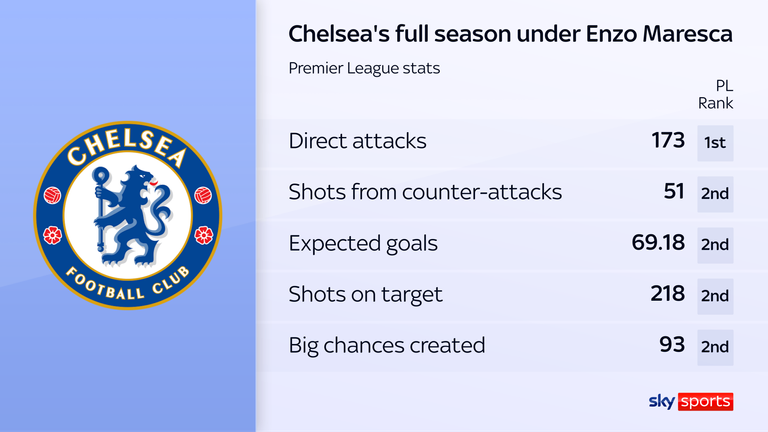
Guardiola’s City often showcased a remarkable fluidity in positional play, with defenders venturing into midfield, midfielders seamlessly transitioning to attack, and even full-backs adopting central defensive roles. Maresca’s preference for a more structured 4-2-3-1 formation, as evidenced during his tenure at Chelsea, suggests a move towards more defined player roles. This system typically relies on a high-functioning number ten to link play and orchestrate attacks. At Chelsea, Cole Palmer excelled in this role. At Manchester City, Maresca has a wealth of options, including Phil Foden and potentially the newly acquired Rayan Cherki, to fulfill this critical creative function.
Maresca’s Most Used Formation at Chelsea:
- (Insert a visual representation or detailed description of Maresca’s typical 4-2-3-1 formation, perhaps with player positions if data is available. If not, describe the key characteristics of the formation).
The adaptation to this more structured system may require a period of adjustment for players accustomed to Guardiola’s more amorphous tactical blueprint. The ability of individual players to comprehend and execute these refined roles will be paramount to Maresca’s success.
Squad Reinforcements and Emerging Leadership
A significant strategic shift has been underway at Manchester City over the past two to three transfer windows, spearheaded by Hugo Viana, with a clear objective to lower the average age of the squad. This initiative has seen the average age decrease from 29 to just over 25. However, this rejuvenation has coincided with a perceived void in leadership following the departures of key figures such as Bernardo Silva and John Stones this summer, and Kevin De Bruyne in previous windows.
While the departures create a leadership gap, the core of the team remains exceptionally strong. Pillars such as Rodri and Ruben Dias provide essential stability and experience. Last season also witnessed Erling Haaland taking on a more prominent leadership role. Furthermore, the presence of experienced and stable figures like Marc Guehi, Josko Gvardiol, and Mateo Kovacic ensures the team’s spine remains robust.
Recent transfer activity has been both costly and judicious. The acquisition of Elliot Anderson from Nottingham Forest for a substantial fee signifies an effort to inject robustness into the midfield and future-proof the squad’s long-term prospects. The capture of young Jeremy Monga from Leicester City further underlines this commitment to developing emerging talent.
Manchester City’s Recent Transfer Activity (Illustrative Data):
- Elliot Anderson: Signed for approximately £116 million, making him one of the most expensive British players. This investment signals a strong belief in his potential to impact the first team immediately and in the future.
- Jeremy Monga: Poached from Leicester City, this signing represents a strategic move to bolster the academy ranks and secure promising young talent.
The club’s transfer wishlist reportedly includes a right-back and a winger. Additionally, Manchester City is reportedly monitoring the progress of Lille teenager Ayyoub Bouaddi, who garnered significant attention for his performances at the World Cup for Morocco. Arsenal is also understood to be an admirer of the young talent.
Potential outgoings from the squad could include a selection of players, depending on valuations met by interested clubs. Names such as Savinho, Omar Marmoush, Nico Gonzalez, Jack Grealish, Tijjani Reijnders, and Rico Lewis have been mentioned in transfer speculation. The conclusion of the World Cup is expected to accelerate transfer activity across the league.
Navigating the Post-Guardiola Era: Maresca’s Foremost Challenges
The current juncture represents a unique period for Manchester City, marking the first time since the Abu Dhabi takeover that the club’s strategic direction feels genuinely uncertain. A decade ago, the entire focus was on meticulously building a club capable of attracting Pep Guardiola to the Premier League. That overarching vision has been realized and surpassed. The pertinent question now is: what comes next?
Manchester City has cultivated a deeply ingrained culture of winning silverware. Anything less than consistent trophy contention is unlikely to be tolerated for an extended period. The Etihad faithful arrive expecting not only enthralling entertainment but, above all, victory. The challenge for Maresca lies in successfully balancing these twin demands – aesthetic appeal and consistent success. This was a tightrope that proved challenging for Maresca to navigate during his tenure at Chelsea.
Maresca does, however, have the advantage of not being the sole managerial newcomer among the Premier League’s elite clubs. This dynamic creates a fluid and unpredictable landscape as established orders are tested. Manchester City appears poised to leverage this period of flux. The appointments of Andoni Iraola at Liverpool, Xabi Alonso at Chelsea, and potentially Michael Carrick at Manchester United (though to a lesser extent) all introduce elements of the unknown. This era of managerial uncertainty presents a fertile ground for ambitious individuals like Maresca to make their mark, a situation that calls for decisive action – a true sink or swim scenario.
The Shadow of the 115 Charges
A significant and persistent cloud hanging over Manchester City remains the 115 Premier League charges. Maresca will inevitably face considerable media scrutiny on this matter. Pep Guardiola, a master of public confrontation, navigated similar media glare throughout his distinguished career at Europe’s leading clubs. He possessed an astute understanding of the Manchester City press corps and the ability to decisively steer conversations away from unwelcome topics.
Maresca, while facing criticism at Chelsea, primarily did so on football-related grounds. His ability to effectively manage this unprecedented situation will likely have a profound impact on his first 12 months in charge, assuming a verdict is reached within that timeframe. The precedent set by how Guardiola handled such pressures will undoubtedly be a reference point, but Maresca must forge his own path in addressing these complex issues.
Enzo Maresca is scheduled to conduct his first press conference as Manchester City manager on Friday, July 24th. Sky Sports will provide comprehensive coverage through a dedicated live blog, ensuring followers can stay abreast of all the developments and statements made by the new City boss. The football world will be watching closely to see how Maresca prepares to steer the Sky Blues through this new and exciting chapter.