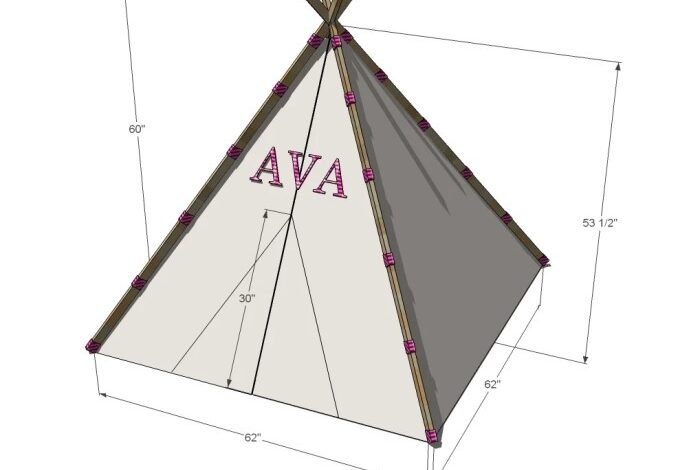
Make your own play teepee sets the stage for a fun and creative DIY project that will transform your home into a magical wonderland for your little ones. Imagine the joy on their faces as they enter their very own teepee, a space where imagination can run wild.
Building a play teepee is not only a rewarding experience, but it also allows you to create a personalized haven for your children, tailored to their unique tastes and interests. This guide will walk you through the process step-by-step, providing you with everything you need to know to build a safe and sturdy teepee that will become a treasured part of your home.
From choosing the right materials to adding creative touches, we’ll explore all the aspects of crafting this delightful structure. So, gather your tools, unleash your creativity, and get ready to embark on a fun-filled journey of building a play teepee that will bring endless hours of joy and wonder to your children.
Introduction to DIY Play Teepees
Play teepees are a popular choice for children’s play areas, providing a cozy and imaginative space for them to explore and create their own world. Building a DIY play teepee offers numerous benefits, including a fun and rewarding experience for parents and children, as well as the ability to personalize the teepee to match your child’s interests and preferences.
Benefits of DIY Play Teepees
Creating a DIY play teepee offers a number of advantages:
- Cost-effective:Building a play teepee from scratch is significantly cheaper than purchasing a pre-made one, allowing you to save money while still providing your child with a special play space.
- Personalized design:You can customize the size, shape, and decorations of your play teepee to perfectly suit your child’s tastes and needs, creating a truly unique and personal space.
- Bonding experience:The process of building a play teepee together can be a fun and rewarding experience for both parents and children, fostering a sense of teamwork and shared accomplishment.
- Educational opportunity:Building a play teepee can be an educational experience for children, teaching them about basic construction skills, spatial reasoning, and creativity.
Steps Involved in Making a Play Teepee
Building a play teepee is a relatively simple process that can be completed in a few steps:
- Gather materials:The first step is to gather the necessary materials, including wooden poles, fabric, rope, and other decorative elements. The type and quantity of materials will depend on the desired size and design of your teepee.
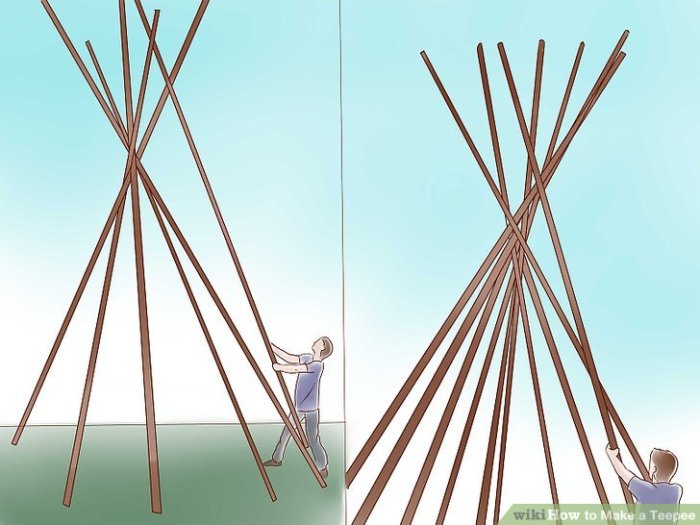
- Assemble the frame:Once you have your materials, you can start assembling the frame of your teepee. This typically involves connecting the wooden poles at the top to form a cone shape, and then securing them to the ground with ropes or stakes.
Building a play teepee is a fun and creative project for kids, but it can also be a great opportunity to teach them about the natural world. As you gather materials like branches and fabric, you can talk about the importance of caring for plants, like the ones you might have inside your home.
If you need some inspiration for keeping those plants thriving, check out these tips for keeping indoor plants alive. Once your teepee is complete, you can even bring some small, non-toxic plants inside to create a little indoor garden for your little explorers to enjoy!
- Cover the frame:After the frame is assembled, you can cover it with fabric. The fabric should be large enough to completely cover the frame and extend to the ground, creating a closed space. You can choose from a variety of fabrics, such as canvas, cotton, or even old blankets.
Building a play teepee for your little ones is a fun and creative project, but remember to factor in the cost of materials. It’s interesting to note how companies like Hydreight manage their finances, as seen in their recent normal course issuer bid announcement.
This kind of financial strategy can help you understand how to budget for your own projects, like crafting a cozy teepee for your kids.
- Decorate:The final step is to decorate your teepee to make it more appealing and fun for your child. You can add various elements like colorful streamers, pom-poms, beads, or even paint the fabric to create a unique design.
Materials and Tools
Creating a play teepee is a fun and rewarding DIY project. The materials you’ll need depend on the size, style, and desired durability of your teepee. Let’s explore the essential materials and tools to get you started.
Building a play teepee for my kids was a fun DIY project that brought back memories of childhood fort building. It reminded me of that feeling of cozy, magical escape that’s so essential for kids. I even found inspiration in a recent article about at home with micaela clouse in austin texas , where her home decor was so inviting and playful.
Now, whenever my kids climb into their teepee, I can’t help but smile knowing they’re creating their own little world of adventure.
Essential Materials
This section provides a comprehensive list of materials you’ll need to build a play teepee.
| Material | Quantity | Purpose |
|---|---|---|
| Wooden poles (for the frame) | 4-6 poles, depending on teepee size | Provide structural support and shape the teepee |
| Fabric (for the cover) | Enough to cover the frame with some overhang | Create the exterior of the teepee, providing a play area |
| Fabric ties (for securing the fabric) | At least 8-10 ties | Secure the fabric to the poles, creating a snug fit |
| Heavy-duty thread or cord (for sewing or tying) | As needed | Sew or tie the fabric together, ensuring durability |
| Optional: Decorative trim (for embellishment) | As desired | Add a personal touch and enhance the teepee’s aesthetic appeal |
Choosing the Right Materials, Make your own play teepee
This section delves into the different types of materials and their characteristics.
- Wooden Poles:
- Pine or Fir:Lightweight and affordable, suitable for smaller teepees.
- Cedar:Naturally insect-resistant and fragrant, offering durability and a pleasant aroma.
- Bamboo:Strong, lightweight, and eco-friendly, adds a unique aesthetic.
- Fabric:
- Canvas:Durable and weather-resistant, ideal for outdoor use.
- Cotton:Soft and breathable, suitable for indoor play areas.
- Polyester:Water-resistant and easy to clean, suitable for both indoor and outdoor use.
Essential Tools
This section Artikels the essential tools needed for building a play teepee.
- Measuring tape:For accurate measurements of the poles and fabric.
- Saw:To cut the wooden poles to the desired length.
- Drill:To create holes for securing the fabric ties.
- Scissors or rotary cutter:To cut the fabric to the desired size.
- Sewing machine or needle and thread:To sew the fabric together, creating a finished edge.
- Hammer:To secure the fabric ties to the poles.
- Safety goggles and gloves:For personal protection while working with tools.
Construction Techniques
The frame of the teepee is the foundation of the structure. It determines the overall shape, stability, and size of the teepee. There are several techniques for constructing the frame, each with its own advantages and disadvantages.The choice of material for the frame depends on factors such as desired durability, ease of construction, and cost.
Here are some common materials and their characteristics:
Dowel Frame
Dowels are cylindrical wooden rods that are readily available in various lengths and diameters. They are relatively inexpensive, lightweight, and easy to work with. To construct a dowel frame, you will need:
- Four dowels of equal length for the main poles.
- One shorter dowel for the top ring.
- A drill with a bit slightly smaller than the diameter of the dowels.
- Wood glue.
- Clamps.
The process involves drilling holes near the top of each main pole and inserting the top ring dowel. Wood glue can be used to secure the joints. Clamps can be used to hold the frame together while the glue dries.
Important:Ensure that the dowels are straight and free of knots for optimal stability.
PVC Pipe Frame
PVC pipes are a popular choice for teepee frames due to their durability, affordability, and ease of assembly. They are lightweight, waterproof, and can be easily cut and joined using PVC pipe fittings.To construct a PVC pipe frame, you will need:
- Four PVC pipes of equal length for the main poles.
- Four PVC elbows.
- PVC pipe glue.
- A saw for cutting the pipes.
The process involves cutting the pipes to the desired length and attaching the elbows to the ends of the pipes. The pipes are then connected to form a square base, and the top is joined using a PVC pipe connector.
Important:Use PVC pipe glue specifically designed for this purpose. It creates a strong and durable bond.
Wooden Pole Frame
Wooden poles are a traditional and sturdy material for teepee frames. They provide a rustic and authentic look, but they can be heavier and more difficult to work with than dowels or PVC pipes.To construct a wooden pole frame, you will need:
- Four wooden poles of equal length for the main poles.
- A saw for cutting the poles.
- A drill with a bit slightly smaller than the diameter of the poles.
- Wood screws or bolts.
- A hammer or drill driver.
The process involves drilling holes near the top of each main pole and connecting them using wood screws or bolts. Alternatively, you can use a wooden ring or a rope to secure the poles at the top.
Important:Ensure that the wooden poles are dry and free of rot for longevity.
Covering the Teepee: Make Your Own Play Teepee
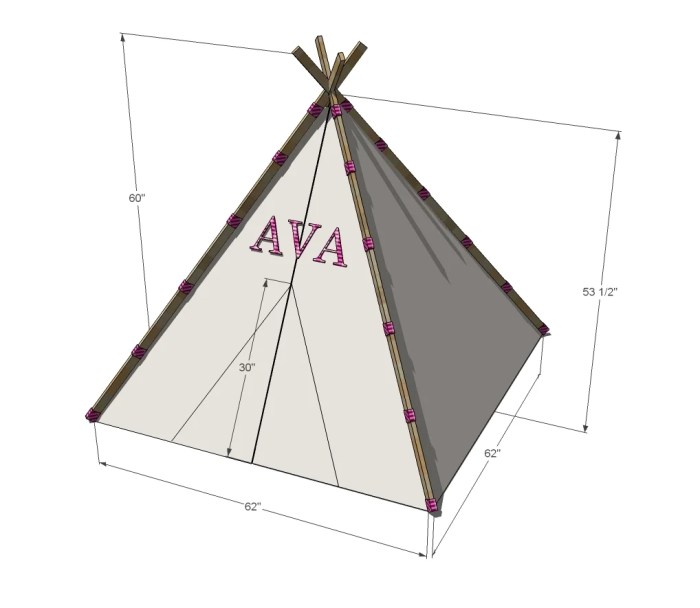
The teepee frame is complete, now it’s time to give it a personality! Choosing the right covering can transform your teepee from a simple structure to a cozy haven for play or relaxation. Let’s explore the options and tips for covering your teepee.
Fabric Options
The covering is what defines the look and feel of your teepee. It’s crucial to consider factors like durability, washability, and aesthetic appeal.
- Canvas:Durable, water-resistant, and breathable, canvas is an excellent choice for a long-lasting teepee. It comes in various weights and colors, offering versatility for both indoor and outdoor use.
- Cotton Fabric:Soft, comfortable, and easy to wash, cotton fabric is a popular choice for teepees. It’s ideal for indoor use, especially for younger children.
- Flannel:A cozy and warm option, flannel adds a touch of warmth and comfort to the teepee.
- Sheets:A budget-friendly and readily available option, sheets can be used as a temporary covering. However, they may not be as durable or aesthetically pleasing as other options.
- Blankets:Similar to sheets, blankets can provide a temporary and cozy covering.
Attaching the Covering
Several methods can be used to attach the covering to the teepee frame. Here are a few popular options:
- Sewing:For a permanent and professional finish, you can sew the fabric panels together and create openings for the poles. This method requires sewing skills and a sewing machine.
- Velcro:Attaching Velcro strips to the fabric panels and the poles provides a secure and easy-to-remove covering.
- Fabric Glue:Use fabric glue to attach the fabric panels to the poles. This method is quick and easy but may not be as durable as sewing or Velcro.
- Safety Pins:For a temporary solution, you can use safety pins to attach the fabric panels to the poles. However, this method may not be as secure as other options.
Remember to leave an opening at the top for ventilation and to create a sense of spaciousness inside the teepee.