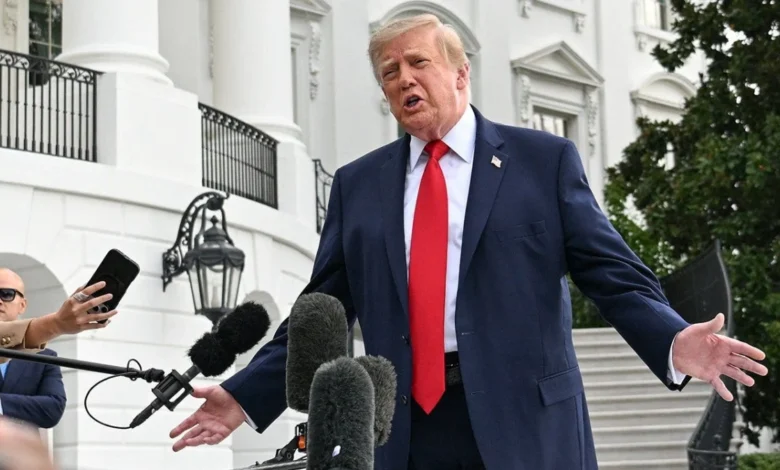
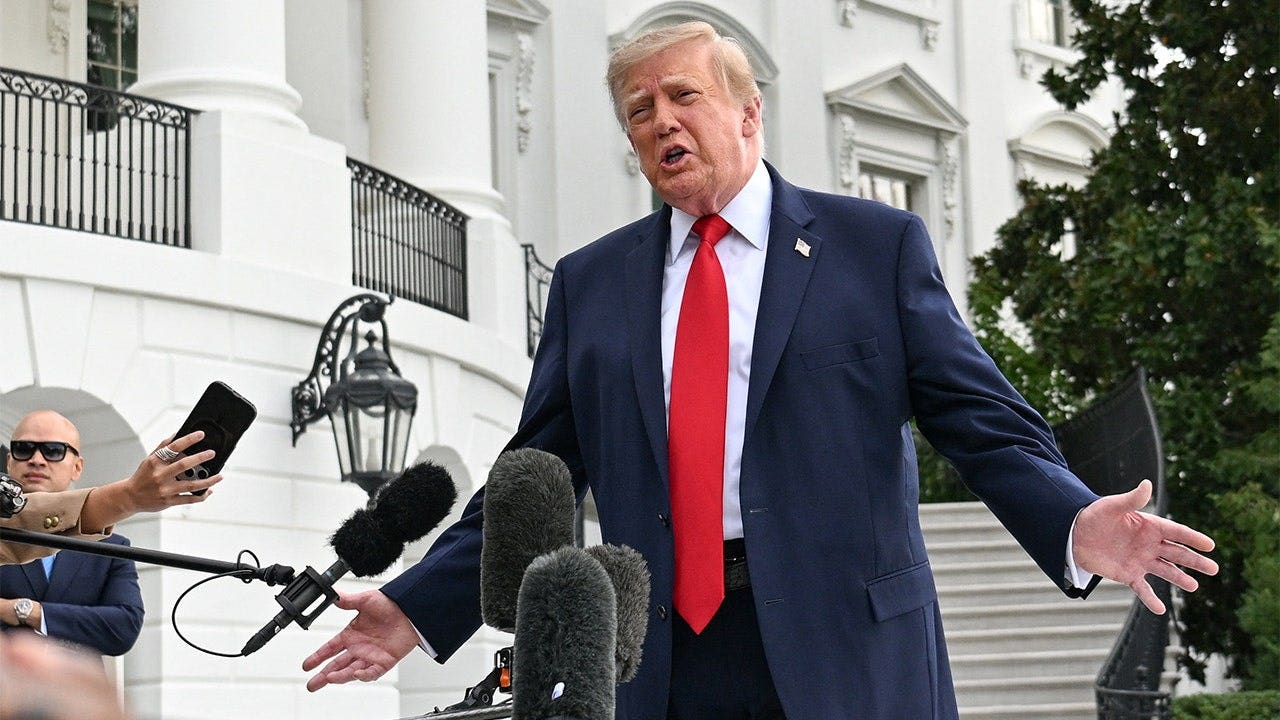
President Donald Trump addressed the escalating human cost of the ongoing war between Ukraine and Russia this Saturday, citing staggering casualty figures while reiterating his administration’s push for a diplomatic resolution. Speaking to reporters on the White House lawn, the President emphasized the urgency of securing a peace deal, noting that the intensity of the conflict has reached a critical juncture. His comments come as the administration navigates a complex strategy of providing defensive capabilities to Kyiv while simultaneously pressuring both sides to engage in substantive negotiations.
The President highlighted the grim reality of the battlefield, noting that approximately 25,000 individuals were killed during the previous month, following an even higher death toll of 32,000 in the preceding period. Trump characterized the majority of these casualties—roughly 97%—as soldiers, though he acknowledged the devastating impact on civilian populations. "What a shame," the President remarked, emphasizing the necessity of bringing the violence to a close before the onset of a harsh winter that could further complicate both military logistics and humanitarian conditions.
Historical Context and the Escalating Human Cost
The war in Ukraine, which began in February 2022, has evolved into a protracted struggle of attrition. Since the initial invasion, international observers and intelligence agencies have struggled to quantify the exact scope of the loss of life, though estimates consistently point to hundreds of thousands of casualties. According to data provided by the Center for Strategic & International Studies (CSIS), Russian forces alone have suffered up to 450,000 casualties since the inception of the conflict.
The figures cited by President Trump align with a broader, growing consensus among defense analysts that the rate of attrition is reaching unsustainable levels for both belligerents. The intensity of artillery exchanges, the use of drones, and the persistent trench warfare have turned sections of the front line into zones of extreme lethality. The scale of these losses has placed immense pressure on the social and economic fabric of both nations, prompting calls from various international leaders for an immediate cessation of hostilities.
Diplomatic Initiatives and the Path to Negotiation
The administration’s current diplomatic strategy appears to be twofold: strengthening Ukraine’s defensive posture while simultaneously facilitating high-level backchannel talks between Washington, Kyiv, and Moscow. President Trump confirmed that he has been in frequent communication with Ukrainian President Volodymyr Zelenskyy, urging him to prioritize a negotiated settlement.
Recent efforts to broker a peace deal have involved senior advisors, including Jared Kushner and real estate developer Steve Witkoff, who have been tasked with engaging in direct discussions with key stakeholders. These meetings in Moscow and Kyiv are designed to test the feasibility of a framework that could satisfy the security requirements of both nations. While the specifics of these proposals remain confidential, the stated goal is to establish a credible "off-ramp" for the conflict.
President Trump’s recent public statements suggest a degree of cautious optimism regarding these discussions. By explicitly stating that he wants both Zelenskyy and Putin to "settle," the White House is signaling a shift toward a more transactional diplomatic approach. The administration’s preference for a deal "before the heavy winter" suggests a desire to avoid a prolonged, frozen conflict that could potentially expand or require deeper U.S. financial and military commitment.
Strategic Shifts: The Patriot Missile Agreement
A major development in the U.S.-Ukraine security relationship was confirmed on Friday, with President Zelenskyy announcing that the United States has agreed to authorize the licensing and production of Patriot missile interceptors within Ukraine. This policy shift represents a significant evolution in U.S. defense strategy, as previous administrations—and even earlier iterations of the current one—had been hesitant to grant such production rights.
The Patriot missile defense system is considered the "gold standard" in anti-ballistic and anti-aircraft protection. By allowing Ukraine to manufacture these systems domestically, the U.S. is effectively providing Kyiv with a degree of strategic autonomy and long-term security. This decision, according to reports, was finalized during recent bilateral meetings at the White House.

"There are concrete agreements regarding Patriot licenses," Zelenskyy stated in a public post. "At our meeting, President Trump stressed that he had made his final decision: Ukraine will receive licenses to produce Patriot missiles."
This move is widely interpreted as a dual-purpose signal: it provides Ukraine with the necessary defensive tools to weather current Russian aerial campaigns, while simultaneously serving as a bargaining chip to demonstrate that the U.S. remains committed to Ukraine’s survival even as it pushes for a peace treaty.
Chronology of Recent Developments
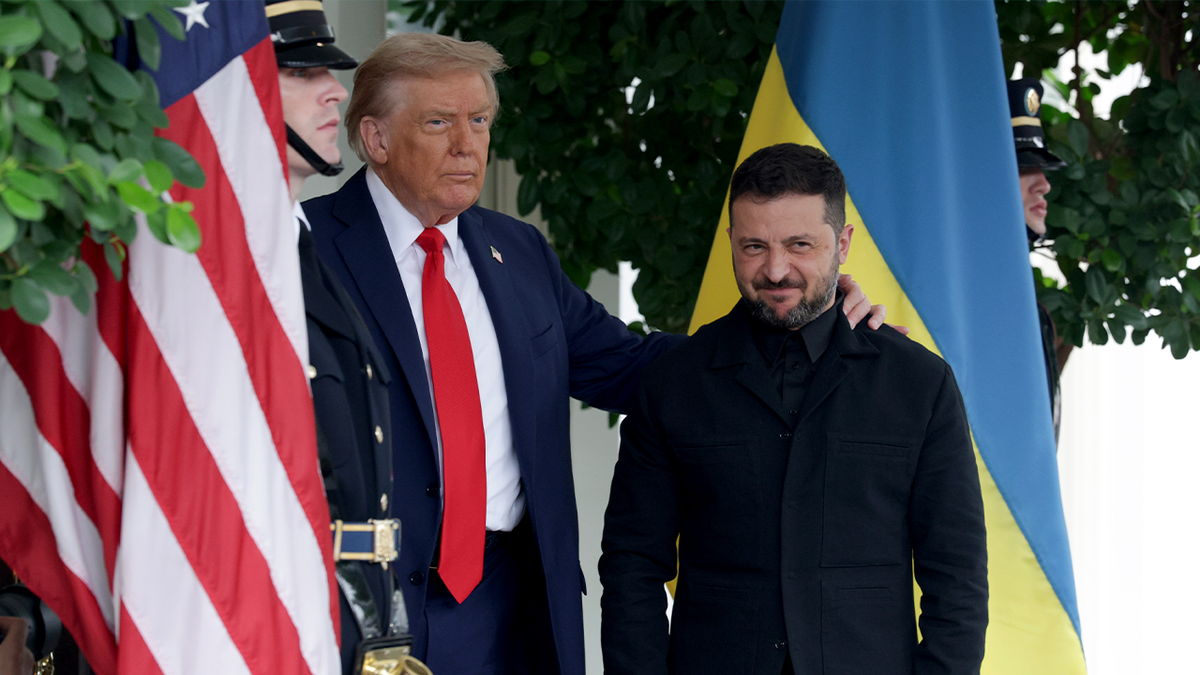
- August 18, 2025: President Trump and President Zelenskyy meet at the White House to discuss long-term defense cooperation and potential peace frameworks.
- Late September 2026: Reports emerge regarding the deployment of U.S. envoys, including Kushner and Witkoff, to Moscow for direct talks with the Kremlin.
- September 25, 2026: President Zelenskyy publicly acknowledges the finalization of the Patriot missile production agreement.
- September 26, 2026: President Trump speaks to the media on the South Lawn, citing specific monthly casualty figures and calling for an urgent end to the war.
Implications and Future Outlook
The implications of the current diplomatic push are profound. If successful, a negotiated peace would likely involve significant compromises, potentially including territorial adjustments and security guarantees that remain deeply contentious in both Kyiv and Moscow. Critics of such a deal argue that any agreement that does not fully restore Ukraine’s 1991 borders could be viewed as a reward for aggression. Conversely, proponents argue that the current rate of human loss necessitates a pragmatic approach, emphasizing that a prolonged war serves no one’s interest and risks further global economic instability.
From a military standpoint, the move to localize the production of Patriot systems suggests that the U.S. intends to transition from being a direct supplier of high-end weaponry to a facilitator of a sustainable, regional security architecture. This shift reduces the immediate burden on the U.S. defense industrial base while ensuring that Ukraine remains well-defended against future aggression.
The geopolitical landscape remains volatile. The involvement of various regional actors and the persistent threat of escalation mean that any "deal" reached will likely require rigorous international monitoring. As the winter months approach, the window for a negotiated settlement may narrow significantly. The White House, by engaging in direct, high-stakes diplomacy, is attempting to dictate the terms of the endgame, hoping that the combination of military aid and diplomatic pressure will bring the warring parties to the table.
Conclusion
As the conflict in Ukraine enters its latest phase, the discourse has shifted from purely military support to the pursuit of an exit strategy. President Trump’s emphasis on the staggering casualty numbers serves as a stark reminder of the humanitarian cost of the war, a factor that appears to be driving the administration’s urgency. Whether the current diplomatic outreach and the shift in defense policy will result in a lasting peace remains to be seen. However, the intensity of the current negotiations and the high-profile nature of the U.S. involvement underscore the global importance of the outcome.
As of late September 2026, the White House has maintained a firm stance on its dual track of supporting Ukraine’s sovereignty through local defense production while actively seeking a resolution to the hostilities. The coming weeks, characterized by shifting weather patterns and intensified diplomatic efforts, will likely be decisive in determining the direction of the conflict and the future of the region. The international community, including NATO allies and observers in the UN, continues to monitor these developments closely, waiting to see if the proposed "deal" can materialize into a sustainable, long-term ceasefire.