The global theme park industry has undergone a radical transformation over the last decade, shifting from simple amusement destinations to complex, multi-day immersive environments that require significant strategic planning. Central to this evolution is the ongoing comparison between the two primary North American hubs of the Walt Disney Company: the Disneyland Resort in Anaheim, California, and the Walt Disney World Resort in Lake Buena Vista, Florida. While both are built upon the foundation of "Magic Kingdom" style storytelling, the operational scale, logistical requirements, and psychological impact of each destination offer distinct experiences for modern families.
The Scale of the Disney Ecosystem
The most immediate differentiator between the two coastal destinations is physical scale. Disneyland, which opened in 1955, is often described by regular visitors as "intimate" or "quaint." Situated on approximately 486 acres in the heart of Anaheim, it is hemmed in by the surrounding city, creating a dense, walkable environment. In contrast, Walt Disney World is a sprawling municipality encompassing nearly 27,000 acres—an area roughly the size of San Francisco.
This Florida complex operates as a self-governing entity known as the Central Florida Tourism Oversight District. It features four major theme parks, two water parks, more than 30 resort hotels, and an extensive transportation network consisting of highways, ferries, monorails, and the "Skyliner" gondola system. For travelers accustomed to the compact nature of Disneyland, the transition to Disney World often presents a "logistics marathon," where moving between locations requires as much planning as the attractions themselves.
The Strategic Framework of Rope Drop and Lightning Lane
In the current era of theme park management, "engineered joy" is facilitated by sophisticated digital systems. Two primary strategies dominate the guest experience: "Rope Drop" and the "Lightning Lane" system.

The term "Rope Drop" originates from the early years of theme park operations when employees would literally drop a physical rope to signal the opening of the park. In modern parlance, it refers to arriving at the park gates 15 to 30 minutes before official opening. Data from park attendance tracking indicates that guests who utilize Rope Drop can often experience two to three high-demand attractions with minimal wait times before the peak mid-day crowds arrive.
The Lightning Lane system, which replaced the previous FastPass and Genie+ models, represents Disney’s shift toward a tiered, premium-access economy. Guests can purchase "Single Pass" or "Multi Pass" options to bypass standard standby lines. For high-demand attractions like the Seven Dwarfs Mine Train at Magic Kingdom or Slinky Dog Dash at Hollywood Studios, these passes are often essential for families seeking to maximize their time. Industry analysts note that these systems have turned the casual vacation into a data-driven exercise, where guests must manage their schedules via the "My Disney Experience" mobile application.
Chronology of a Multi-Park Expedition
A standard comprehensive visit to Walt Disney World typically involves a three-to-four-day itinerary, moving through the distinct thematic environments of the individual parks.
Day One: Magic Kingdom and the Heritage of Illusion
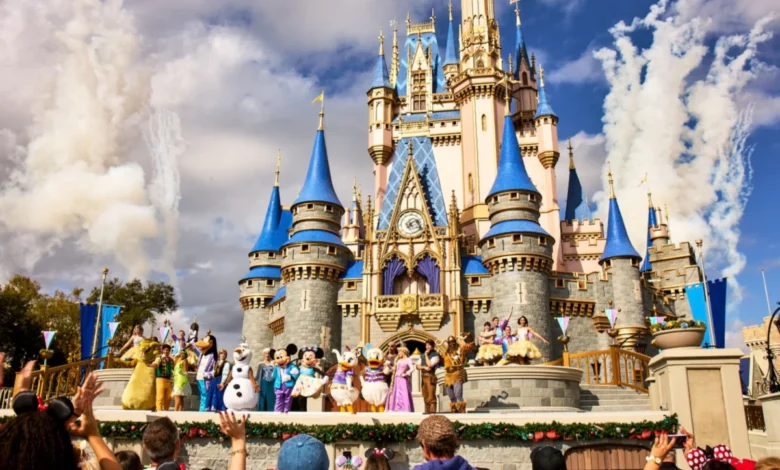
Magic Kingdom remains the flagship park, mirroring much of Disneyland’s original layout but on a grander scale. A key highlight for California residents visiting the Florida park is the Seven Dwarfs Mine Train, a tilting-vehicle roller coaster that is not available at the Anaheim location. The park’s operational philosophy relies heavily on the "dusk transformation," where advanced lighting and projection mapping on Cinderella Castle shift the atmosphere from daytime bustle to a more fantastical nighttime environment.
Logistical challenges are frequent in this high-traffic environment. For instance, the transition of thousands of guests through attractions like Pirates of the Caribbean requires a high level of "cast member" (employee) training to handle issues ranging from lost personal items to crowd flow management.

Day Two: Epcot and the Global Village Concept
Epcot (Experimental Prototype Community of Tomorrow) represents a departure from traditional theme park tropes, focusing instead on international culture and technological optimism. The park is divided into "World Celebration," "World Discovery," "World Nature," and the "World Showcase."
The World Showcase features 11 pavilions representing different nations, including Morocco, France, Japan, China, and Norway. This area has fostered an unofficial adult culture known as "drinking around the world," where guests sample traditional beverages from each pavilion. However, Epcot also houses some of the resort’s most advanced technology, such as Guardians of the Galaxy: Cosmic Rewind, a "reverse-launch" storytelling coaster that has been cited by engineers as a benchmark in ride vehicle mechanics.
Day Three: Hollywood Studios and Narrative Immersion
Disney’s Hollywood Studios has transitioned from a behind-the-scenes look at filmmaking to a park dedicated to "living the movies." This is most evident in Star Wars: Galaxy’s Edge, a 14-acre immersive land that represents a massive capital investment—estimated by industry reports to be in the range of $1 billion across both coasts.
The park features Star Wars: Rise of the Resistance, an attraction widely considered the most complex theme park ride ever built. The experience combines four different ride systems, including trackless vehicles, a motion simulator, and a drop tower, all integrated into a 20-minute narrative. Complementing this is Oga’s Cantina, a themed lounge that utilizes sensory details—such as "Blue Milk" and smoking mocktails—to maintain the illusion of a lawless galactic outpost.
The Role of On-Site Accommodations
A critical component of the Walt Disney World strategy is the "on-property" stay. Resorts like Disney’s Contemporary Resort, an iconic A-frame structure designed by Welton Becket and premiered in 1971, serve to keep guests within the "Disney bubble." The Contemporary is notable for its monorail track, which runs directly through the center of the hotel’s Grand Canyon Concourse.

Staying on-site offers several operational advantages:
- Proximity: Sidewalk access to Magic Kingdom and direct monorail links reduce transit time.
- Early Entry: On-site guests are granted 30-minute early access to parks, a crucial advantage for Rope Drop strategies.
- Immersion: The staff, or "cast members," maintain a consistent thematic performance, referring to characters as mutual acquaintances and utilizing specific terminology to uphold the "shared illusion."
Supporting Data and Economic Impact
The scale of Disney World is not merely physical but economic. According to a 2023 study by Oxford Economics, Disney’s Florida operations generated $40.3 billion in total economic impact across the state. The resort is the largest single-site employer in the United States, supporting over 263,000 jobs directly and indirectly.
Visitor data suggests that the average guest at Walt Disney World walks between 7 and 10 miles per day (approximately 15,000 to 20,000 steps). This physical demand, combined with Florida’s subtropical climate—characterized by sudden theatrical downpours and high humidity—creates a high-stress environment that contrasts with the "vacation" label.
Broader Implications for Modern Tourism
The "Disney World experience" serves as a case study for the broader travel industry regarding the "collapse of distance" between parent and child. Psychologists and sociologists have noted that these environments are engineered to create "rare alignment" between generations, where both adults and children are absorbed in the same narrative fantasy.
However, the cost of this alignment is high. The transition from a "quaint" experience to an "epic" one requires guests to surrender to a high-degree of corporate orchestration. From the "Lightning Lane" purchases to the "mobile ordering" of food, the experience is increasingly transactional.

Conclusion: The Mythmaking Scale
Ultimately, Walt Disney World operates on a scale of mythmaking. While critics often point to the "corporate" or "expensive" nature of the parks, proponents argue that the resort provides a unique form of modern folklore. By giving physical shape to cinematic stories and inviting guests to "live inside" them, Disney has created a form of tourism that functions like a modern world’s fair.
For the modern family, the choice between Disneyland and Disney World is a choice between intimacy and spectacle. While the Florida parks represent a significant investment of time, money, and logistical effort, they offer a level of immersion that remains the benchmark for the global theme park industry. As the company looks toward its next decade of expansion, the focus remains on "engineered joy"—a complex, high-tech endeavor that continues to define the travel habits of millions.