Denali National Park and Preserve remains one of America’s most magnificent and enduring wilderness destinations, drawing hundreds of thousands of visitors annually to its sprawling 6-million-acre expanse. However, navigating this subarctic sanctuary requires careful planning, particularly in light of ongoing geological challenges that have fundamentally altered how travelers experience the park’s interior. Established to protect the rugged Alaskan interior and its iconic wildlife, Denali offers a complex mix of backcountry adventure, unique cultural heritage, and modern logistical hurdles that demand both preparation and flexibility from travelers.
Main Facts and Current Access Limitations
The cornerstone of any Denali adventure has traditionally been the 92-mile Denali Park Road, the singular vehicular artery traversing the park. Historically, narrated tour buses and hop-on, hop-off transit systems conveyed visitors deep into the wilderness, offering prime opportunities for wildlife viewing, landscape photography, and access to remote trailheads.
That operational landscape changed significantly due to a persistent and aggressive land slump at Pretty Rocks, located near mile 43 of the park road. The destabilization of the mountainside has forced the National Park Service (NPS) to implement a partial closure of the road, restricting all vehicle traffic—including standard tour and transit buses—to turn around at mile 43. Consequently, deep-interior destinations that were once standard day trips are currently unreachable via the traditional road network, shifting visitor traffic patterns toward the park’s entrance and eastern corridors.
Despite these restrictions, visitors still have multiple avenues for initial exploration. For travelers seeking a cost-effective introduction to the park road, a complimentary courtesy shuttle operates between the Denali Visitor Center and the Savage River at mile 15. Furthermore, independent travelers frequently rent bicycles from local outfitters situated just outside the park gates, enabling self-paced excursions along the accessible lower stretches of the road. During peak summer seasons, private vehicles are permitted to drive as far as the Savage River checkpoint, though parking availability remains severely constrained due to high demand and limited infrastructure.
Chronology of the Pretty Rocks Landslide and Road Closures
The logistical constraints currently facing Denali National Park are the result of rapid and observable climate-driven changes in the Alaskan interior. The instability at Pretty Rocks is not a sudden, single-event rockslide, but rather a continuous, accelerating downward movement of a rock glacier situated high above the park road.
In 2014, park officials first noticed subtle shifts in the roadbed at Pretty Rocks, requiring routine maintenance and minor fills to keep the corridor passable. By 2018 and 2019, the rate of displacement increased dramatically, shifting from centimeters per year to centimeters per day. The situation reached a critical threshold in August 2021 when a massive section of the road slumped away faster than maintenance crews could rebuild it, forcing the immediate closure of the road west of the site.
In response to the economic and logistical fallout, the National Park Service commissioned extensive engineering studies to find a permanent solution. The approved mitigation strategy involves constructing a 400-foot-long steel bridge across the rapidly moving slide area. According to current project timelines managed by the Federal Highway Administration, construction is slated to progress through the mid-2020s, with a projected reopening of the road past mile 43 anticipated around 2026, pending stable geotechnical conditions and construction milestones.
Encountering North America’s Tallest Peak
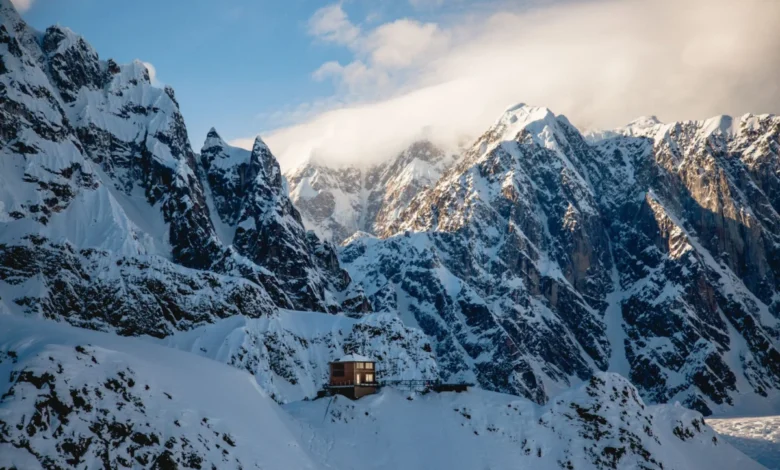
Rising 20,310 feet above sea level, Denali—formerly known as Mount McKinley—dominates the North American continent and serves as the visual anchor of the park. Managing expectations regarding visibility is a critical component of trip preparation. Due to its massive scale, the mountain generates its own localized weather patterns, meaning it is entirely obscured by clouds roughly two-thirds of the time during the peak summer visitor window.
For visitors determined to catch a glimpse of the summit, strategic positioning is essential. The lower elevations near the park entrance do not offer views of the peak due to intervening topography. Travelers must journey at least to mile 9 of the park road to clear the foothills and achieve the necessary elevation angle for a viewing window. For those seeking an elevated vantage point on foot, the Mountain Vista trail near mile 12 provides panoramic outlooks.
When ground-level weather obstructs the view within the park boundary, alternative viewing corridors remain viable. The Alaska Railroad, which runs along the eastern border of the park, offers panoramic railcar windows specifically designed for mountain viewing. Additionally, motorists traveling along the Parks Highway can utilize several well-marked scenic waysides that offer distant, unobstructed perspectives of the Alaska Range on clear days.
Hiking Safety, Trail Networks, and Ranger Guidance
Beyond the park road, Denali offers a diverse trail system catering to various skill levels, alongside a unique policy allowing unrestricted off-trail hiking. Prominent routes include the Savage River and Savage Alpine trails, which showcase alpine tundra ecosystems, and the Triple Lakes Trail, where hikers frequently spot local fauna, including resident beaver populations.
Unlike heavily regulated national parks in the contiguous United States, Denali operates under an open-country policy. Hikers are permitted to disembark at any designated pullout along the park road and explore the wilderness off-trail. However, this freedom comes with significant responsibilities regarding wilderness safety.
Wildlife encounters represent a primary operational and safety concern for park management. Denali is prime habitat for both grizzly and black bears, as well as wolves, moose, and Dall sheep. To mitigate safety risks, the National Park Service strongly mandates that all backcountry visitors carry EPA-approved bear spray. Equipment rentals are readily available through the Alaska Geographic store adjacent to the Denali Visitor Center.
Park rangers emphasize proactive education over reactive enforcement. Throughout the summer season, rangers host daily orientation sessions, safety briefings, and guided walks both on and off-trail. These programs are designed to educate visitors on proper food storage, trace principles, and behavioral protocols during unexpected wildlife encounters.
Working Sled Dogs of Denali
A distinctive cultural and operational asset of Denali National Park is its status as the home of the National Park Service’s only working kennel of sled dogs. Established during the early decades of the park’s history, the sled dog team is not merely a historical exhibition; it serves a vital functional purpose.
During the long, snow-covered winter months when motorized vehicles are prohibited or rendered impractical by deep snowdrifts, park rangers utilize the canine teams to patrol the park’s vast wilderness boundaries, conduct scientific research, and transport supplies. This sustainable method of travel preserves the wilderness character of the protected area while honoring the historical traditions of Alaskan frontier life.
During the summer visitor season, the kennels remain a major public attraction. Rangers host multiple daily public demonstrations detailing the care, training, and operational history of the working dogs. Visitors can access the kennels via a dedicated walking path from the park entrance or utilize the park’s complimentary shuttle system.
External Adventures and Gateway Outfitters
Because the interior park road is restricted past mile 43, a burgeoning sector of commercial tourism has developed along the immediate boundaries of Denali National Park. These private outfitters offer motorized and non-motorized excursions that allow visitors to experience the subarctic landscape from alternative perspectives.
Whitewater rafting on the Nenana River—which delineates the eastern border of the park—ranks among the most popular external activities. Family-owned operations such as Denali Raft Adventures guide participants through varying classes of rapids, balancing high-adrenaline whitewater runs with calmer interpretive floats.
For land-based exploration, visitors frequently choose between motorized and equestrian tours. Denali Horseback Tours operates guided trail rides through the foothills overlooking the park, offering a quiet, non-motorized alternative to mechanical transit. Conversely, for travelers seeking higher speeds and rugged terrain, operators like Denali ATV Adventures provide guided off-road excursions along the park periphery.
For those requiring deep backcountry access inside the restricted zones, specialized permitted guide services such as Alaska Alpine Adventures provide custom hiking and backpacking expeditions. Because these operators hold specific commercial use authorizations from the National Park Service, they can legally lead clients into remote interior regions that are otherwise difficult to access independently during the ongoing road closures. However, these excursions require a high degree of physical fitness and thorough preparation for extreme wilderness conditions.
Economic and Ecological Implications of Park Access
The restrictions on the Denali Park Road have created notable economic ripples throughout the gateway community of Healy and the broader Denali Borough. Local lodging operators, tour bus companies, and hospitality ventures have had to adapt to altered tourist itineraries. While overall visitation numbers have remained robust, the average length of stay for tourists has shifted as visitors adjust to shorter excursion distances.
Ecologically, the partial closure of the road has yielded measurable, albeit temporary, benefits for local wildlife populations. Researchers note that reduced vehicular traffic west of mile 43 has resulted in decreased human-wildlife friction in key Dall sheep lambing grounds and grizzly bear foraging areas. Wildlife habituation along the lower road corridor has prompted ongoing monitoring by park biologists to ensure that shifting human concentrations do not negatively impact animal behavior.
As the National Park Service continues its engineering work at Pretty Rocks, the future of Denali National Park remains a balance between infrastructure resilience and wilderness preservation. Visitors arriving in the interim are encouraged to monitor real-time road conditions through official park channels, secure shuttle and tour reservations well in advance, and maintain a flexible mindset when experiencing one of North America’s most dynamic natural environments.