The culmination of three years of intense logistical planning, engineering precision, and architectural ambition is set to unfold this weekend in the Spanish capital. The Madring circuit, a bespoke Formula 1 street track, marks a pivotal moment in the evolution of modern motorsport. Designed by Jarno Zaffelli, the founder of the globally recognized firm Dromo, the circuit represents a departure from traditional street track design, aiming to blend the high-speed demands of Grand Prix racing with the unique topography of Madrid’s Valdebebas district. As the 2026 Spanish Grand Prix prepares to host its inaugural race from September 11 through September 13, the global automotive community remains fixated on whether this ambitious project can redefine the standard for urban racing.
A Legacy of Engineering and Design
Jarno Zaffelli is no stranger to the demands of high-performance racing. Over a 25-year career, his firm, Dromo, has been responsible for the development of more than 200 courses across the globe. However, the Madring project stands out as the most complex undertaking in his portfolio. The track, which measures 5.4 kilometers in total length, is a hybrid construction that integrates 1.5 kilometers of existing public roads with newly commissioned segments that wind through the perimeter of the IFEMA convention center.

The design philosophy behind the circuit was rooted in a desire to avoid the common pitfalls associated with street racing. Historically, Formula 1 street circuits—often characterized by narrow corridors and 90-degree turns—have been criticized for limiting overtaking opportunities and producing processions rather than races. Zaffelli sought to disrupt this narrative by focusing on the "flow" of the track. By manipulating elevation and banking, the design team has attempted to create a layout that demands technical proficiency while encouraging high-speed maneuvers.
The Engineering Behind La Monumental
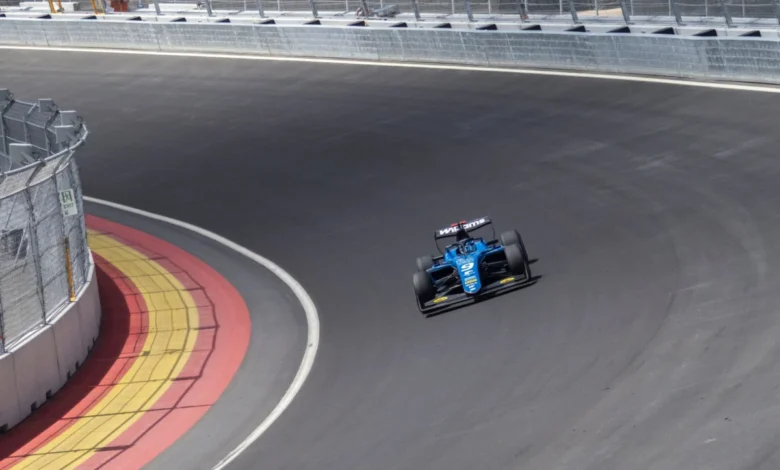
The centerpiece of the track is undoubtedly "La Monumental," a highly banked turn that has already generated significant industry buzz. With a 24% slope gradient and a peak elevation of 10 meters, it is poised to be the second steepest corner on the entire Formula 1 calendar. This specific section of the track is intended to test the limits of modern F1 aerodynamics and mechanical grip.
Zaffelli notes that the drama of the corner is amplified by the preceding elevation changes. "A banked corner on its own can be static," Zaffelli explains. "What makes this design interesting is the 10 meters of elevation change in the segments leading into the turn. The objective of our design is to influence the driver’s sensory experience, making them feel as if they are traveling faster than the speedometer suggests."

The construction process, which spanned 17 months starting in April 2025, involved a massive logistical effort. Approximately one million square meters of earth were moved to sculpt the track’s topography, ensuring that the circuit met the stringent safety and performance requirements mandated by the FIA.
Chronology of Development
The path to the inaugural 2026 Grand Prix was paved with extensive bureaucratic and environmental negotiations.
- Early 2023: Initial concept designs were drafted, focusing on the integration of the IFEMA convention center and the surrounding Valdebebas infrastructure.
- 2024: Detailed environmental and transport impact studies were conducted. Zaffelli’s team made the strategic decision to reduce the reliance on public roads by more than 50% from original sketches, a move intended to streamline coordination with the 50-plus municipal and governmental entities involved in the project.
- April 2025: Official groundbreaking occurred, beginning a 17-month construction window.
- August 2026: A series of Formula 3 test sessions provided the first real-world data on the circuit’s performance characteristics.
- September 11–13, 2026: The official launch of the Spanish Grand Prix at the Madring circuit.
The Impact of the Netflix Effect
The development of the Madring circuit coincides with an unprecedented surge in Formula 1’s popularity. The success of the Netflix docuseries Drive to Survive has fundamentally altered the sport’s demographic, bringing in a younger, more globally diverse audience. This increased interest has translated into an aggressive expansion of the F1 calendar, with new venues in high-profile locations like Miami, Las Vegas, Jeddah, and Lusail.

This expansion reflects a strategic shift in how Formula 1 approaches its footprint. The sport is increasingly favoring "destination races"—events that are as much about the surrounding urban environment and hospitality as they are about the racing itself. By situating the race within the city limits of Madrid and utilizing the massive infrastructure of the IFEMA center, the event organizers are positioning the race as a centerpiece of the city’s cultural and economic calendar.
Skepticism and Technical Challenges
Despite the excitement, the track has faced scrutiny from seasoned veterans in the industry. Robert Barnard, a renowned track designer who spearheaded the development of Australia’s Adelaide Street Circuit in the mid-1980s, has expressed reservations regarding the safety and flow of the new layout.
Barnard points to the results of the Formula 3 test sessions in August, which were interrupted by 19 red flags. While junior series are notoriously more volatile than Formula 1, the frequency of incidents suggested that the circuit’s blind corners and tight radii could pose a significant challenge for drivers during the opening weekend.

"These drivers are exceptionally talented, but they are also risk-averse when the environment is unpredictable," Barnard noted. "If the sight lines are obscured, the likelihood of a bottleneck or a collision during the opening lap increases significantly."
Conversely, longtime analyst David Hobbs offers a more balanced perspective. Hobbs, who has covered the sport since the 1970s, argues that the red flags in the feeder series were expected and do not necessarily reflect how the more sophisticated F1 cars will handle the surface. "The mechanics will have their work cut out for them," Hobbs remarked. "They will need to adjust the ride heights and stiffen the suspension to handle the high G-forces at the banked turn. It is going to be a technical race, and that is where the sport becomes truly interesting."
Broader Implications for Urban Racing
The success of the Madring circuit will likely serve as a blueprint for future urban track designs. The ability to create a "stadium-like" atmosphere, as Zaffelli has done by placing grandstands directly adjacent to the track at La Monumental, is a key component of the modern fan experience. By ensuring that spectators can feel the vibration and intensity of the cars, the designers are attempting to bridge the gap between the detached viewing experience of television and the visceral reality of trackside attendance.

Furthermore, the logistical success of coordinating with the Madrid transportation department, local environmental agencies, and the nearby international airport demonstrates that complex urban projects are possible with sufficient foresight. If the event runs smoothly, it will reinforce the viability of city-center racing as a sustainable long-term model for the sport.
Looking Ahead
As the paddock arrives in Madrid, the focus is squarely on the performance of the drivers and the durability of the track surface. The 2026 Spanish Grand Prix is not merely a race; it is a test of a new philosophy in track architecture. For Jarno Zaffelli, the weekend is the culmination of a professional life spent analyzing the geometry of speed.
"I want people to walk away recognizing that it is possible to build a street circuit that is not boring," Zaffelli said in a recent interview. "We have pushed the limits of what a city can host, and I am confident that the drivers will rise to the challenge."

Whether the race produces a tactical masterclass or a chaotic debut remains to be seen. However, one thing is certain: the eyes of the world will be on Madrid this weekend, as the city attempts to cement its place in the history of Formula 1. For the sport, the Madrid experiment is an essential step in its ongoing quest to blend the historic prestige of Grand Prix racing with the fast-paced, urban future of the 21st century.