Fans of American literary icon Truman Capote will soon have the unprecedented opportunity to acquire physical fragments of his storied life. Nearly 400 personal items, ranging from the mundane to the deeply sentimental, are set to hit the auction block in a sale managed by Cornell Auction. This collection, which offers an intimate glimpse into the world of the author of In Cold Blood, stems from the estate of Gerald Clarke, the acclaimed journalist and biographer who spent decades preserving the legacy of the man who redefined 20th-century American prose.

The Provenance of the Collection
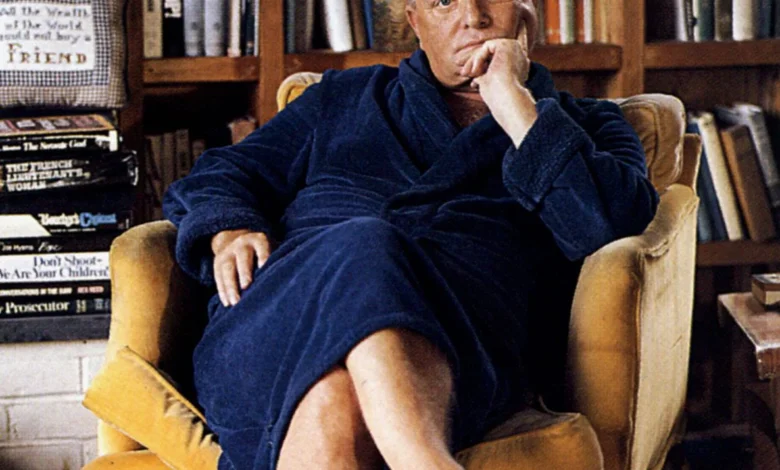
The items up for auction carry significant historical weight, as much of the collection was documented during a 1976 feature in Architectural Digest. That spread provided a rare window into Capote’s secluded beach house in Sagaponack, Long Island—a sanctuary he famously described as "Kansas with a sea breeze."
Gerald Clarke, now 89, became the steward of many of Capote’s belongings following the author’s death in 1984 at the age of 59. As Clarke enters a new phase of life and downsizes, he has decided to release these treasures to the public. The auction is scheduled for November 21, with an online preview and the commencement of bidding set for October 26. While the full catalogue is yet to be disclosed in its entirety, the snippets released by the Bellport, New York-based auction house have already generated significant interest among collectors and literary historians.

A Curated Life: What is on the Block
The collection represents the diverse interests and aesthetic sensibilities of a writer who lived at the intersection of high society and the literary underground. Among the most notable items expected at auction are:
- Capote’s Signature Paperweights: Perhaps the most famous aspect of his decor, Capote was known for his obsession with glass paperweights. Clarke noted that the author collected them incessantly. The auction will feature unique pieces, including some crafted by Capote himself using flowers preserved in resin. One particularly poignant lot includes a paperweight containing rocks sourced from the Kansas farm that served as the setting for his true-crime masterpiece, In Cold Blood.
- Literary Memorabilia: Among the items is a signed copy of To Kill a Mockingbird, authored by his lifelong friend and confidante, Harper Lee. This object serves as a physical testament to the deep, complicated bond between the two writers who grew up together in Monroeville, Alabama.
- Personal Effects: Beyond literature and decor, the auction includes more utilitarian items that humanize the legendary scribe, such as a bronze frog inkwell and the physical house keys to his Hamptons residence.
Contextualizing the Sagaponack Sanctuary
To understand the items being auctioned, one must understand the environment in which they resided. Capote’s home in Sagaponack was a study in intentional "run-down comfort." Built in 1962 to his exact specifications, the box-shaped, flat-roofed structure was designed to look unfinished, a "raincoat" for his intellectual pursuits.

The house was not a showpiece for public consumption but a private retreat. Capote, who was equally famous as a socialite and a recluse, used the space to distance himself from the frenetic energy of Manhattan. His routine was disciplined: he worked from 7:00 a.m. to 1:00 p.m., spent his afternoons walking his English bulldog, Maggie, and retired early with a book. The items being auctioned—the wicker furniture, the needlepoint pillows gifted by friends, and the stacks of detective magazines—were not merely decorative; they were the tools of a life lived in observation of the world.
A Legacy Dramatized
The timing of this auction coincides with a renewed public fascination with Capote’s life. In the last two decades, the author has been the subject of multiple high-profile dramatizations, including the 2005 biopic Capote, which focused on the writing of In Cold Blood, and the 2024 miniseries Feud: Capote vs. the Swans. These works have introduced a new generation to the "social butterfly" who counted the New York elite as his closest friends and deepest betrayals. By owning an item from his collection, bidders are not just acquiring an antique; they are purchasing a relic of the mid-century American literary era.

Market Implications and Historical Value
For collectors, the value of these items lies in their provenance. Objects owned by influential writers often see a significant appreciation in value when they can be tied to a specific creative period or a well-documented living space. The "paperweight" lots, in particular, are expected to command high prices due to their direct connection to the author’s creative process and his personal crafting hobbies.
From an academic perspective, the dispersion of these items represents the end of an era in literary estate management. When a collection of this scale—which has been carefully curated by a biographer for nearly 40 years—is broken up, the items often disappear into private collections, potentially limiting future access for museum exhibits. However, the auction process also democratizes ownership, allowing scholars, institutions, and devoted fans to secure pieces of history that might otherwise have remained in storage.

The Philosophy of a Collector
Capote once remarked that his home was "where I hang my hats," yet he admitted he was a chronic collector who rarely "edited" his possessions. His interior design philosophy—that a room should not be "immediately offensive"—reflected a man who favored comfort and personal resonance over curated perfection. The forthcoming auction is, in many ways, an edit that Capote never performed himself.
As the bidding date approaches, the auction house continues to process the sheer volume of artifacts. The move by Gerald Clarke to auction these items is viewed by many as a final act of stewardship, ensuring that the objects find new homes where they will be valued for their connection to one of the most distinctive voices in American letters. Whether it is a set of keys or a signed book, these items are reminders of a man who moved through the world with a unique, high-pitched laugh, a keen eye for human frailty, and a profound, often lonely, commitment to his craft.

The auction serves as a reminder of the ephemerality of the things we surround ourselves with. For Truman Capote, who constantly returned to the themes of home and memory in his work, the sale of his personal effects is perhaps the final chapter of a story that began in a small town in Alabama and ended in a secluded dune in the Hamptons. As the gavel falls in November, the objects will take on new lives, but their status as vessels of literary history remains firmly intact.