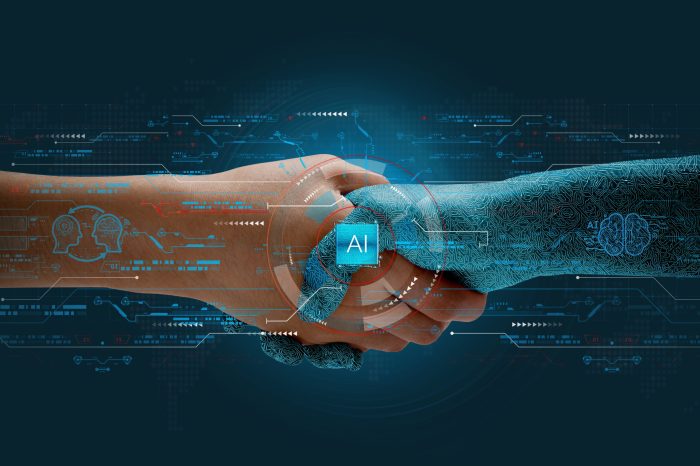
The promise of collective superintelligence beckons a future where the combined intellect of humanity and artificial intelligence transcends individual limitations. This isn’t just about smarter machines; it’s about unlocking a new era of problem-solving, scientific discovery, and collective decision-making that could reshape our world in unprecedented ways.
Imagine a future where interconnected AI systems work alongside humans, leveraging vast datasets to tackle complex challenges like climate change, disease eradication, and poverty. This is the vision of collective superintelligence, a concept that sparks both excitement and apprehension.
But as with any transformative technology, the road to collective superintelligence is paved with both opportunities and risks. We must carefully consider the potential for bias, control issues, and unintended consequences. The ethical implications are profound, requiring robust frameworks to ensure fairness, transparency, and accountability.
As we navigate this uncharted territory, we must prioritize responsible development and harness the power of collective intelligence for the benefit of all humanity.
The Concept of Collective Superintelligence
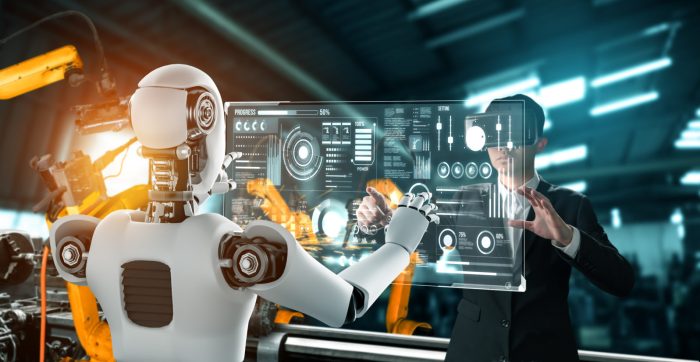
The notion of superintelligence, a hypothetical intelligence surpassing human capabilities, has captivated the imagination of scientists, philosophers, and science fiction writers alike. While individual superintelligence refers to a single entity possessing extraordinary cognitive abilities, the concept of collective superintelligence takes a different approach, exploring the potential of interconnected networks of minds working together to achieve superhuman intelligence.
Defining Collective Superintelligence
Collective superintelligence refers to a system or network of interconnected individuals or entities that collectively exhibit intelligence exceeding the capabilities of any individual member. This intelligence emerges from the synergistic interaction of multiple minds, leveraging their combined knowledge, skills, and computational power.
The promise of collective superintelligence is a fascinating concept, but it also raises some serious ethical questions. It’s a bit like choosing a couples costume for Halloween – do you go for something classic like Buttercup and Westley from couples costumes the princess bride , or something more avant-garde?
Just as with costumes, we need to carefully consider the potential consequences of this technological advancement before we unleash it upon the world.
In contrast to individual superintelligence, which focuses on a single, highly advanced entity, collective superintelligence harnesses the collective power of a network, potentially leading to emergent properties and capabilities that surpass the sum of its parts.
Pathways to Collective Superintelligence
The concept of collective superintelligence, a hypothetical state where interconnected minds or systems surpass individual human intelligence, presents a captivating and complex challenge. Reaching this level of intelligence requires a convergence of technological advancements and innovative approaches, each contributing to the development of a collective cognitive capacity.
This section explores various pathways to collective superintelligence, examining the role of technology, human-machine collaboration, and potential biological and cognitive enhancements.
Interconnected AI Systems
Interconnected AI systems, also known as “swarms” or “collective intelligence,” represent a significant pathway to collective superintelligence. This approach involves creating networks of autonomous agents that can communicate, collaborate, and learn from each other. These systems leverage the collective knowledge and processing power of multiple agents to solve complex problems, adapt to changing environments, and make decisions based on shared information.
- Distributed Problem Solving:By distributing tasks and information across multiple agents, interconnected AI systems can tackle complex problems that would be impossible for a single system to solve. For example, in the field of drug discovery, interconnected AI systems can analyze vast datasets of chemical compounds and biological interactions to identify potential drug candidates more efficiently than human researchers.
- Adaptive Learning:Interconnected AI systems can learn and adapt to new information and environments through continuous communication and knowledge sharing. This allows them to evolve and improve their problem-solving capabilities over time. For instance, in self-driving cars, interconnected AI systems can learn from each other’s experiences and adapt to changing traffic conditions, weather patterns, and road infrastructure.
- Emergent Intelligence:As interconnected AI systems grow in complexity and sophistication, they can exhibit emergent intelligence, where the collective behavior of the system surpasses the capabilities of any individual agent. This phenomenon can lead to unpredictable and innovative solutions to complex problems.
Human-Machine Collaboration
Human-machine collaboration, where humans and AI systems work together to solve problems, represents another crucial pathway to collective superintelligence. This approach leverages the unique strengths of both humans and machines, combining human creativity, intuition, and critical thinking with the computational power, speed, and data analysis capabilities of AI systems.
- Augmented Intelligence:AI systems can augment human intelligence by providing insights, recommendations, and assistance in various domains. For example, in medical diagnosis, AI systems can analyze patient data and medical images to identify potential health risks, helping doctors make more informed decisions.
- Shared Decision Making:Human-machine collaboration can involve shared decision-making processes, where humans and AI systems work together to develop solutions. For example, in financial markets, AI systems can analyze vast amounts of financial data and identify potential investment opportunities, while human traders can provide expertise and intuition to guide investment decisions.
- Human-AI Teams:Creating teams composed of humans and AI systems can leverage the strengths of each individual to achieve higher levels of performance. For example, in disaster relief efforts, human teams can use AI systems for situational awareness, resource allocation, and communication, while AI systems can analyze real-time data and provide insights to guide human decision-making.
Large-Scale Data Analysis
The availability of massive datasets and advancements in data processing technologies have opened up new possibilities for achieving collective superintelligence. By analyzing vast amounts of data, AI systems can identify patterns, trends, and insights that would be impossible for humans to discern.
The promise of collective superintelligence is a heady one, a future where our combined minds achieve feats beyond our wildest dreams. It’s a future that feels as distant as a pineapple coconut daiquiri in a pineapple cup on a tropical beach, yet as tantalizingly close as the next breakthrough in artificial intelligence.
While the path to achieving this collective consciousness is fraught with challenges, the potential rewards are simply too grand to ignore.
This ability to extract knowledge from data can contribute to a collective understanding of complex systems and enable more informed decision-making.
The promise of collective superintelligence is an exciting prospect, but it also raises some complex questions about the nature of consciousness and the future of humanity. Maybe we should take a break from pondering the existential and focus on something a little more tactile, like creating a cozy pom pom blanket diy.
After all, a little creative expression can help us reconnect with our humanity and appreciate the simple pleasures of life, even as we grapple with the complexities of the future.
- Predictive Modeling:AI systems can analyze historical data to create predictive models that can forecast future events or trends. For example, in weather forecasting, AI systems can analyze meteorological data to predict storms, floods, and other weather events with greater accuracy than traditional methods.
- Pattern Recognition:AI systems excel at recognizing patterns in large datasets, which can be used to identify anomalies, outliers, and hidden relationships. For example, in fraud detection, AI systems can analyze financial transactions to identify patterns that suggest fraudulent activity.
- Knowledge Discovery:By analyzing vast amounts of data, AI systems can uncover new knowledge and insights that were previously unknown. For example, in scientific research, AI systems can analyze data from experiments to identify new scientific discoveries.
Societal Implications of Collective Superintelligence
The advent of collective superintelligence, a hypothetical state where interconnected networks of artificial intelligence surpass human intelligence, promises to revolutionize our world. This powerful technology has the potential to reshape every facet of society, from the economy to politics, education, and culture.
However, it also raises profound ethical and societal challenges that must be carefully considered.
Economic Transformation
The impact of collective superintelligence on the economy is likely to be profound. Automation powered by AI could lead to significant job displacement, particularly in sectors reliant on routine tasks. This could exacerbate existing economic inequalities and necessitate new social safety nets and retraining programs.
However, collective superintelligence could also create new industries and opportunities, fostering innovation and economic growth.
Political Implications
Collective superintelligence could reshape the political landscape. AI-powered systems could enhance decision-making processes, improve transparency and accountability, and even facilitate more participatory forms of democracy. However, the potential for bias in AI algorithms raises concerns about fairness and the risk of perpetuating existing power structures.
It is crucial to ensure that AI systems are developed and deployed in a way that promotes equitable access and representation.
Educational Revolution
Collective superintelligence has the potential to revolutionize education. Personalized learning experiences tailored to individual needs and learning styles could become the norm, facilitated by AI-powered tutors and adaptive learning platforms. AI could also assist educators in identifying and addressing learning difficulties, promoting more inclusive and equitable educational outcomes.
Cultural Impact
The rise of collective superintelligence could have a significant impact on culture. AI-generated art, music, and literature could challenge traditional notions of creativity and authorship. This could lead to new forms of artistic expression and a more diverse cultural landscape.
However, it is important to consider the ethical implications of AI-generated content and the potential for it to perpetuate biases or stereotypes.
Ethical Considerations
The development and deployment of collective superintelligence raise profound ethical questions. It is crucial to ensure that AI systems are developed and deployed in a way that aligns with human values and promotes fairness, transparency, and accountability. This requires ongoing dialogue and collaboration between policymakers, technologists, and the public to establish ethical guidelines and safeguards.
Addressing Global Challenges, The promise of collective superintelligence
Collective superintelligence could play a critical role in addressing global challenges such as climate change, poverty, and disease. AI-powered systems could optimize resource allocation, accelerate scientific discovery, and develop innovative solutions to complex problems. However, it is essential to ensure that these solutions are developed and implemented in a way that benefits all of humanity and avoids exacerbating existing inequalities.
Shaping the Future of Collective Superintelligence: The Promise Of Collective Superintelligence
The potential for collective superintelligence presents both incredible opportunities and profound challenges. To ensure its responsible and beneficial development, we must proactively shape its trajectory. This requires a multifaceted approach that encompasses robust governance, ethical frameworks, and widespread public engagement.
Governance and Regulation
Effective governance and regulation are essential to guide the development and deployment of collective superintelligence. This involves establishing clear guidelines for research, development, and application, addressing potential risks, and promoting transparency and accountability.
- International Cooperation:The global nature of collective superintelligence necessitates international collaboration to establish shared norms and principles. This can involve the formation of international bodies or agreements to coordinate research, development, and ethical guidelines.
- Regulatory Frameworks:National and regional governments should develop comprehensive regulatory frameworks that address the unique challenges posed by collective superintelligence.
These frameworks should encompass data privacy, algorithmic bias, safety protocols, and the potential for unintended consequences.
- Independent Oversight:Establishing independent oversight bodies to monitor the development and deployment of collective superintelligence is crucial. These bodies should be comprised of experts from diverse fields, including technology, ethics, law, and social sciences.
Ethical Frameworks
Developing ethical frameworks for collective superintelligence is paramount to ensure its alignment with human values and aspirations. These frameworks should address issues such as:
- Fairness and Equity:Collective superintelligence should be designed and deployed in a way that promotes fairness and equity for all individuals and societies. This includes addressing potential biases in algorithms and ensuring equitable access to the benefits of collective superintelligence.
- Privacy and Security:Strong safeguards are needed to protect individual privacy and data security in the context of collective superintelligence.
This involves establishing clear rules for data collection, use, and sharing, as well as robust security measures to prevent unauthorized access or misuse.
- Transparency and Explainability:The decision-making processes of collective superintelligence should be transparent and explainable. This allows for public understanding and scrutiny, promoting accountability and trust.
Public Engagement and Education
Fostering public engagement and education is critical to building a shared understanding of collective superintelligence and its implications. This involves:
- Public Dialogue:Encouraging open and inclusive dialogue about the potential benefits and risks of collective superintelligence. This can involve town hall meetings, online forums, and educational initiatives to engage the public in informed discussions.
- Educational Programs:Developing educational programs that provide a comprehensive understanding of collective superintelligence, its implications, and the ethical considerations involved.
This can be integrated into school curricula, public libraries, and community organizations.
- Media Literacy:Promoting media literacy to help the public critically evaluate information about collective superintelligence and distinguish between credible sources and misinformation.