The coastal state of Veracruz, stretching along the eastern seaboard of Mexico parallel to the Gulf of Mexico, has historically occupied a foundational yet overlooked chapter in the nation’s narrative. While international tourism routinely gravitates toward the sun-drenched shores of the Riviera Maya or the luxury enclaves of Cabo San Lucas, Veracruz remains a distinct landscape defined by towering emerald mountains, dark volcanic gray-sand beaches, and profound historical resonance. Long pigeonholed in the national consciousness as an industrial corridor of ports, maritime shipping, and oil refineries, the region possesses a rich agricultural and cultural tapestry that is increasingly drawing the attention of modern gastronomic leaders.
Among those spearheading a reevaluation of the state’s cultural capital is Lucho Martínez, chef and founder of Mexico City’s Michelin-starred establishment, Em. For Martínez, who was born in the southern Veracruz municipality of Coatzacoalcos, the state represents more than a personal point of origin; it is an invaluable pantry of hyper-local ingredients that anchor his celebrated urban kitchen. In an effort to counter prevailing tourism trends and spotlight the region’s agricultural output, Martínez regularly returns to his home state, orchestrating an intimate culinary and exploratory journey through the heartland of Veracruz.
The Architectural and Historical Legacy of El Tajín
The itinerary frequently begins far from the bustling coastal ports, deep within the archaeological wonder of El Tajín. Situated in the northern sector of Veracruz, this pre-Columbian architectural complex is widely attributed to the Totonac civilization. On a typical weekend morning, the entrance hums with local commerce—artisans vending hand-embroidered garments and glazed ceramics. However, passing the security gate reveals a stark contrast: expansive, quiet plazas where visitors can traverse the historical grounds largely undisturbed.

At the center of the site stands the Pyramid of the Niches, a magnificent six-terraced structure featuring precisely 365 carved niches, believed to correspond to the solar year. Set against a backdrop of dense, rolling green hills, the monument evokes a profound sense of temporal isolation.
"When I come during the week, it’s completely empty," Martínez observes while surveying the main plaza. "It feels forgotten."
This sentiment of being left to itself rather than left out characterizes much of inland Veracruz. Despite being the landing point for Spanish conquistadors in the early 16th century, parts of the state remain logistically isolated. El Tajín, for instance, requires a demanding four-hour drive from Mexico City or a three-hour transit from the airport in Veracruz City. This geographical friction has historically shielded the region from mass-market tourism, preserving its indigenous traditions and pristine ecosystems.
Tracing the Roots of Global Gastronomy: The Vanilla Trade
A cornerstone of Martínez’s culinary philosophy is the elevation of native ingredients, particularly those originating in Veracruz. Chief among these is vanilla (Vanilla planifolia), an orchid species indigenous to the region and historically cultivated by the Totonac people long before European contact.

"Everyone thinks of Madagascar," Martínez notes, referencing the African island nation that currently dominates global vanilla production. "But vanilla was first cultivated here."
To examine the supply chain firsthand, Martínez frequently visits specialized agricultural operations such as Gaya, a historic vanilla farm in the region operated by the descendants of Italian immigrants who arrived in 1873. Within the fragrant curing rooms of the farm, green pods undergo a meticulous process of sweating, drying, and packaging. Evaluating the quality of a vanilla pod involves tactile assessment: rolling the pod between the index finger and thumb to test its flexibility—a primary indicator of gourmet standard and high vanillin content.
Martínez sources approximately 90 percent of his restaurant’s ingredients directly from Veracruz, spanning specialty coffees, heirloom produce, and premium vanilla pods. By routing these regional commodities into fine-dining establishments in Mexico City—including his casual bistro Martínez and seafood venue Ultramarinos Demar—the chef aims to rewrite the economic and cultural narrative of his home state, proving its viability as a premier agricultural exporter.
Culinary Architecture: From Roadside Comales to Michelin Stars
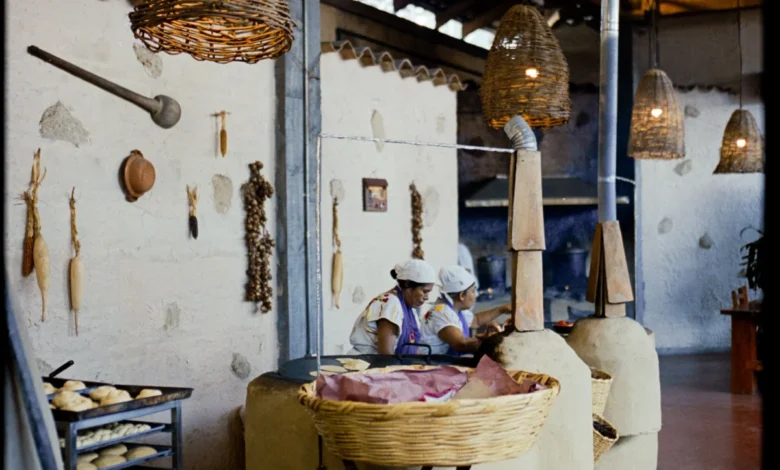
The gastronomic landscape of Veracruz is defined by unpretentious, deeply traditional comfort foods that reflect a confluence of indigenous and colonial influences. During transit through towns such as Gutiérrez Zamora—a municipality flanking the Tecolutla River—culinary exploration often takes the form of open-air establishments like La Galera.

At such local eateries, menus feature staples like cheese empanadas, molotes (crispy, deep-fried corn masa pockets stuffed with chicken), and thick, oil-tossed gorditas. The preparation method is elemental: utilizing wood-fired comales, fresh masa, local cheeses, and rich creams.
The influence of these humble roadside meals directly informs avant-garde gastronomy in the capital. Martínez’s affinity for the regional gordita is so profound that a deconstructed, elevated iteration replaced the traditional bread course at Em. Served as a crispy, puffed masa pocket crowned with crème fraîche and a generous dollop of caviar, the dish bridges the gap between rural Veracruzana tradition and contemporary haute cuisine.
Similarly, breakfast traditions in the region lean into rich textures and bold flavors. At historic properties like Maison Couturier—a 19th-century agricultural estate in San Rafael converted into a design-focused boutique hotel by Grupo Habita—diners partake in esponjaditas (extra-fluffy gorditas) served alongside eggs drenched in spiced tomato reduction. The estate itself reflects the eclectic settlement patterns of the area, notably the influx of French immigrants in the 19th century who established agricultural colonies marked by French Provincial architecture, wood-shuttered windows, and sprawling verandas.
The Costa Esmeralda and the Preservation of Unspoiled Shores
Further east, along the maritime boundary known as the Costa Esmeralda, the travel experience diverges sharply from the highly commercialized resort corridors of the Caribbean or the Baja Peninsula. A long, two-lane highway runs parallel to the Gulf, flanked by sun-bleached boutique properties such as Hotel Azúcar. Comprising a cluster of whitewashed structures cascading directly onto charcoal-hued volcanic sand, the hotel serves as a quiet retreat.

The absence of international crowds and mega-resorts fosters an atmosphere of unvarnished authenticity. Evening meals along the shoreline often consist of freshly caught prawns and finfish prepared by local cooks over open wood fires, served barefoot at tables just feet from the surf. Without the artifice of elaborate wine lists or overly curated presentation, the dining experience honors the purity of the catch and the immediate coastal environment.
Broader Economic and Cultural Implications
The intentional redirection of culinary attention toward Veracruz carries significant implications for regional development. For decades, the state’s economic identity has been tethered heavily to heavy industry, petroleum extraction, and large-scale maritime trade, often eclipsing its rich biodiversity and cultural heritage.
By establishing direct trade pipelines with small-scale farmers, vanilla producers, and regional fisheries, chefs like Martínez are creating localized micro-economies that reward sustainable, traditional agricultural practices. Furthermore, cultural tourism to sites like El Tajín and community-run establishments like Nakú Restaurante Papanteco—where traditional indigenous dances and hyper-local recipes are actively preserved—provides vital economic stimulus without the ecological degradation associated with mass tourism developments.
Ultimately, while Veracruz may continue to feel somewhat isolated from the hyper-connected hubs of modern travel, that very distance remains its most potent asset. By retaining its quiet beaches, ancient ruins, and agricultural roots largely untouched by hyper-commercialization, the region offers an increasingly rare commodity in modern travel: genuine authenticity coupled with an extraordinary culinary heritage.