Methane, a colorless and odorless hydrocarbon, has emerged as a focal point in the global effort to stabilize the climate, representing the second-largest contributor to global warming after carbon dioxide. Composed of one carbon atom and four hydrogen atoms, this potent greenhouse gas is the primary component of natural gas, which currently accounts for approximately 25 percent of the world’s electricity generation. While carbon dioxide remains the most abundant driver of the climate crisis, methane’s unique chemical properties and its role in several intensifying feedback loops make its mitigation a matter of extreme urgency for policymakers and scientists alike.
As of late 2023, atmospheric methane concentrations reached a record 1,934 parts per billion (ppb), a staggering 265 percent increase over pre-industrial levels. According to data from the World Meteorological Organization and the United Nations Environment Programme, human activities are responsible for approximately 60 percent of these emissions. Because methane traps roughly 86 times more heat than carbon dioxide over a 20-year period, its presence in the atmosphere is responsible for about one-third of the total global heating observed since the Industrial Revolution.

The Science of Methane Formation and Measurement
Methane is generated through two primary pathways: geological and biological. Geologically, it forms over millions of years as heat and pressure act upon organic matter trapped deep underground—the process that creates the fossil fuel reserves exploited by the oil and gas industry. Biologically, methane is a byproduct of methanogenesis, a form of anaerobic respiration performed by microorganisms known as archaea. These microbes thrive in oxygen-poor environments, such as the waterlogged soils of wetlands, the digestive tracts of ruminant animals like cows and sheep, and the depths of landfills.
Accurately tracking these emissions has historically been a challenge for climate scientists, leading to the development of two distinct methodologies. The "bottom-up" approach relies on localized measurements and statistical estimations, such as multiplying the average emissions per head of cattle by the total population of a region. Conversely, the "top-down" approach utilizes aerial surveillance, high-altitude platforms, and sophisticated satellite constellations to monitor the atmosphere directly.
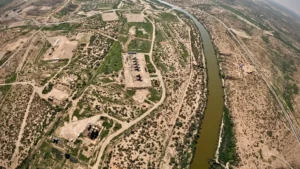
Recent advancements in satellite technology, such as those employed by GHGSat and the Environmental Defense Fund’s MethaneSAT, have revealed significant discrepancies in reported data. For instance, a landmark study published in the journal Science found that methane emissions from U.S. oil and gas operations were 60 percent higher than estimates provided by the Environmental Protection Agency (EPA). These satellite observations have been instrumental in identifying "super-emitters"—massive, localized leaks or venting incidents that contribute a disproportionate amount of total emissions. In 2022 alone, researchers identified over 1,000 such incidents, including a leak in Turkmenistan that spewed methane at a rate equivalent to the entire hourly emissions of France.

Primary Sources of Anthropogenic Emissions
Human-caused methane emissions are largely concentrated within three industrial sectors: agriculture, fossil fuels, and waste management.
The Agricultural Footprint
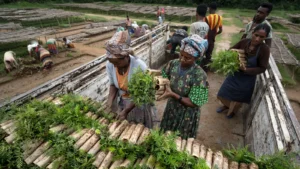
Agriculture is the single largest source of anthropogenic methane, accounting for roughly 40 percent of emissions. Within this sector, livestock production is the primary driver. Ruminant animals produce methane through enteric fermentation, a digestive process where microbes break down tough plant fibers. Additionally, the storage of manure, particularly in liquid form on industrial pig and dairy farms, releases significant volumes of the gas. Rice cultivation follows as the second-largest agricultural source, contributing 8 percent of human-caused emissions. The flooded paddies required for rice growth create the ideal anaerobic conditions for methane-producing archaea.
Fossil Fuel Leaks and Venting
The energy sector contributes approximately 35 percent of human-caused methane. During the extraction, processing, and transport of oil and natural gas, methane is frequently released through intentional venting, safety flaring, or accidental leaks in aging infrastructure. Coal mining also plays a significant role; methane trapped within coal seams is released during the extraction process or through ventilation systems designed to prevent underground explosions. Approximately 70 percent of coal-related methane comes from deep underground mines rather than surface operations.

Waste and Landfills
Landfills and wastewater treatment systems account for roughly 20 percent of emissions. As organic waste—such as food scraps and paper—decomposes in the oxygen-depleted environment of a landfill, it produces "landfill gas," which is roughly half methane. With global solid waste production expected to rise by 73 percent by 2050, emissions from this sector are projected to grow faster than those from any other anthropogenic source.
The Positive Feedback Loop and Tipping Points
One of the most alarming aspects of methane science is the existence of positive feedback loops, where warming caused by methane triggers the release of even more methane from natural sources. Wetlands, which cover about 6 percent of the Earth’s surface, are the largest natural source of the gas. However, as global temperatures rise and rainfall patterns shift, tropical wetlands are expanding and Arctic permafrost is thawing.
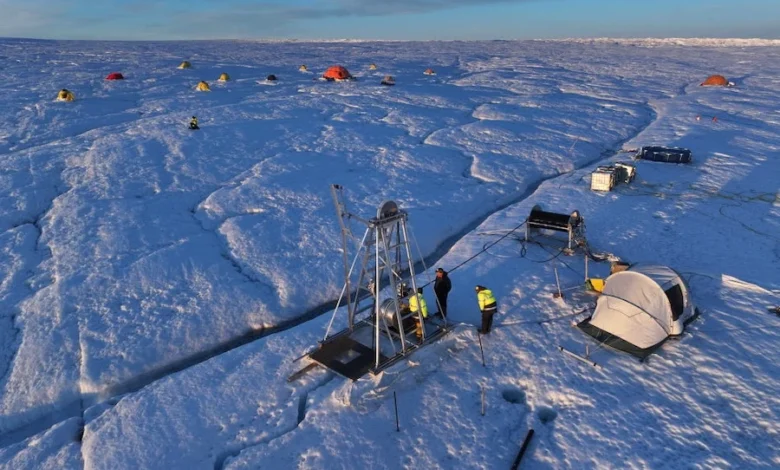
The Arctic contains approximately 2.5 times more carbon in its frozen soil than is currently in the atmosphere. As this permafrost melts, it creates new waterlogged wetlands and awakens long-dormant microbes, leading to what scientists call the "wetland methane feedback." Between 2000 and 2020, methane emissions from wetlands increased at a rate that exceeded even the most pessimistic climate models. Furthermore, the increasing frequency and intensity of wildfires—driven by a warming climate—release significant quantities of methane as biomass burns, further accelerating the heating cycle.

Debunking the Bridge Fuel Narrative
For over a decade, the natural gas industry has promoted methane as a "bridge fuel" that could facilitate the transition from coal to renewables. Proponents argue that because burning natural gas produces 50 percent less carbon dioxide than coal, it is a cleaner alternative. However, this narrative often ignores the impact of methane leakage across the supply chain.
Research indicates that if as little as 0.2 percent of methane leaks during production and transport, the climate benefits of switching from coal to gas are effectively neutralized. Current data suggests that leak rates in many regions are significantly higher than this threshold. A 2023 analysis concluded that when accounting for these leaks, liquefied natural gas (LNG) could have a 33 percent greater global warming potential than coal over a 20-year horizon. This has led to intense criticism of the massive expansion of LNG export terminals in the United States, Canada, and Australia, with activists warning that these "methane bombs" could lock in decades of high emissions.
Public Health and Environmental Impacts
Beyond its role in climate change, methane significantly impacts public health by contributing to the formation of ground-level ozone. When methane reacts with other pollutants in the presence of sunlight, it creates smog, which damages lung tissue and exacerbates respiratory conditions like asthma. Current estimates suggest that methane-generated ozone is responsible for approximately 500,000 premature deaths annually.

The environmental toll also extends to food security. Ground-level ozone is toxic to plants, inhibiting their ability to photosynthesize. Reducing methane emissions by one million metric tons could prevent the loss of 145,000 metric tons of essential crops, including wheat, soybeans, and rice, every year.
Global Policy and Technical Solutions
In response to these findings, the international community launched the Global Methane Pledge at COP26 in 2021. As of early 2025, 159 countries have committed to reducing global methane emissions by 30 percent from 2020 levels by 2030. Achieving this goal could shave 0.2 degrees Celsius off projected global warming by 2050.
Technical solutions to meet these targets are already available. In the energy sector, the International Energy Agency (IEA) estimates that 70 percent of methane emissions from oil and gas could be eliminated using existing technologies, such as improved leak detection and the replacement of pneumatic valves. In agriculture, scientists are seeing success with dietary supplements for cattle, such as red seaweed (Asparagopsis taxiformis), which can reduce enteric methane by over 80 percent. In the waste sector, capturing landfill gas to use as biogas and diverting organic waste to composting facilities are proven methods for rapid reduction.

While some researchers are exploring geoengineering solutions—such as releasing iron salts into the atmosphere to break down methane molecules—most experts agree that the safest and most effective path forward is the aggressive reduction of emissions at the source. This involves a fundamental shift in energy production toward renewables, a transformation of global food systems to reduce reliance on industrial livestock, and a transition toward a circular, zero-waste economy.
The Intergovernmental Panel on Climate Change (IPCC) has stated that methane emissions must fall by 34 percent by 2030 to keep the 1.5-degree Celsius target within reach. Because methane is short-lived in the atmosphere—lasting only about 12 years—cutting emissions now provides a near-immediate "brake" on global warming, offering a critical window of time to address the more persistent problem of atmospheric carbon dioxide.