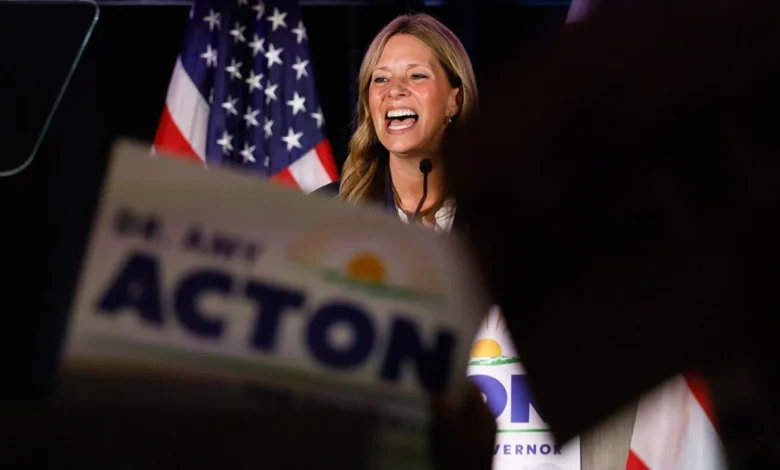
The Ohio gubernatorial race, currently one of the most closely watched political contests in the United States, saw a significant escalation of hostilities this past weekend when a physical confrontation occurred between campaign staff for Democratic nominee Dr. Amy Acton and a Republican political activist. The incident, which took place at a campaign stop in Harrison, Ohio, underscores the increasingly volatile nature of the race as both candidates enter the critical homestretch leading up to the November 3 general election.
The confrontation began when an independent political operative, acting on behalf of the Republican camp, attempted to confront Dr. Acton regarding her persistent refusal to participate in a series of debates against her GOP opponent, Vivek Ramaswamy. As Dr. Acton exited the venue, the activist approached her with a camera, seeking an on-the-record explanation for her campaign’s decision to bypass traditional debate formats. The ensuing interaction quickly devolved into a physical standoff as Acton’s security and campaign staff intervened, physically obstructing the cameraman and attempting to shield the candidate from questioning. Video footage from the event shows a clear moment of contact where the cameraman’s equipment was jolted by staff, prompting the journalist to caution those around him to be careful.
A Campaign Defined by Debate Avoidance
The debate issue has become the central pillar of political discourse in the Ohio race. Since the primary concluded, the question of whether Dr. Acton would face Mr. Ramaswamy in a public forum has been a recurring point of friction. Mr. Ramaswamy has consistently pushed for multiple debates, arguing that the electorate deserves to see the candidates side-by-side to compare their visions for the state’s economy, healthcare, and infrastructure.
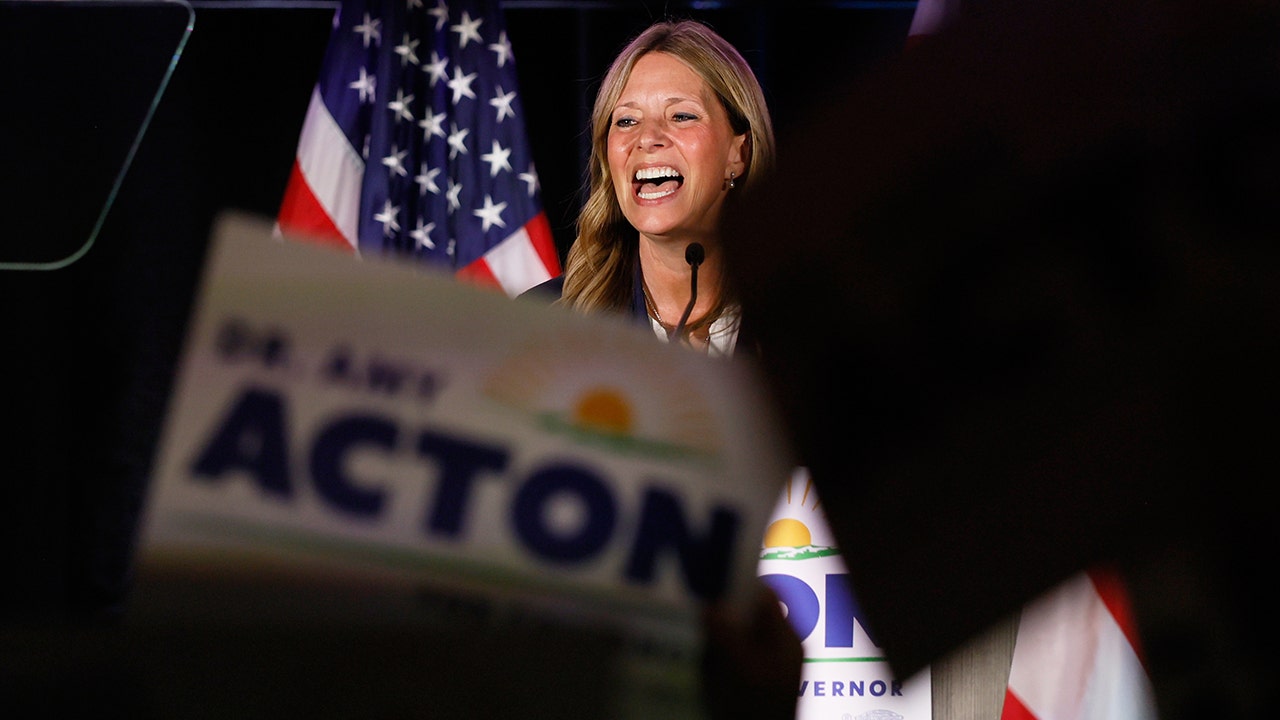
Dr. Acton’s campaign has maintained a rigid stance, rejecting multiple invitations to debate, including those proposed by major national and local media outlets. Earlier this month, when Mr. Ramaswamy publicly accepted a debate invitation from a major television network, the Acton campaign issued a definitive refusal. In a statement released on September 2, a campaign spokesperson characterized the request for a debate as a platforming opportunity for what they described as a "scam artist." The statement further alleged that Mr. Ramaswamy has engaged in a smear campaign involving the use of artificial intelligence to misrepresent the candidate’s history and has weaponized personal trauma against her.
Contextualizing the Political Warfare
The animosity between the two camps is rooted in a series of aggressive campaign tactics that have characterized the 2026 election cycle. The Acton campaign’s frustration stems from a variety of attack vectors employed by Republican-aligned groups. These include persistent criticism of Dr. Acton’s tenure as Ohio’s health director during the COVID-19 pandemic, as well as the resurfacing of a 2019 incident involving a domestic verbal dispute that occurred while she was intoxicated.
Furthermore, the campaign has taken significant issue with the use of AI-generated content. Recent advertisements have surfaced online that allegedly digitally altered images of Dr. Acton’s vehicle to include inflammatory license plates, a tactic her team claims is intended to dehumanize her and distract from substantive policy debates. Conversely, the Ramaswamy camp has pointed to these controversies as evidence that Dr. Acton is unfit for the executive office, arguing that her past decisions and personal conduct are legitimate areas of inquiry for voters.
Mr. Ramaswamy, a businessman who has poured $25 million of his own capital into his gubernatorial bid, has managed to set state fundraising records, accumulating a total campaign haul exceeding $50 million. This immense financial advantage has allowed his team to saturate the airwaves with messaging that questions the integrity and transparency of the Acton campaign. By framing the refusal to debate as an attempt to hide from accountability, the Ramaswamy team has successfully kept the focus on the former health director’s public record.
The Financial and Strategic Landscape
The financial disparity in this race is historically significant for Ohio. Mr. Ramaswamy’s self-funding has changed the tactical calculus of the campaign, forcing the Acton camp to defend its record while simultaneously managing a barrage of negative advertisements. Political analysts note that when a candidate opts out of debates, they risk appearing evasive to independent voters, yet they also avoid the potential pitfalls of an unpredictable, high-stakes debate performance.
For Dr. Acton, the strategy appears to be one of controlled engagement. By focusing on direct, curated interactions with voters—such as her recent stop at a coffee shop in Columbus—she aims to bypass the "noise" of the media and the direct confrontation of her opponent. However, as the Harrison incident demonstrates, that strategy is becoming increasingly difficult to maintain in a political environment where activists are actively seeking to challenge candidates on their home turf.
Official Responses and Public Reaction
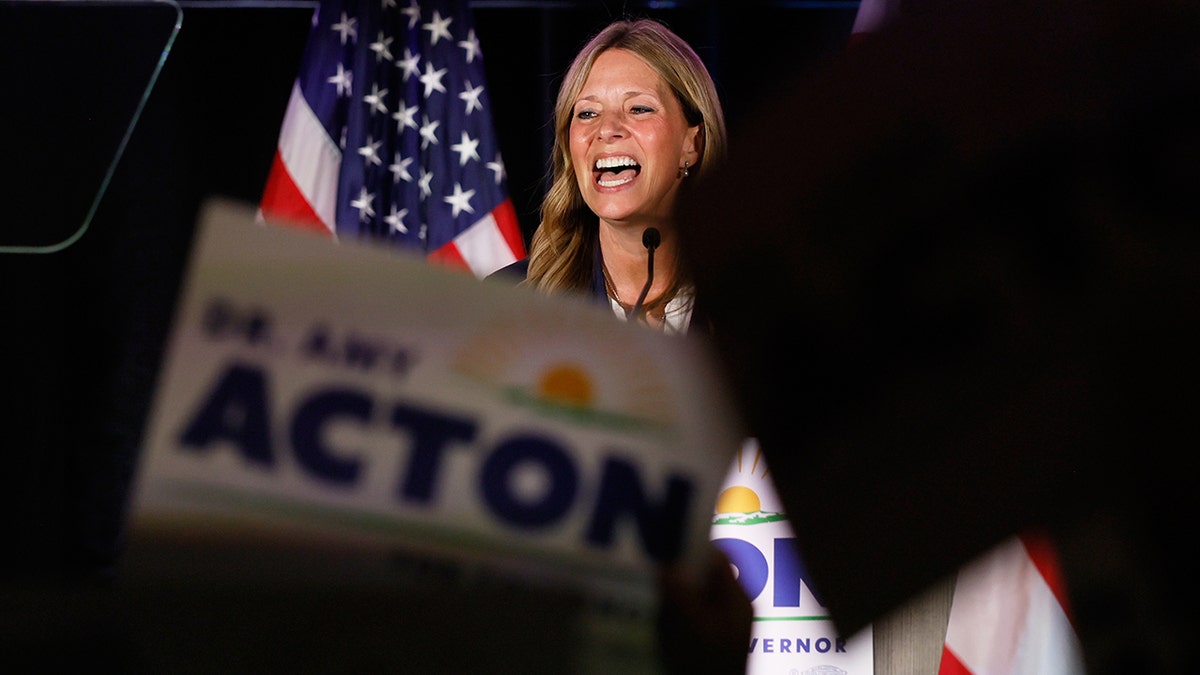
In the aftermath of the Harrison incident, the divide between the two campaigns has only widened. Mr. Ramaswamy took to social media to amplify the narrative of his opponent’s unavailability. "It’s too bad for Ohio voters that Acton won’t take voter questions, won’t debate, quit after failing as Ohio’s health director, and has some serious issues now surfaced in multiple police reports," he stated in a post that garnered significant engagement. His rhetoric is clearly designed to appeal to the base while casting doubt on his opponent’s readiness to lead.
The Acton campaign, meanwhile, has remained largely silent on the specific details of the weekend confrontation, focusing instead on their previously established talking points regarding the integrity of the election process. The silence from the campaign on the physical confrontation itself suggests an attempt to prevent the incident from dominating the news cycle, though the presence of video evidence makes that task increasingly difficult.
Broader Implications for the Midterm Cycle
The incident in Harrison is emblematic of a broader trend in American politics where the traditional boundaries between campaigning and confrontation have blurred. As both parties accuse one another of trickery, election interference, and the misuse of technology, the electorate is left to navigate a landscape filled with conflicting narratives.
The implications for the November 3 election are substantial. Ohio, often seen as a bellwether for national political trends, is serving as a testing ground for how candidates handle the intersection of personal reputation, social media, and traditional media scrutiny. If Dr. Acton continues to decline debates, the narrative of "hiding from the voters" may stick, potentially swaying undecided voters who prioritize transparency. Conversely, if Mr. Ramaswamy’s aggressive, often personal attacks are perceived as bullying, he may alienate moderate suburban voters who are wary of combative political styles.
Chronology of Recent Escalations
- May 5, 2026: Dr. Amy Acton wins the Democratic primary, setting the stage for a high-profile gubernatorial race.
- Late Summer 2026: Negative advertising campaigns intensify, with both sides trading accusations regarding the use of AI-generated content and personal character attacks.
- September 2, 2026: The Acton campaign issues a formal statement refusing to debate Mr. Ramaswamy, citing his use of "baseless lies" and personal smears.
- Late September 2026: Mr. Ramaswamy reports a record-breaking $50 million in total campaign funds, signaling an aggressive push for the final weeks of the race.
- October 2026: The incident in Harrison, Ohio, occurs, marking the most direct physical interaction between the two camps to date.
Looking Ahead
As the final weeks of the campaign approach, the pressure on both candidates will only increase. With the election just a few weeks away, the focus will shift from fundraising and messaging to voter turnout operations. However, the shadow of the debate refusal—and the physical confrontation that stemmed from it—will likely continue to act as a distraction.
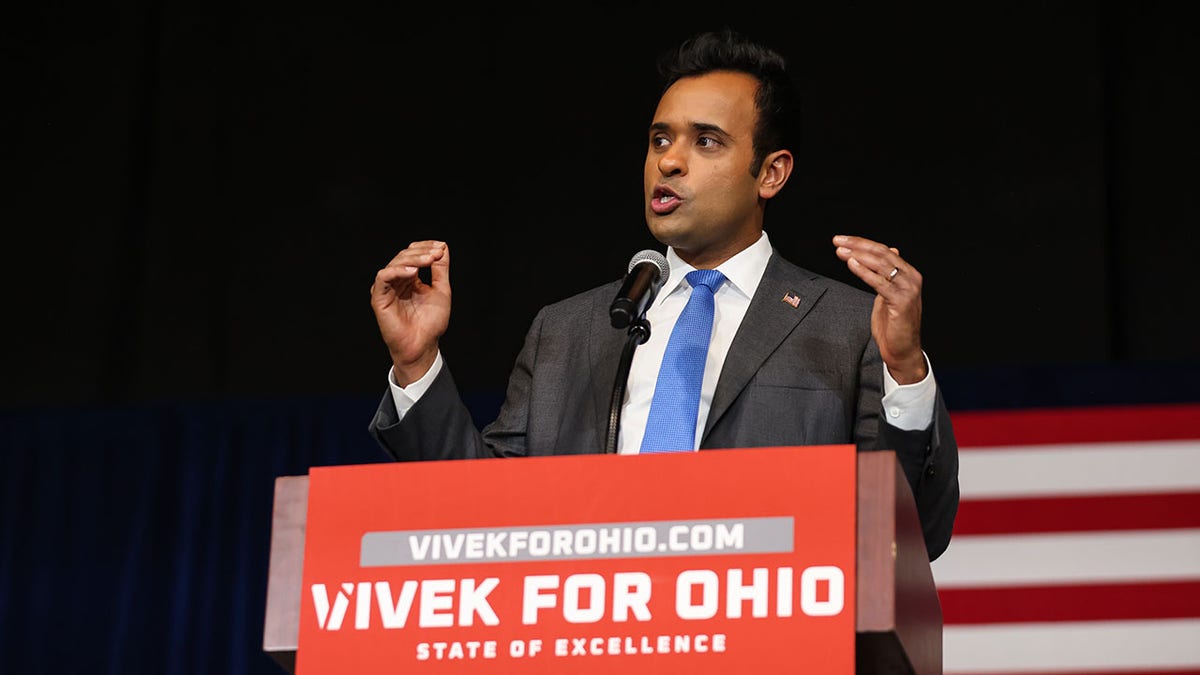
For voters, the choice in November is becoming increasingly clear, defined as much by the personalities and conduct of the candidates as by their stated platforms. Whether Dr. Acton can maintain her current strategy of avoiding the debate stage while managing the fallout from public confrontations remains to be seen. Similarly, it remains unclear if Mr. Ramaswamy’s strategy of relentless attack and financial dominance will be enough to win over the broad coalition of voters needed to secure the governor’s mansion.
As the political dust settles, the events in Harrison serve as a stark reminder of the current state of American democratic discourse: polarized, high-stakes, and increasingly prone to volatile interruptions. Both candidates will need to demonstrate, in the final stretch, that they can govern effectively despite the environment of mutual suspicion that has come to define this election. Whether through a surprise change in debate policy or a shift in campaign tactics, the closing days of this race are expected to be as intense as the months that preceded them.