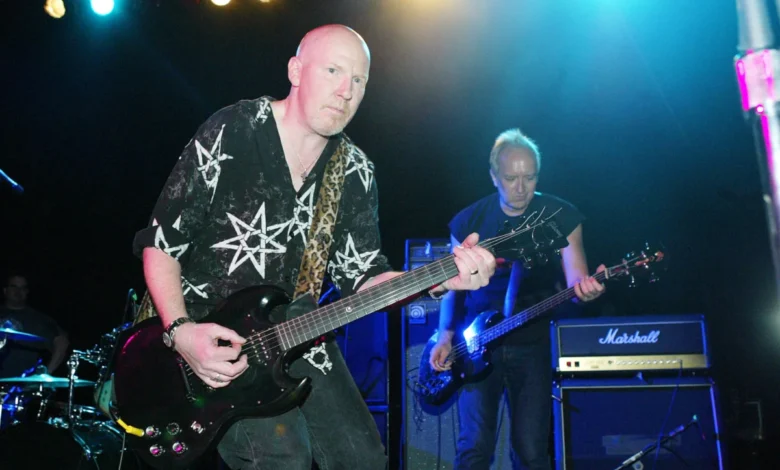
Eugene Richard O’Connor, internationally celebrated across the alternative and punk music communities as Cheetah Chrome, the incendiary lead guitarist of the pioneering first-wave punk band the Dead Boys, has died at the age of 71. His passing on Sunday was confirmed by his bandmates through an emotional statement shared via official social media channels, plunging the global rock community into mourning for one of the genre’s most distinct and influential architects.
Chrome was widely recognized not merely as a performer, but as a foundational force who helped shape the aggressive, high-energy sonic blueprint that defined American punk rock in the mid-1970s. Known for his blistering, razor-sharp guitar tone and an anarchic stage presence, he left an indelible mark on modern music history.
A One-Man Hurricane: The Band’s Official Tribute
The surviving members of the Dead Boys—Tony, Chris, and Mark—released a joint statement expressing profound grief over the loss of their longtime collaborator and friend.
"We are incredibly sad to announce the news of the passing of our beloved friend and bandmate Cheetah Chrome," the statement read. "Cheetah was a true original, an architect of the punk rock movement. A one-man hurricane tearing up the musical landscape with his feral guitar riffs and manic energy. Beyond all that, Cheetah was also just a really sweet guy that loved rock and roll."
The band extended condolences to Chrome’s family, friends, and legions of fans worldwide, emphasizing that his recorded legacy will endure to inspire future generations of musicians. The bandmates also requested privacy for Chrome’s family during the difficult transition.
Chrome is survived by his wife, Anna O’Connor, and his 14-year-old son, Rogan, both of whom reside in Nashville, Tennessee, where the musician had made his home in later decades.
From Cleveland to the Bowery: A Chronology of a Punk Pioneer
Born in Cleveland, Ohio, Eugene Richard O’Connor emerged from the industrial Midwest during a period of economic decay and cultural stagnation, conditions that proved fertile ground for the birth of raw, underground rock and roll. Chrome’s musical journey began in earnest in 1974 when he joined the legendary, short-lived proto-punk outfit Rocket from the Tombs. Though the band released no official albums during their initial tenure, they achieved mythical status among music historians as a crucible for future punk icons, also featuring future Pere Ubu founder David Thomas.
Following the dissolution of Rocket from the Tombs, Chrome teamed up with vocalist Stiv Bators and drummer Johnny Blitz to form Frankenstein. Shortly thereafter, the group relocated to New York City’s legendary CBGB-centric underground scene, rebranding themselves as the Dead Boys.
In the crucible of the New York punk explosion, the Dead Boys quickly established a reputation as one of the most dangerous, uncompromising, and visceral live acts of the era. While contemporaries like the Ramones brought speed and melodic pop structures to punk, and Television introduced intricate art-rock textures, the Dead Boys injected a heavy dose of theatrical violence, nihilism, and unbridled heavy metal aggression into the genre. Stiv Bators’ self-destructive frontman antics, paired with Chrome’s screaming, feedback-drenched guitar lines, set a new standard for shock value and sonic intensity.
The Discography and Disruption of the Dead Boys
The band signed with Sire Records and released their seminal debut studio album, Young, Loud and Snotty, in 1977. Produced by Genya Ravan, the record featured underground anthems such as "Sonic Reducer"—a track boasting one of the most recognizable and enduring guitar riffs in punk rock history. Despite critical acclaim within underground circles, mainstream commercial success eluded the group, largely due to the abrasive nature of their sound and controversies surrounding their live performances.
In 1978, the Dead Boys released their sophomore effort, We Have Come for Your Children, produced by Felix Pappalardi. While the album showcased a more polished hard-rock production style, it failed to bridge the gap to commercial radio, and internal tensions mounted. Pressured by their record label to soften their image and commercial performance, the group dissolved in 1979.
Throughout the subsequent decades, the Dead Boys engaged in periodic, highly anticipated reunions for special live engagements and anniversary shows. Although they never returned to the recording studio to produce a third full-length album, their influence continued to reverberate across multiple generations of musicians, from 1980s hardcore punk acts to 1990s grunge bands and modern garage-rock revivals. Prior to Chrome’s passing, the group had been actively making plans to embark on a 50th-anniversary tour celebrating their landmark debut album in 2027.
Supporting Data and the Broader Impact on Modern Music
To understand the cultural weight of Cheetah Chrome’s career, musicologists often point to the direct lineage between Cleveland’s mid-70s underground and the global punk phenomenon. Alongside bands like the Stooges and the New York Dolls, the Dead Boys bridged the gap between 1960s garage rock and the ferocious DIY ethos that erupted in London and New York in 1976 and 1977.
"Sonic Reducer," co-written by Chrome and former bandmate Stiv Bators, has been covered by dozens of prominent alternative rock acts over the decades, including Pearl Jam, Guns N’ Roses, and the Beastie Boys. The song’s enduring presence in alternative culture underscores how Chrome’s guitar work transcended the transient nature of the original punk movement, embedding itself permanently in the DNA of modern rock music.
Industry analysts note that while first-wave punk musicians rarely achieved the stadium-filling commercial heights of their mainstream classic-rock predecessors, their cultural capital remains immense. Artists like Chrome built the infrastructure of independent music distribution, touring circuits, and countercultural aesthetics that continue to sustain the modern independent music industry.
Fact-Based Analysis of Implications for the Punk Community
The passing of Cheetah Chrome marks another poignant chapter in the gradual fading of the founding generation of punk rock pioneers. With the loss of figures like Bators (who died in 1990) and now Chrome, the living links to the raw, unfiltered origins of 1970s CBGB culture are diminishing.
However, cultural historians suggest that Chrome’s legacy is securely anchored by the enduring vitality of the music he helped create. As contemporary punk and garage-rock bands continue to draw inspiration from the raw, unpolished energy of Young, Loud and Snotty, Chrome’s contributions remain a vital touchstone for artistic rebellion.
Tributes from across the musical spectrum have poured in following the announcement, with contemporary guitarists, independent label executives, and longtime fans sharing memories of Chrome’s fierce dedication to rock and roll, his humility off stage, and his unyielding commitment to authenticity.
As the music world processes the loss of Eugene Richard O’Connor, the collective consensus remains clear: Cheetah Chrome was not merely a participant in rock history, but an architect who helped lay down the foundational framework for an entire global counterculture. His music, defined by volume, attitude, and raw emotional power, will continue to resonate through amplifiers and turntables for generations to come.