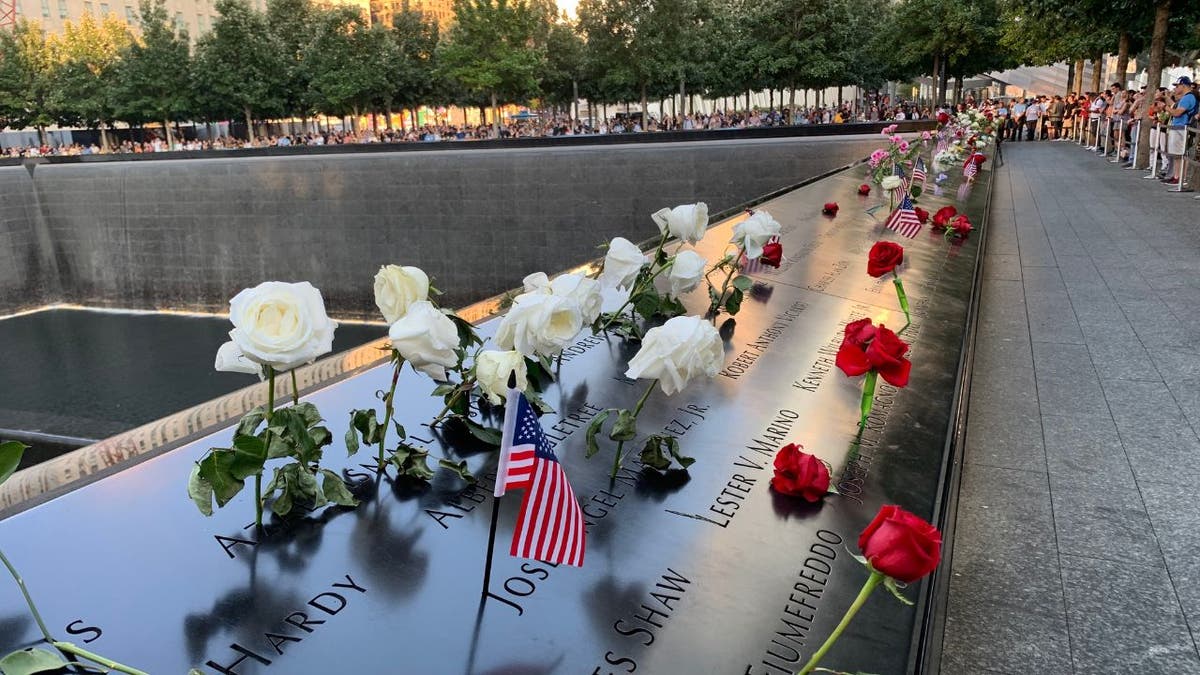
The 25th anniversary of the September 11, 2001, terrorist attacks served as a somber milestone for the nation, bringing thousands of mourners, dignitaries, and families of victims to the National September 11 Memorial and Museum in New York City. However, the solemnity of the occasion was punctured by a viral controversy involving Representative Alexandria Ocasio-Cortez (D-N.Y.) and New York City Mayor Zohran Mamdani. A brief, televised exchange between the two officials during the reading of the victims’ names ignited a firestorm of criticism across social media and political circles, prompting a sharp rebuke from former President Donald Trump.
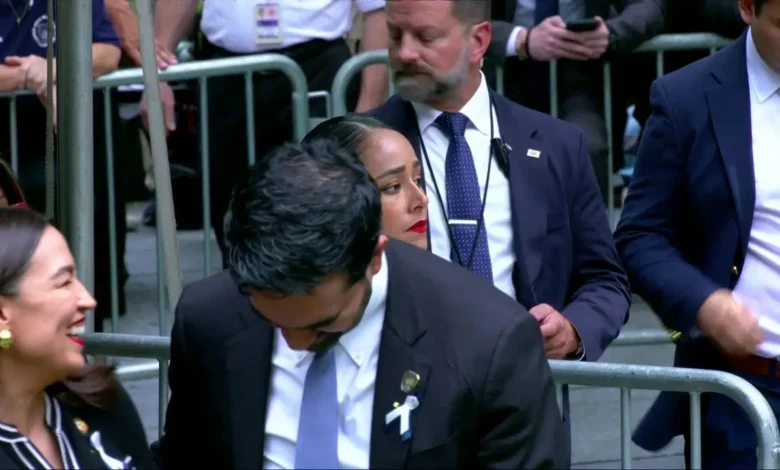
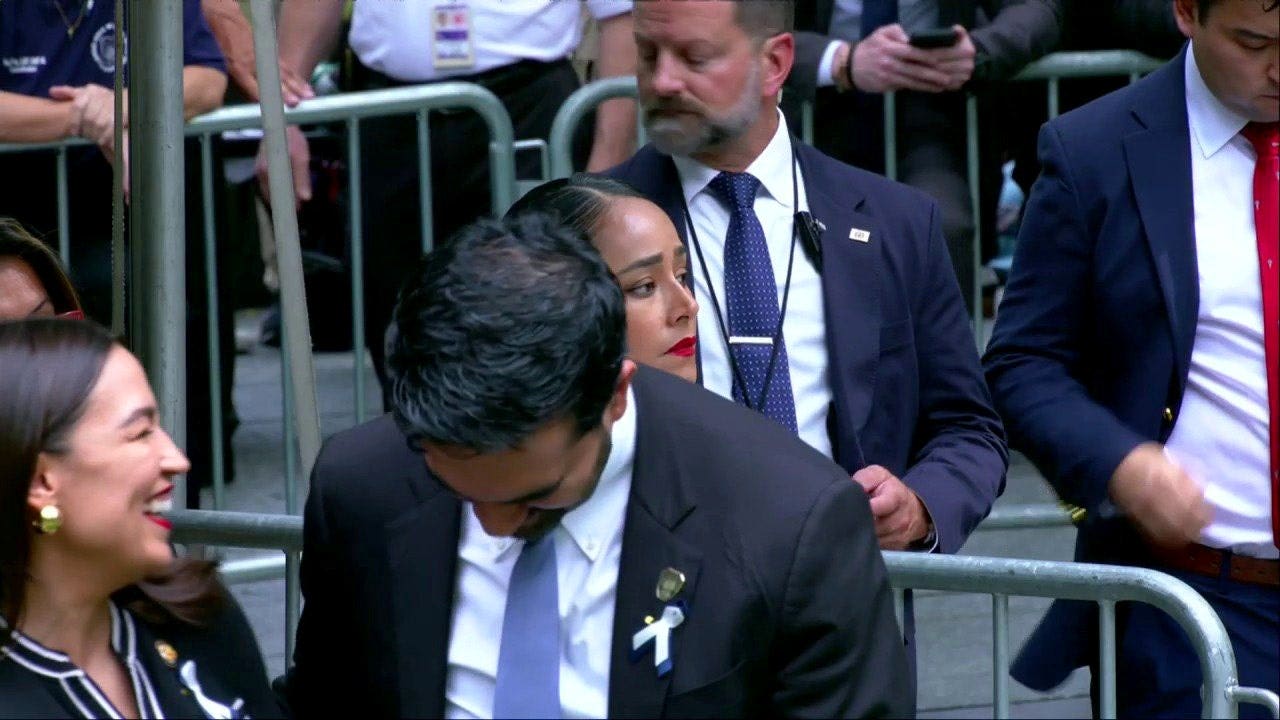
The footage, which circulated widely on Friday, captured a moment in which the two Democrats appeared to be sharing a lighthearted interaction. While the audio of the conversation remains unknown, the visual contrast—juxtaposing the gravity of the memorial service with the pair’s smiling faces—led to immediate backlash from observers who characterized the behavior as disrespectful toward the memory of the nearly 3,000 individuals lost in the 2001 attacks and the 1993 World Trade Center bombing.
The Context of the Controversy
The 25th anniversary event was intended to be a moment of national unity and reflection. The ceremony, which has become a staple of New York’s cultural and political calendar, involves the reading of the names of the victims, a tradition that demands absolute decorum from attendees.
Mayor Mamdani’s presence at the ceremony had been a point of contention even before the event began. In the weeks leading up to the anniversary, more than 110,000 individuals signed a petition urging the mayor to abstain from attending the memorial. The resistance to his attendance stemmed from a combination of past political statements and a polarized local political climate. Critics, including New York City Councilwoman Inna Vernikov, had previously characterized Mamdani’s platform as divisive, arguing that his presence at such a sacred site was inherently inappropriate given his history of contentious rhetoric regarding local law enforcement and national policy.
Presidential and Political Reaction
Former President Donald Trump, addressing the footage, did not mince words regarding his disapproval. "I think it’s terrible," Trump stated when prompted for comment on the video. "It’s not a place to be laughing, especially in that case. The fact that they were laughing together at a very important part of the ceremony was inappropriate."
The criticism was echoed by several prominent political figures. Representative Wesley Hunt (R-Texas) utilized the social media platform X to voice his frustration, framing the incident as a failure of professional conduct. "There is a time and a place for politics. This isn’t it," Hunt wrote. "Ground Zero is sacred ground. September 11 is not a photo op; it is not a networking event."
The reaction highlights the ongoing sensitivity surrounding the 9/11 Memorial. For many families of the victims, the site is a place of profound grief, and any perceived lack of solemnity by public officials is often met with swift and severe public outrage. The incident has reignited debates regarding the expectations of decorum for elected officials during national days of mourning.

Analyzing the Incident: The Defense
Despite the wave of condemnation, some who were present at the event have stepped forward to provide context to the viral clip. Michael Ragusa, an associate who has served as a member of former Mayor Rudy Giuliani’s entourage, argued that the optics of the video were misleading.
"The videos of them laughing are not true. I was standing next to them the whole time," Ragusa wrote on social media. According to his account, the clip captured a fleeting moment of greeting rather than a substantive, lighthearted conversation about unrelated topics. Ragusa further suggested that the focus on Ocasio-Cortez and Mamdani was a matter of selective scrutiny, noting that other politicians in the vicinity were also engaged in conversation throughout the lengthy proceedings.
The defense suggests that in large-scale, hours-long ceremonies, interactions between officials are inevitable, and that viewers may be misinterpreting brief, human moments of acknowledgment as signs of disrespect. However, for the critics, the specific timing of the exchange—occurring during the reading of the victims’ names—is the crux of the offense, regardless of the content of the dialogue.
Broader Implications and Public Sentiment
The incident serves as a bellwether for the intense polarization currently defining American political life. In an era where every move by a high-profile politician is documented and scrutinized, the margin for error during sensitive public events is effectively zero.
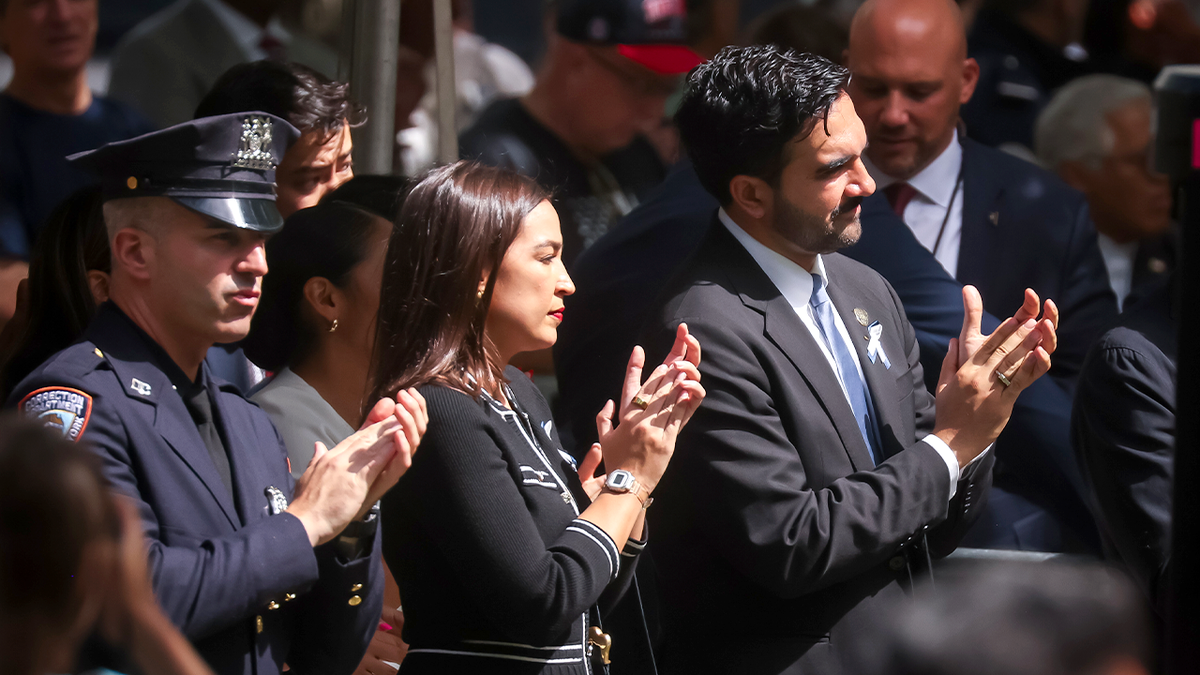
The 25th anniversary of 9/11 carries a unique weight. A quarter-century later, the trauma of the attacks remains a central pillar of New York City’s collective identity. When public officials appear to deviate from the expected emotional tone of such a day, it touches a nerve with a public that is already on edge regarding political discourse.
The backlash against Mamdani also reflects broader anxieties regarding the shifting political landscape in New York City. Having faced significant opposition from victims’ families prior to his arrival, the mayor was already under a microscope. His decision to attend despite the petition served as a catalyst for the subsequent outrage, turning a routine civic appearance into a focal point of partisan conflict.
Chronology of the 25th Anniversary Remembrance
The day’s events followed a strict, established protocol aimed at honoring the fallen. The ceremony began early in the morning, with families gathering to read the names of those lost in the North and South Towers, the Pentagon, and Shanksville, Pennsylvania.
- Early Morning: Official commencement of the reading of the names at the National September 11 Memorial.
- Mid-Morning: The incident involving Ocasio-Cortez and Mamdani occurs, which is subsequently captured by news cameras and distributed via social media.
- Late Morning: The video begins to trend on digital platforms, triggering an immediate wave of criticism from conservative commentators and victims’ advocates.
- Afternoon: High-profile political figures, including Donald Trump and members of Congress, issue public statements criticizing the behavior.
- Evening: Defenders of the officials, including Michael Ragusa, offer rebuttals, claiming the clip lacks the necessary context.
The Role of Digital Media in Political Accountability
This episode underscores how digital media acts as both a tool for transparency and a vector for rapid-fire political outrage. The fact that a single, soundless video could trigger a national conversation involving a former president and multiple members of Congress demonstrates the power of visual media in shaping political narratives.
While supporters of Ocasio-Cortez and Mamdani argue that the clip is being weaponized to score political points against two progressive figures, critics maintain that the standard for public behavior at a site of mass tragedy must be impeccable. The incident has not yet resulted in any formal disciplinary action or public apology from the officials involved, as both have largely remained silent regarding the specific criticisms leveled against them in the aftermath.
Conclusion
The 25th anniversary of 9/11 was intended to be a day of silence and reflection. Instead, it became a reminder of the hyper-partisan environment in which American governance now operates. Whether the interaction between Ocasio-Cortez and Mamdani was a benign greeting or a genuine lapse in judgment remains a matter of interpretation, but the reaction to it highlights a public that is increasingly sensitive to the behavior of its elected representatives.
As the nation continues to grapple with the legacy of 9/11, the expectations placed upon those in power will likely continue to rise. The debate surrounding this incident is less about the brief duration of a conversation and more about the symbolic weight carried by public servants when they stand on the sacred ground of a national tragedy. For now, the event stands as a case study in the power of optics and the enduring, raw sensitivity of a nation still mourning the lives lost twenty-five years ago.