
Thriving Interiors: Five Effortlessly Easy-Care Houseplants for a Greener Home
Cultivating a verdant indoor oasis doesn’t necessitate a green thumb or an encyclopedic knowledge of horticulture. For individuals seeking to introduce the benefits of houseplants – improved air quality, reduced stress, and aesthetic enhancement – without the commitment of demanding care routines, selecting the right species is paramount. This article identifies five exceptionally forgiving and low-maintenance houseplants that thrive with minimal intervention, making them ideal for busy individuals, novice plant parents, or those who simply prefer a hands-off approach to plant care. These selections are chosen for their resilience, adaptability to various indoor environments, and general tolerance for common care oversights.
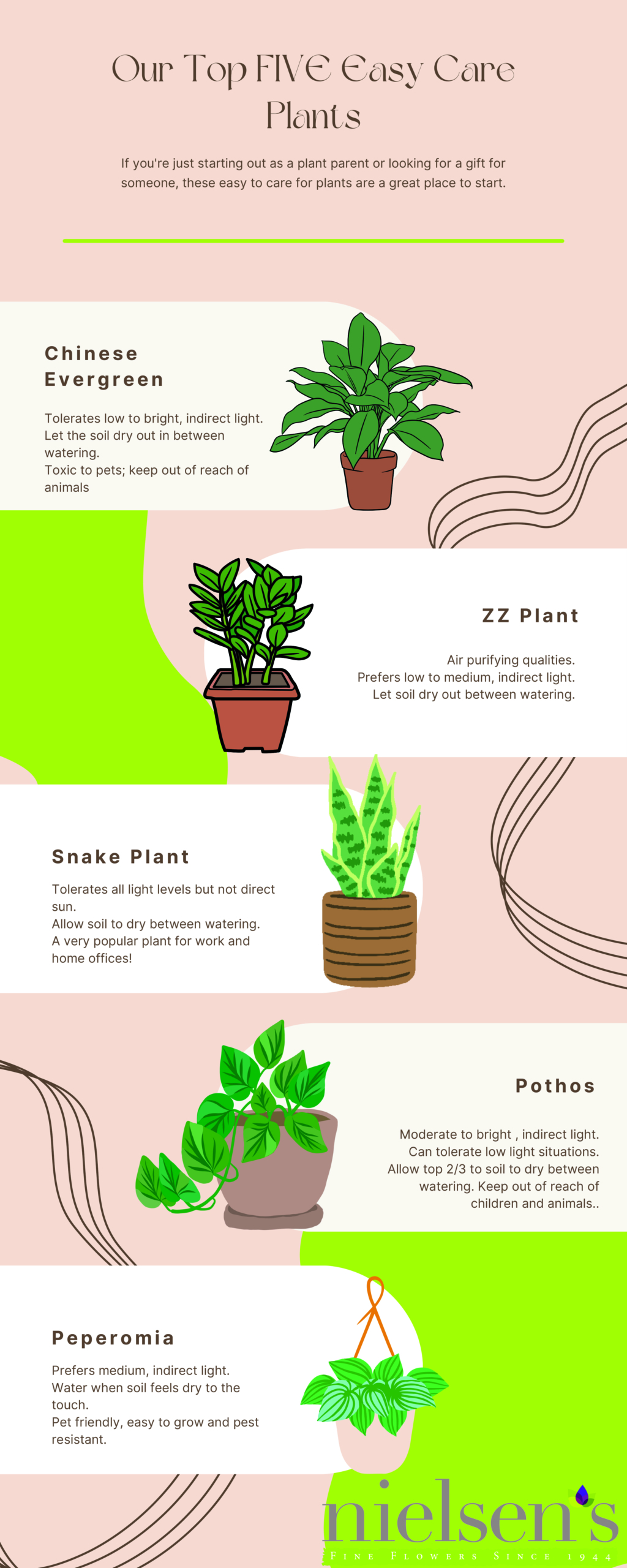
The Snake Plant (Sansevieria trifasciata), also known as Mother-in-Law’s Tongue, stands as a paragon of hardiness and adaptability. Its stiff, upright, sword-like leaves, often variegated with shades of green, yellow, and white, contribute a striking architectural element to any interior design. Beyond its aesthetic appeal, the snake plant is renowned for its air-purifying capabilities, effectively filtering out common household toxins like formaldehyde, benzene, and xylene. This makes it a valuable addition to bedrooms, living areas, and offices alike. The primary reason for its ease of care lies in its drought tolerance. Snake plants are succulents, meaning they store water in their leaves and roots, allowing them to endure extended periods without watering. Overwatering is the most common cause of death for snake plants, leading to root rot, a fungal disease that is difficult to treat. Therefore, the most crucial aspect of snake plant care is to allow the soil to dry out completely between waterings. A simple finger test, inserting a digit into the soil up to the second knuckle, will indicate moisture levels. If the soil feels dry at that depth, it is time to water. During the warmer months, typically spring and summer, watering might be required every 2-4 weeks. In the cooler, dormant period of autumn and winter, watering frequency can be reduced to once a month or even less, depending on ambient humidity and temperature. It is essential to use well-draining potting mix, such as a cactus or succulent blend, and a pot with drainage holes to prevent waterlogging. Snake plants are remarkably tolerant of a wide range of light conditions, from low-light environments to bright, indirect sunlight. While they will grow more slowly in dim conditions, they will still survive and maintain their health. Direct, intense sunlight, however, can scorch their leaves, so it’s best to place them near a window that receives filtered or indirect light. They can also adapt to fluorescent lighting, making them suitable for office settings. Regarding temperature, snake plants prefer average room temperatures between 65-80°F (18-27°C) and can tolerate slightly cooler temperatures but should be protected from frost. Fertilization is minimal; a balanced liquid fertilizer diluted to half strength can be applied once or twice during the growing season (spring and summer) to encourage growth, but it is not essential for their survival. Propagation is also remarkably easy, with new plants readily grown from leaf cuttings or by dividing rhizomes. To propagate from a leaf cutting, simply cut a healthy leaf into several 2-3 inch sections, allowing the cut ends to callus over for a day or two, and then plant them cut-side down in moist potting mix. New plantlets will emerge from the cut surface. This plant’s resilience, air-purifying qualities, and undemanding nature make it a cornerstone of effortless indoor gardening.
The ZZ Plant (Zamioculcas zamiifolia), characterized by its glossy, dark green, ovate leaves that grow in an attractive arching manner from thick, succulent stems, is another exceptionally resilient houseplant. Its architectural form and sophisticated appearance lend themselves to modern and minimalist interior designs. Similar to the snake plant, the ZZ plant is a drought-tolerant succulent that stores water in its bulbous rhizomes, allowing it to survive prolonged periods of neglect. Overwatering is its nemesis, as it leads to root and rhizome rot. The key to successful ZZ plant care is infrequent watering and ensuring the soil is completely dry between waterings. A moisture meter or the finger test can be used to gauge soil dryness. During the growing season (spring and summer), water when the top 2-3 inches of soil are dry, which might be every 2-4 weeks. In the dormant season (autumn and winter), watering can be reduced to once a month or even less. Always use a well-draining potting mix and a pot with drainage holes. The ZZ plant is remarkably adaptable to low-light conditions, making it an excellent choice for dimly lit corners or rooms that receive little natural light. It can also tolerate bright, indirect sunlight, but prolonged exposure to direct sun can cause leaf burn. Its ability to thrive in low light makes it one of the most forgiving houseplants for those who may forget to water or are unsure about optimal light placement. ZZ plants prefer average room temperatures between 65-75°F (18-24°C). They are not particularly sensitive to humidity but will appreciate average household levels. Fertilization is not essential for the ZZ plant’s survival, but a light feeding with a balanced liquid fertilizer, diluted to half strength, once in the spring or summer can promote more vigorous growth. Propagating the ZZ plant can be done through division of the rhizomes during repotting or by leaf cuttings. Leaf cuttings, while slower, are an effective method. Simply take a healthy leaf, dip the cut end in rooting hormone (optional but recommended), and insert it into moist potting mix. With patience, new shoots will emerge from the base of the cutting. The ZZ plant’s ability to tolerate low light, infrequent watering, and generally poor conditions makes it a top contender for the easiest houseplants to care for, providing lush greenery with minimal effort.
The Spider Plant (Chlorophytum comosum), with its characteristic arching, strap-like leaves, often variegated with white or cream stripes, is a classic and exceptionally easy-to-care-for houseplant. What makes the spider plant particularly appealing to beginners is its prolific production of "spiderettes" or plantlets, which hang down from the mother plant, resembling spiders dangling from their webs. These plantlets are not only visually interesting but also serve as an easy propagation method. The spider plant is forgiving when it comes to watering, preferring to be kept consistently moist but not waterlogged. The key is to allow the top inch of soil to dry out before watering again. Overwatering can lead to root rot and yellowing leaves, while underwatering can cause the tips of the leaves to turn brown and crispy. A good indicator of thirst is when the soil feels dry to the touch. Water thoroughly until water drains from the bottom of the pot, and discard any excess water that collects in the saucer. Spider plants thrive in bright, indirect sunlight. While they can tolerate lower light conditions, their variegation may become less pronounced, and they may not produce as many spiderettes. Direct sunlight, however, can scorch their leaves. Placing them near an east or west-facing window, or a few feet away from a south-facing window, is ideal. Average room temperatures are perfectly suitable for spider plants, typically between 60-75°F (15-24°C). They appreciate moderate humidity but are quite tolerant of typical household humidity levels. If the air is particularly dry, misting occasionally or placing the pot on a pebble tray filled with water can be beneficial. Fertilization is relatively simple. During the spring and summer growing season, feed with a balanced liquid fertilizer diluted to half strength every 2-4 weeks. During the autumn and winter, reduce fertilization to once every 6-8 weeks or cease altogether. Brown tips on spider plant leaves are a common concern, often caused by fluoride or salts in tap water, or inconsistent watering. Using filtered or distilled water can help mitigate this issue. Propagation is incredibly straightforward thanks to the numerous spiderettes produced. Once these plantlets develop small roots of their own, they can be carefully snipped from the mother plant and planted in moist potting mix or even placed directly in water until roots form. They can also be propagated from the division of the parent plant during repotting. Their rapid growth, attractive appearance, and simple propagation make them a rewarding choice for anyone looking to add greenery with minimal fuss.
The Pothos (Epipremnum aureum), also known as Devil’s Ivy, is a trailing vine that is almost legendary for its hardiness and adaptability. Its heart-shaped leaves, which can be solid green or variegated with shades of yellow, white, or light green, make it a versatile choice for hanging baskets, shelves, or trained to climb. The Pothos is incredibly forgiving when it comes to watering, thriving on neglect. It prefers its soil to dry out between waterings. Similar to the snake plant and ZZ plant, overwatering is the primary cause of problems, leading to yellowing leaves and root rot. A good rule of thumb is to water when the top 1-2 inches of soil feel dry to the touch. In warmer months, this might be every 1-2 weeks, while in cooler months, it can be as infrequent as every 3-4 weeks. Pothos is also very communicative about its watering needs; its leaves will begin to droop slightly when it is thirsty, offering a clear visual cue. This plant is exceptionally tolerant of low-light conditions, making it a perfect candidate for darker corners of a home or office. While it can survive in minimal light, its variegation will be more pronounced and its growth more vigorous in brighter, indirect light. Avoid direct sunlight, as it can scorch the leaves. Pothos is not picky about temperature, happily existing in average room temperatures between 65-85°F (18-29°C). It can tolerate slight fluctuations but should be protected from drafts and frost. Humidity is also not a major concern; it thrives in average household humidity. Fertilization is not a necessity for Pothos, but a light feeding with a balanced liquid fertilizer, diluted to half strength, once or twice during the spring and summer growing season will encourage faster growth and lusher foliage. The real beauty of Pothos lies in its ease of propagation. Stem cuttings can be taken at any point along the vine, ideally with at least one leaf and a node (the small bump where a leaf attaches to the stem). These cuttings can be placed directly in water or planted in moist potting mix. Roots will typically form within a few weeks, and the new plant can then be potted up. This ease of propagation means you can quickly fill your home with Pothos or share cuttings with friends and family. Its trailing habit, tolerance of low light and infrequent watering, and simple propagation methods solidify its status as one of the most foolproof houseplants available.
The Cast Iron Plant (Aspidistra elatior), as its name suggests, is an incredibly tough and resilient plant, aptly named for its ability to withstand neglect and poor growing conditions. It features long, dark green, leathery leaves that grow directly from the soil, creating a dense, upright clump. This plant is the epitome of low-maintenance, making it an excellent choice for those who have very little time or experience with plant care. The Cast Iron Plant is remarkably drought-tolerant. It prefers its soil to dry out between waterings. Overwatering is the most significant threat, as it can lead to root rot. It’s best to water thoroughly only when the top 2-3 inches of soil are dry. During the warmer months, this might be every 2-3 weeks, and in the cooler, dormant months of autumn and winter, watering can be reduced to once a month or even less. The Cast Iron Plant is renowned for its ability to thrive in very low-light conditions, making it suitable for hallways, dimly lit corners, or rooms with minimal natural light. It can also tolerate moderate indirect light, but direct sunlight should be avoided at all costs, as it will scorch its leaves. Its tolerance for low light is one of its most celebrated attributes. This plant is not particular about temperature and will thrive in a wide range of average room temperatures, typically between 50-80°F (10-27°C). It can tolerate cooler temperatures better than many other houseplants. Humidity is also not a significant factor; it does well in average household humidity levels and does not require frequent misting. Fertilization is minimal and often unnecessary for the Cast Iron Plant’s survival. If you wish to encourage growth, a light feeding with a balanced liquid fertilizer diluted to half strength once in the spring or summer is sufficient. Over-fertilization can do more harm than good. While propagation is slower compared to other plants on this list, it can be achieved through division of the rhizomes during repotting. When the plant becomes overcrowded, you can carefully separate clumps of rhizomes and replant them individually. The Cast Iron Plant’s unwavering resilience, tolerance for low light and inconsistent watering, and its ability to add a touch of lushness to even the most challenging indoor environments make it an undisputed champion for effortless plant ownership.

