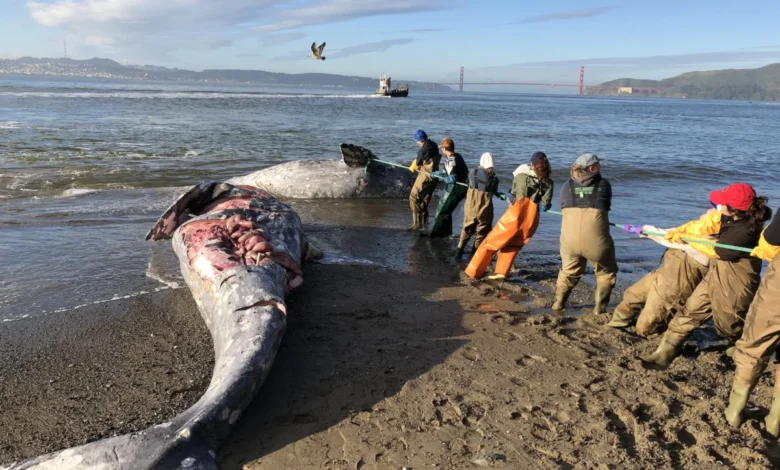
The coastal town of Newport, Oregon, recently served as the backdrop for an urgent two-day summit that brought together hundreds of marine biologists, government researchers, and environmental advocates. The singular focus of this gathering was the precarious future of the eastern North Pacific gray whale, a species currently facing a population collapse that has alarmed the scientific community. Over the last decade, the gray whale population has been halved, dropping from a peak of approximately 30,000 individuals in 2016 to current estimates ranging between 11,700 and 17,000. This drastic decline, coupled with a record-low birth rate of just 85 calves recorded last year, has transformed what was once a conservation success story into a mounting environmental emergency.
The Anatomy of a Population Collapse
The eastern gray whale’s life cycle is a feat of evolutionary endurance, encompassing one of the longest annual migrations of any mammal. Each year, these whales travel thousands of miles from their summer feeding grounds in the Arctic—where they feast on small crustaceans—to the warmer waters of Mexico, where they calve. However, the Arctic is warming at a rate nearly four times faster than the global average, a phenomenon that has triggered a catastrophic ripple effect.
As sea ice recedes, the delicate ecosystem that supports the whales’ primary prey is unraveling. The resulting food scarcity forces the whales to begin their arduous migration with critically low energy reserves. This nutritional deficit leads to a cascade of physiological failures: lower pregnancy rates, higher calf mortality, and an increased vulnerability to the myriad threats they face during their journey.
The consequences of this energy deficit are increasingly visible on the West Coast. This past summer alone, 187 gray whales were discovered dead on beaches across the region. Marine biologists warn that this figure represents only a fraction of the total mortality, as many carcasses likely sink to the ocean floor before they can be documented. Malnutrition also appears to be driving whales into unconventional and hazardous feeding areas, such as the San Francisco Bay, where they are increasingly susceptible to vessel strikes and entanglement in fishing gear. Estimates indicate that in the San Francisco Bay area, between 20% and 50% of whale deaths are directly attributable to collisions with ships.
A Tense Atmosphere: Science Versus Policy
While the conference in Newport was intended to facilitate the exchange of data, participants described a palpable sense of apprehension. Many of the scientists in attendance are affiliated with federal agencies, such as the National Oceanic and Atmospheric Administration (NOAA), or rely on federal funding that has been subject to significant scrutiny and reduction under the current administration.
Since 2025, the federal government has implemented sweeping cuts to NOAA’s staff and research budget. Furthermore, there have been formal proposals to eliminate the Marine Mammal Commission—an independent agency tasked with providing science-based oversight on marine mammal policy—and a systematic roll-back of habitat protections under the Endangered Species Act. With approximately 400 species currently caught in a federal backlog awaiting listing decisions, the atmosphere at the conference was one of profound caution.
"People were walking on eggshells," noted Mark Palmer, an associate director at the Earth Island Institute. According to Palmer and other attendees, the conference organizers explicitly mandated that the event remain focused strictly on scientific data, effectively barring discussions of policy or political implications. This rigid separation of science from policy highlights the mounting tension between the researchers tasked with monitoring the species and the government agencies responsible for their protection.
Legal Challenges and Regulatory Deadlines
The frustration within the scientific community is compounded by the federal government’s failure to meet legal obligations. Gray whales were removed from the Endangered Species Act list in 1994, following a successful recovery from the commercial whaling era of the 19th and 20th centuries. However, given the current population crash, environmental groups have petitioned for their relisting.
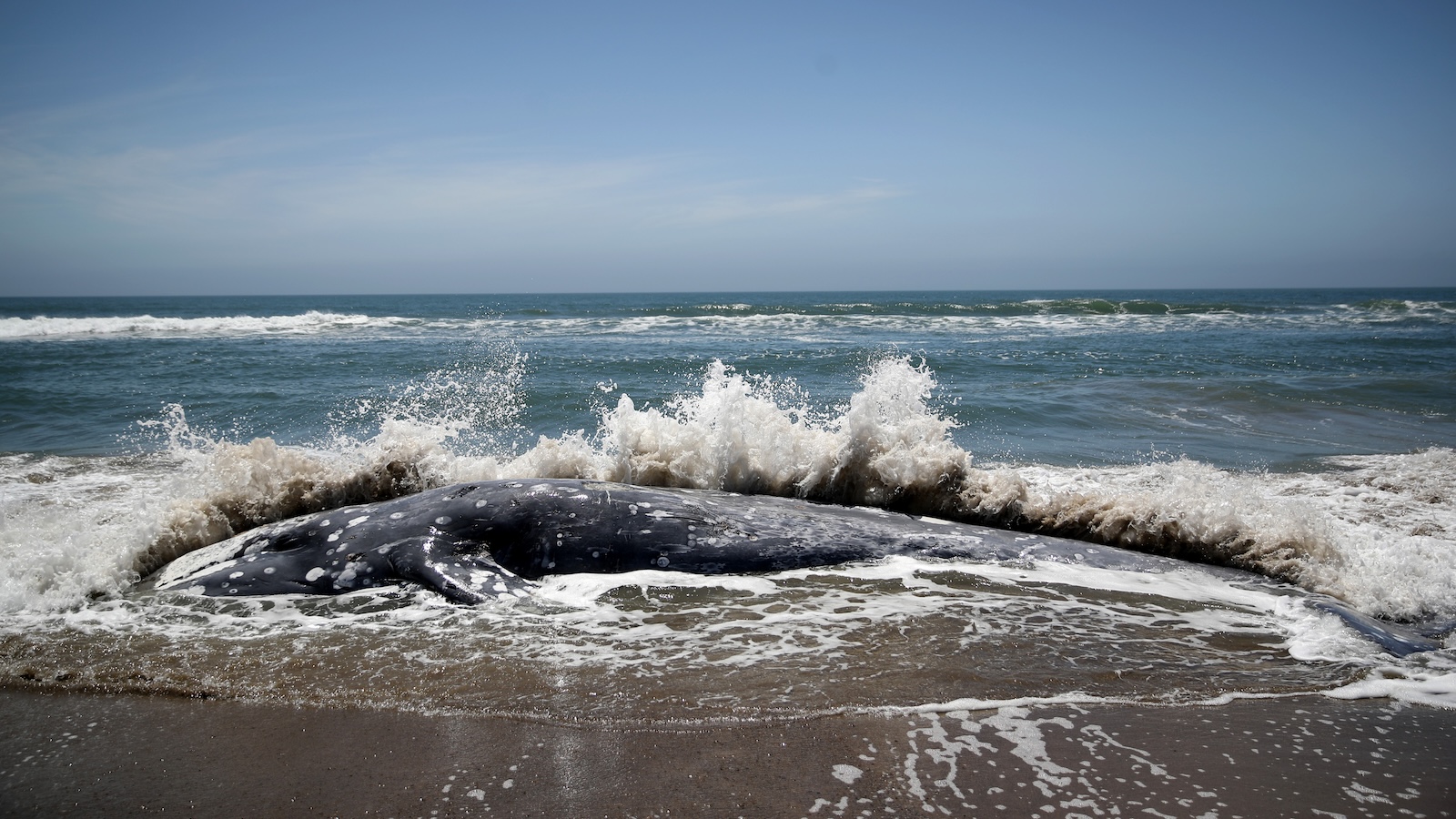
NOAA, which is legally required to respond to such petitions, has recently missed statutory deadlines for a decision. In late August, a coalition of conservation groups, including the Center for Biological Diversity, filed a formal notice of intent to sue. This legal maneuver serves as a final warning: if the administration does not provide a substantive response to the petition within two months, a formal lawsuit will be initiated.
Miyoko Sakashita, an attorney leading the litigation, argues that the legal mandate is clear. "The law says they have to use the best available science," Sakashita stated. "When we look at this terrible population decline, it seems like there cannot be any other answer than to proceed forward with a threatened or endangered listing." A formal listing would trigger the development of a federally mandated recovery plan and unlock critical resources for habitat restoration and population monitoring.
Discrepancies in Data and Oversight
Adding to the controversy are recent, conflicting reports regarding the health of the population. While independent researchers emphasize the record-low birth rates and the overall decline in numbers, NOAA has released estimates suggesting the population rebounded by roughly 5,000 individuals in the last year. Many experts, including those at the Newport conference, have expressed skepticism regarding these figures.
"It’s just physically impossible for gray whales to produce that many animals in such a short time," Palmer remarked, citing the physiological limits of whale reproduction. This discrepancy has fueled accusations that the government is underplaying the severity of the crisis to avoid the political and economic costs associated with granting the species protected status.
Mitigation Strategies: Slowing the Tide
In the absence of a federal mandate, various non-governmental organizations and academic institutions are spearheading localized efforts to mitigate human-caused threats. The "Whale Safe" project, led by the Benioff Ocean Science Laboratory at the University of California, Santa Barbara, utilizes a high-tech combination of sonar, thermal cameras, and satellite tagging to map whale activity in real-time.
The primary goal of these initiatives is to secure voluntary compliance from the shipping industry to reduce speeds to 10 knots or less in high-traffic zones. While similar speed limits are mandatory for large vessels on the U.S. East Coast, the West Coast remains largely reliant on voluntary measures. Projects like "Blue Whales Blue Skies" have successfully incentivized shipping companies to slow down through public recognition and financial offsets. However, the persistence of cruise ships and other commercial vessels maintaining high speeds through critical feeding and migration corridors remains a significant hurdle.
Broader Implications for Global Biodiversity
The plight of the eastern gray whale is viewed by many experts as a sentinel event. Richard Steiner, a marine conservation biologist who initiated the relisting petition, warned that the situation is a harbinger of broader ecological shifts. "As goes Arctic sea ice, so goes the gray whale population," Steiner said, noting that the extinction of the Atlantic gray whale centuries ago—the only known instance of a whale species going extinct due to human activity—serves as a grim precedent for the vulnerability of the species.
If current climate trends continue, the consequences could prove catastrophic not only for gray whales but for the entire marine ecosystem. As researchers continue to document the decline, the onus shifts to policymakers. The data collected in Newport serves as a definitive record of an ecosystem in distress; whether that data will be used to guide meaningful intervention remains the central question facing the administration. For now, the future of the gray whale hangs in the balance, caught between the inexorable pressures of a warming climate and the slow, often contentious gears of federal regulation.