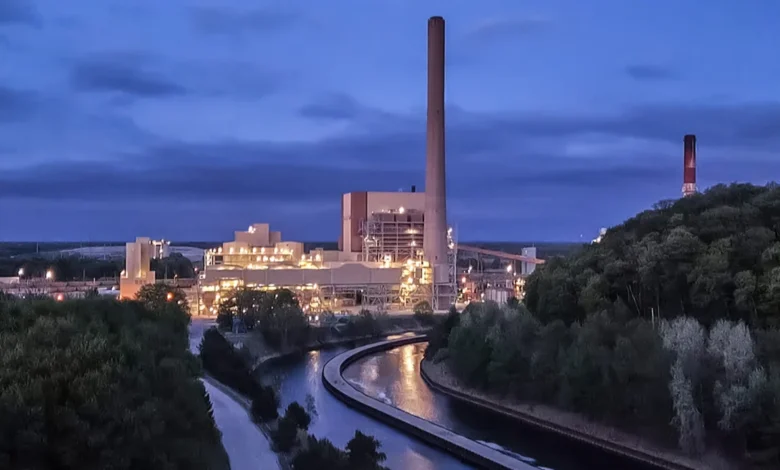
The United States Court of Appeals for the D.C. Circuit issued a landmark ruling on Friday that curtailed the executive branch’s authority to mandate the continued operation of aging fossil fuel infrastructure under the guise of national energy emergencies. The decision, which specifically addressed the J.H. Campbell power plant in West Olive, Michigan, marks a significant judicial check on the Trump administration’s aggressive push to preserve coal-fired electricity generation despite established industry transition plans. Writing for the court, Judge Cornelia Pillard characterized the emergency powers invoked by the Department of Energy (DOE) as a narrow, last-resort mechanism, rather than a broad mandate for the executive to override market-driven or regulatory retirements of utility assets.
The J.H. Campbell facility, a 64-year-old staple of the Michigan power grid, had been slated for decommissioning in May 2025. However, in an eleventh-hour maneuver, the DOE utilized emergency provisions under the Federal Power Act to prevent the plant’s closure. The administration justified this action by citing potential regional grid instability and the escalating energy demands of burgeoning data centers. While the ruling does not immediately force the plant to go offline, it dismantles the legal scaffolding the administration used to keep seven similar fossil fuel plants operational nationwide, signaling a potential shift in the regulatory landscape for energy policy.
Chronology of the Energy Emergency Mandate
The legal conflict stems from the administration’s inaugural energy policy directive. On January 20, 2025, President Donald Trump signed an executive order declaring a "national energy emergency." This declaration served as the primary instrument for federal agencies to prioritize fossil fuel production and retention. By early spring of 2025, the DOE began systematically identifying coal-fired units scheduled for retirement and issuing "emergency orders" to keep them on the grid.
The timeline of the J.H. Campbell case serves as a microcosm for this broader strategy:
- May 2025: The J.H. Campbell plant is scheduled for permanent retirement following a comprehensive transition plan developed by its operator, Consumers Energy Company.
- May 2025 (Days before closure): The DOE issues an emergency directive, citing the Federal Power Act, to maintain operations, claiming that regional energy supply could not meet demand without the plant’s capacity.
- June 2025–August 2026: Environmental groups, including the Environmental Defense Fund (EDF) and the Natural Resources Defense Council (NRDC), file a series of lawsuits challenging the DOE’s interpretation of "emergency."
- September 2026: The D.C. Circuit Court of Appeals issues its decision, ruling that the DOE’s invocation of the Federal Power Act was an overreach and that the "emergency" did not meet the legal threshold for such an intervention.
Environmental and Economic Impact Analysis
The continued operation of the J.H. Campbell plant has ignited a firestorm of controversy regarding both public health and financial accountability. According to data provided by the Environmental Defense Fund, the plant’s forced extension has resulted in the emission of 1,000 tons of nitrogen oxides, 2,000 tons of sulfur dioxide, and 140 tons of fine particulate matter since May 2025. These pollutants are documented contributors to respiratory distress and cardiovascular issues.
Local residents in West Olive, a community of approximately 3,000 people, are now bearing the brunt of these emissions. The EDF projects that the added pollution load could be responsible for as many as 100 new cases of pediatric and adult asthma in the surrounding area. Beyond the health externalities, the financial burden is substantial. The plant’s operation since its original retirement date has incurred $259 million in costs. Consumers Energy Company, the utility provider, has sought to pass these costs directly to ratepayers in Michigan and ten other states, sparking backlash from consumer advocacy groups and state regulatory boards.
Official Responses and Legal Perspectives
The ruling has triggered varying reactions from stakeholders. Ted Kelly, director and lead counsel for U.S. Clean Energy at the Environmental Defense Fund, noted that while the ruling does not declare the "energy emergency" itself illegal, it effectively neuters its practical application. "You can say there is an ‘energy emergency’ as much as you want—even if you’re the president," Kelly remarked. "But what you can actually do depends on what the real facts on the ground are and what the law actually lets you do in different situations."
Conversely, the administration is expected to weigh its options. Gavin McCabe, senior litigating counsel at the NRDC, suggested that the administration may attempt to delay the enforcement of the ruling by seeking a rehearing before the full D.C. Circuit or petitioning the Supreme Court for a writ of certiorari. "The court order doesn’t mean the plant has to shut down immediately," McCabe said. "The administration has signaled it will likely fight this to the end, but the precedent is now firmly against them."
The Paradox of Energy Policy: Renewables vs. Coal
Analysts have pointed to a glaring contradiction in the administration’s energy posture. While the DOE has aggressively spent capital to keep coal plants running, it has simultaneously moved to dismantle renewable energy infrastructure. By mid-August 2026, the administration had allocated roughly $4 billion in compensatory payouts to private entities to terminate or suspend offshore wind projects. These projects, had they been completed, were projected to generate sufficient electricity to power over 15 million homes.
This dual-track approach—subsidizing the retention of legacy fossil fuel assets while actively disincentivizing modern renewables—has drawn sharp criticism from energy sector analysts. The prevailing argument among critics is that the administration’s "emergency" declarations are pretextual, serving as a political tool to bolster coal industry support rather than a data-driven strategy to ensure grid reliability. McCabe summarized this sentiment: "Why would the administration be blocking sources of energy that are ready to come online in favor of keeping online something that has been set to be retired? There appears to be a pretext that the president wants to help coal industry supporters."
Future Implications for Grid Reliability and Law
The D.C. Circuit’s ruling serves as a vital signal for several other pending lawsuits. Courts across the nation have been holding similar cases in abeyance, awaiting guidance on how to interpret the Trump administration’s emergency authorities. With this precedent established, the legal hurdles for the remaining six plants forced to stay open have increased significantly.
From an engineering perspective, the case also highlights the growing tension between aging infrastructure and the rising load requirements of AI and cloud computing data centers. While the administration argued that these data centers created an "emergency" demand, the court’s decision suggests that long-term grid planning must be handled through established regulatory channels, such as the Federal Energy Regulatory Commission (FERC) and regional transmission organizations, rather than through executive orders that bypass standard cost-benefit analyses.
As the legal battle moves forward, the J.H. Campbell plant remains a focal point for the broader debate over the future of the U.S. energy mix. The case serves as a test of the limits of presidential power in the face of environmental mandates and market realities. Whether the administration chooses to comply with the court’s directive or pursues a protracted legal escalation, the judicial branch has made one thing clear: an executive declaration of an "emergency" is not a blank check to override the statutes that govern the nation’s power grid. The outcome of this case will likely define the parameters of energy policy for the remainder of the current administration’s term and set the stage for how future presidents navigate the intersection of national security, environmental regulation, and infrastructure management.