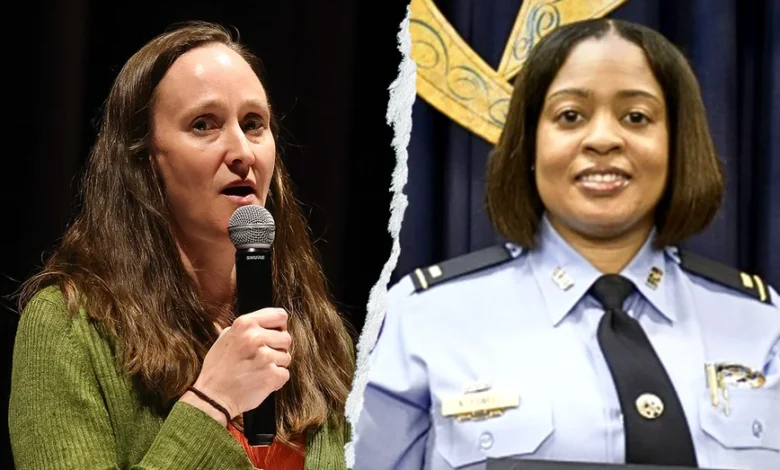
The administration of Seattle Mayor Katie Wilson is currently navigating a period of heightened scrutiny following an awkward and widely circulated television interview regarding the city’s approach to public safety and gun violence. The incident, which occurred during a press engagement alongside Seattle Police Department Assistant Chief Nicole Powell and Amy Barden, the head of the city’s Community Assisted Response and Engagement (CARE) department, has reignited a fierce local debate over the role of surveillance technology in crime prevention.
The interview, conducted by KOMO News reporter Chris Daniels, centered on the efficacy of Flock-type automated license plate readers and surveillance cameras as tools to address the city’s persistent backlog of unsolved criminal cases. The exchange, which was captured on video, featured a notable moment of hesitation from Assistant Chief Powell when asked directly about the utility of these technological tools. Before the police official could offer a substantive response, Mayor Wilson interjected, asserting that cameras were indeed a "useful tool," citing past instances where footage from Seattle Center had aided in investigations.
Chronology of the Surveillance Policy Shift
The current controversy is the latest chapter in a long-standing policy dispute within Seattle municipal government. During her mayoral campaign, Katie Wilson—who identifies as a socialist—expressed deep-seated skepticism regarding the expansion of the city’s surveillance infrastructure. In September of last year, Wilson publicly argued that the deployment of additional cameras would not provide a "magical" solution to public safety, suggesting instead that such measures could potentially compromise the privacy and vulnerability of local residents.
Upon assuming office, Wilson acted on those campaign assertions, ordering a moratorium on the expansion of the city’s surveillance network. This move allowed existing cameras to remain operational but halted the installation of new units pending a comprehensive privacy and data-governance audit. This policy shift created a friction point between the administration and various public safety advocates who argue that modern technology is a vital component of modern policing.

During this week’s interview, when pressed by the reporter on when a final decision regarding the expansion would be reached, the Mayor emphasized that the administration is awaiting the conclusion of the aforementioned audit. She indicated that the results would be made public by the end of the month, at which point a definitive policy direction would be established.
Contextualizing the Public Safety Climate
The tension surrounding the camera debate cannot be separated from the broader context of Seattle’s public safety landscape. In recent years, the city has grappled with significant challenges related to violent crime and a high volume of unsolved cases. Data from the Seattle Police Department has frequently highlighted the difficulty of tracking suspects in a transient urban environment, leading some law enforcement experts to advocate for the integration of real-time surveillance data.
The "Bite of Seattle" shooting, referenced by Mayor Wilson during the interview, serves as a focal point for this debate. Proponents of surveillance argue that the availability of footage in such high-profile incidents demonstrates that cameras are essential for identifying perpetrators and securing convictions. Conversely, civil liberty advocates argue that such systems are prone to misuse and that the city’s focus should remain on social services and community-based interventions, represented by the CARE department’s mission.
Analysis of the Interview Dynamics
The interview dynamics revealed a palpable disconnect between the executive branch and the law enforcement officials tasked with carrying out public safety policy. When Assistant Chief Powell was initially asked whether the cameras could assist with unsolved cases, her visible hesitation and look toward the Mayor were interpreted by many observers—and subsequently highlighted by political commentators—as an indication of internal conflict or political pressure.
The subsequent intervention by Amy Barden, while intended to steer the conversation toward a "holistic approach," highlighted the ideological divide within the city’s leadership. Barden’s focus on long-term service referrals and "meaningful improvement" in the lives of individuals represents a departure from the traditional law enforcement-led model of crime reduction. This holistic approach, while championed by the administration as a more compassionate and effective path, has faced criticism from those who believe the immediate urgency of violent crime requires a more robust, technology-driven enforcement presence.

Public and Political Reactions
The fallout from the interview has been swift, with reactions surfacing across social media and political advocacy circles. The conservative-leaning account "End Wokeness" characterized the moment as a significant indicator of the current administration’s hesitation to fully support traditional policing tools, despite the mounting pressure of crime statistics.
Furthermore, the advocacy group Future 42 released a statement criticizing the Mayor’s handling of the interview, suggesting that the interruption of the Assistant Chief of Police reflects a lack of confidence in the city’s own law enforcement leadership. The group argued that the optics of the exchange damaged public trust, as residents are left wondering whether the Mayor’s political ideology is superseding the practical recommendations of the police department.
The critique is not limited to the surveillance issue alone; the Mayor has also faced recent scrutiny regarding her personal conduct in relation to public messaging, specifically regarding her stance on a boycott of a major coffee retailer. These compounding issues have contributed to a narrative of instability within the Mayor’s office.
Policy Implications and Future Outlook
The decision to pause the surveillance expansion remains a high-stakes gamble for the Wilson administration. If the forthcoming audit reveals that the current system is inadequate to meet the city’s safety requirements, the administration will face a difficult choice: abandon its campaign-trail commitment to privacy, or double down on its policy at the risk of further alienating public safety proponents.
From a data-driven perspective, the debate over Flock cameras and similar technologies is a national phenomenon. Cities across the United States are currently weighing the benefits of "force multiplication"—the ability of a small number of officers to cover more ground through technology—against the risk of creating a surveillance state. As of mid-2026, several major metropolitan areas have opted for expanded camera networks, citing high clearance rates for violent crimes.
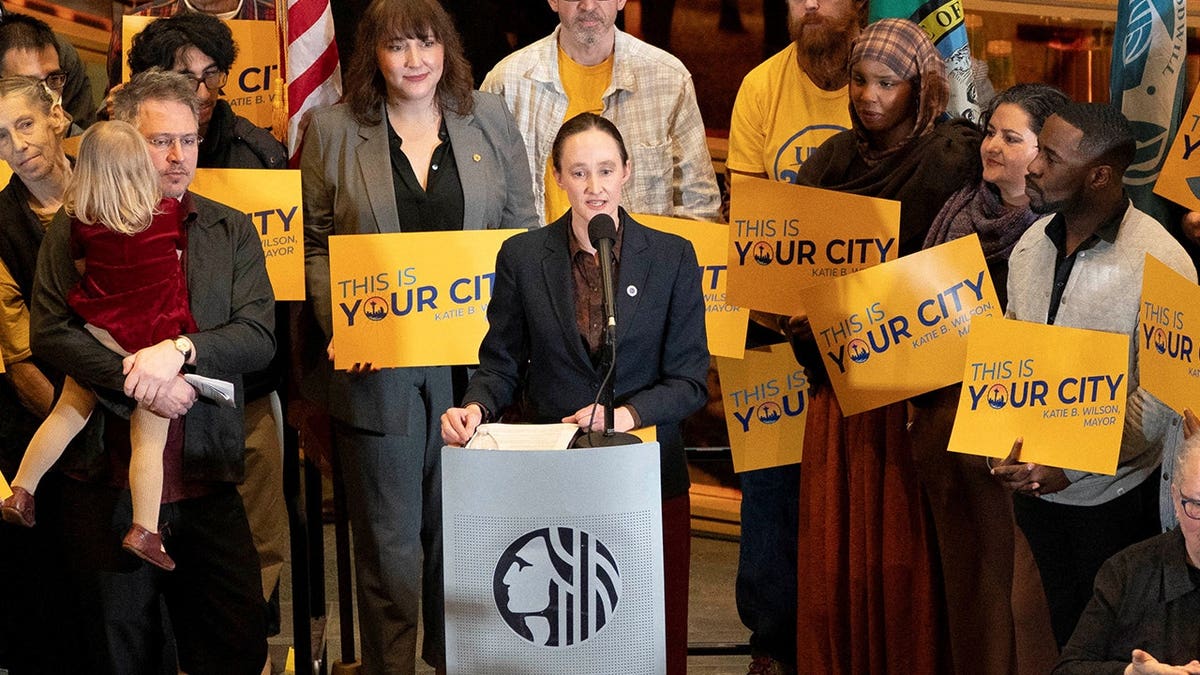
As the end of the month approaches, all eyes in Seattle will be on the release of the privacy and data-governance audit. The findings will likely serve as the definitive justification for the Mayor’s next steps. Whether the administration chooses to embrace a more traditional model of public safety or sticks to its alternative, community-based strategy, the decision will undoubtedly serve as a bellwether for the future of governance in a city currently at a crossroads.
The challenge for the Mayor will be to demonstrate that her administration is capable of navigating complex public safety needs without allowing political rhetoric to undermine the professional judgment of those in the field. The upcoming weeks will prove critical in determining whether this administration can effectively bridge the gap between its ideological base and the practical, often urgent demands of a city facing a significant public safety crisis.