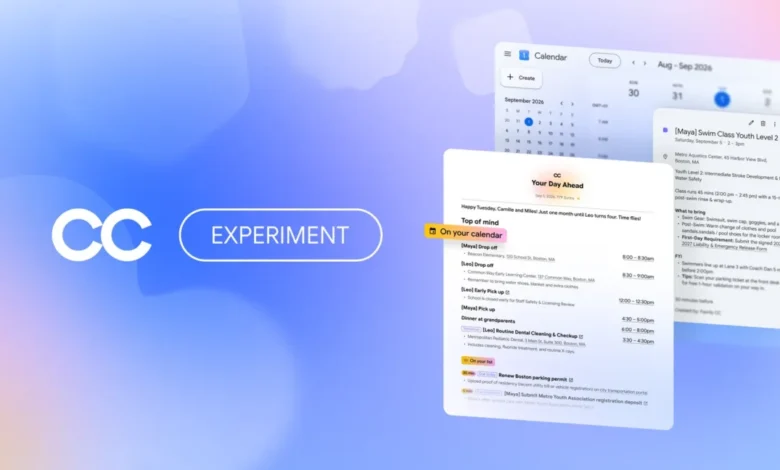
Google is leveraging its most formidable asset in the ongoing artificial intelligence race: comprehensive user data. While rival foundational models from OpenAI, Anthropic, and Microsoft often lead standard performance benchmarks, Google maintains an unparalleled advantage through its deeply entrenched ecosystem of consumer products. Building upon this foundation, the technology giant has introduced its latest Google Labs initiative, an experimental AI agent designated as CC. This tool extends the hyper-personalized capabilities previously restricted to individual accounts into a shared, collaborative resource engineered specifically for family units.
The Evolution of Google Labs Experiments and the Genesis of CC
The roots of the CC project trace back to developmental announcements made by Google throughout 2025, during which the company accelerated its research into proactive, contextual AI assistants. The original incarnation of the technology laid the groundwork for features such as Gemini’s Daily Brief, an automated tool designed to parse individual Google accounts to surface daily action items, calendar reminders, and productivity suggestions.
However, modern households rarely operate in a vacuum. Families must coordinate complex schedules, manage shared domestic responsibilities, and process information distributed across multiple distinct email addresses and communication channels. Recognizing this operational friction, Google Labs re-engineered the core architecture of the experimental agent to accommodate up to six users within a single domestic ecosystem.
Rather than functioning as a standalone chatbot, CC operates as a dedicated, quasi-independent participant within the household network. It maintains its own distinct Google account, establishing a secure boundary that allows family members to opt in or out of interactions dynamically. This architectural design represents a calculated shift in consumer AI development, moving away from isolated, single-user interactions toward ambient, multi-user household management.
Mechanics and Data Governance: How CC Integrates Family Life
Data privacy and granular control remain paramount concerns for consumers adopting ambient AI tools, particularly when multiple family members are involved. Google has structured CC with strict permission protocols to address these sensitivities. The AI agent does not possess blanket access to every connected user’s personal correspondence or digital footprint. Instead, data sharing is governed by deliberate, user-defined rules.
CC exclusively reviews incoming communications from connected users when those communications are explicitly shared. For example, family members can designate specific email addresses or domains—such as school administration portals, pediatric clinics, or athletic leagues—as perpetually accessible to the agent. Furthermore, users can manually feed content directly to CC by routing information through email or Google Chat.
In addition to messaging channels, the agent can be granted oversight of a designated, shared Google Drive folder. Households can utilize this repository to deposit physical mail scans, event invitations, permission slips, utility bills, and other essential documentation. By centralizing these disparate informational inputs, CC compiles a coherent operational overview of the household without requiring invasive, unmonitored surveillance of private communications.
Core Functionalities and the Daily Briefing Cycle
At the heart of CC’s utility is its adaptation of the individual Daily Briefing concept, rebranded within the family context as "Your Day Ahead." Each morning, the AI agent processes the accumulated data inputs and dispatches a comprehensive, synchronized email briefing to all registered participants in the household.
This briefing consolidates the day’s obligations, cross-referencing individual calendars to highlight potential scheduling conflicts, overlapping commitments, and outstanding tasks derived from previous days. Beyond mere observation, CC possesses active execution capabilities. The agent can independently insert new events into shared family calendars, issue timely reminders regarding critical household chores or administrative deadlines, and draft collaborative documents based on conversational instructions provided by any authorized family member. These assets remain universally accessible within the CC network, ensuring that all adults or participating members operate from a single source of truth.
Industry Context and Strategic Implications
The launch of CC arrives at a critical juncture in the consumer artificial intelligence market. As foundational model capabilities—such as reasoning speed, coding proficiency, and multimodal generation—continue to plateau across major providers, technology companies are searching for sustainable moats to retain user loyalty.
Industry analysts note that Google’s primary advantage lies not necessarily in raw computational superiority, but in high-frequency integration. By embedding AI directly into daily life workflows—spanning Gmail, Google Calendar, Google Drive, and Google Chat—Google creates a high switching barrier for consumers. If an AI agent successfully coordinates a household’s logistics, medical appointments, and academic schedules, users face significant friction should they attempt to migrate to a competing platform.
However, this strategy also introduces distinct challenges. Centralizing family data within an AI agent heightens consumer scrutiny regarding data retention, monetization practices, and security vulnerabilities. While Google has instituted opt-in boundaries for CC, consumer advocacy groups and privacy watchdogs continue to monitor how ambient AI experiments handle sensitive domestic information.
Future Outlook and Research Trajectory
As an official Google Labs project, CC remains an experimental endeavor rather than a commercially finalized feature integrated directly into standard Google Workspace or Gemini Advanced subscriptions. The trajectory of the project will largely depend on user telemetry, feedback gathered during the testing phase, and the technical scalability of multi-user context windows.
Google Labs has established a precedent for incubating experimental concepts before eventually deprecating them or graduating them into mainstream product offerings. Given the heavy consumer demand for frictionless household organization tools, CC points toward a future where ambient AI acts less like a search engine or a conversational chatbot, and more like a silent administrative partner integrated into the operational fabric of daily family life.