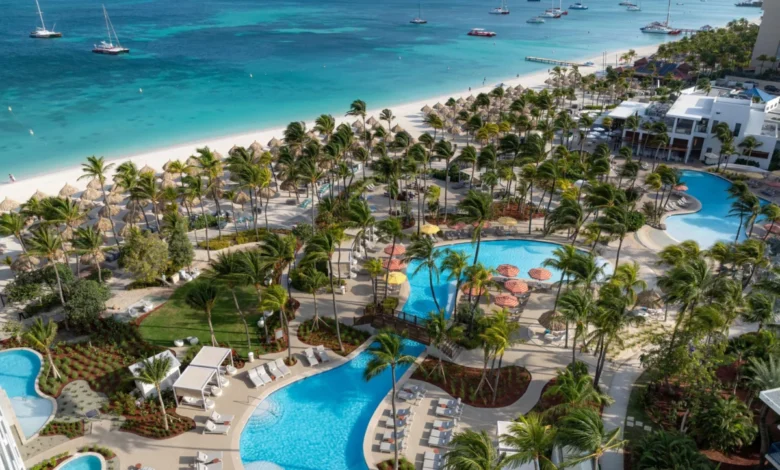
Aruba has long maintained its reputation as one of the most reliable and enduringly popular destinations in the wider Caribbean basin. Characterized by pristine white-sand shorelines, striking aquamarine waters, and a consistently refreshing trade wind that moderates its tropical climate, the island offers an idealized year-round travel environment. Geographically positioned well below the typical trajectory of the Atlantic hurricane belt, Aruba provides travelers and tourism operators with an exceptionally low-risk weather profile, bolstering its appeal as a dependable winter and summer getaway. Beyond its postcard-worthy coastlines, the island features a dynamic topography, highlighted by Arikok National Park—which encompasses nearly twenty percent of Aruba’s total landmass—where rugged limestone formations, secluded natural pools, and cactus-dominated desert trails reveal a dramatically different ecosystem from its tranquil beaches. Culturally, Aruba’s heritage reflects a complex blend of Indigenous Arawak roots, Spanish colonization, and centuries of Dutch influence, a confluence that directly informs its vibrant culinary scene, architectural style, and local traditions. Small enough to be navigated comprehensively over a long weekend, yet diverse and relaxing enough to sustain extended multi-week vacations, Aruba continues to adapt to shifts in global tourism demands while preserving the core attributes that have sustained its popularity for decades.
Historical Context and Evolution of Aruban Tourism
To understand Aruba’s modern hospitality landscape, one must examine the deliberate evolution of its tourism sector over the latter half of the twentieth century. Historically reliant on the oil-refining industry—specifically the operations of the Lago Oil and Transport Company, which dominated the economy of San Nicolas for decades—Aruba faced a major economic turning point in the mid-1980s. Following the closure of the refinery in 1985, the local government and private stakeholders made a strategic, coordinated pivot toward the hospitality and tourism sector as the island’s primary economic engine.
During the late 1980s and 1990s, the coastline north of the capital city of Oranjestad underwent rapid development, transforming from quiet stretches of arid scrubland into the distinct zones known today as the low-rise and high-rise districts. The low-rise area, primarily situated along Eagle Beach, preserved a more intimate, boutique-style architectural profile, characterized by properties that rarely exceeded four stories. Conversely, Palm Beach emerged as the high-rise corridor, welcoming international flag-ship hotel brands, high-density resorts, high-end shopping complexes, and vibrant nightlife venues. This dual-track development strategy allowed Aruba to capture two distinct market segments simultaneously: travelers seeking quiet, low-density relaxation and those preferring full-service, amenity-rich mega-resorts.
Economic Impact and Tourism Data
The deliberate cultivation of the tourism sector has yielded profound economic dividends for the island of just over 100,000 residents. According to data from the Aruba Tourism Authority (ATA) and the Central Bureau of Statistics Aruba, the tourism industry accounts for roughly the vast majority of the island’s Gross Domestic Product (GDP), either directly or through secondary economic linkages.
In the post-pandemic era, Aruba’s tourism sector demonstrated a remarkable recovery trajectory. Following the global disruptions of 2020, visitor arrival numbers rebounded swiftly, setting new benchmarks for tourism receipts and average daily rates (ADR) across the island’s hotel inventory. Data from recent hospitality performance indexes indicate that Aruba consistently achieves some of the highest hotel occupancy rates in the Caribbean region, frequently outperforming competitive destinations during both peak winter seasons and the traditionally slower shoulder months. This high demand has driven significant capital investment into the destination, resulting in the continuous renovation of legacy properties and the introduction of newly constructed luxury boutiques and branded all-inclusive resorts designed to cater to affluent, experience-driven travelers.
Geographical and Environmental Preservation Efforts
As tourism infrastructure expanded, local authorities and environmental organizations recognized the urgent need to balance commercial development with ecological preservation. Approximately one-fifth of Aruba is officially safeguarded within the boundaries of Arikok National Park, established to protect fragile desert ecosystems, native flora and fauna—such as the Aruban rattlesnake (Cascabel) and the burrowing owl (Shoco)—and significant historical sites, including caves featuring ancient Arawak rock drawings.
Environmental management in Aruba extends beyond the borders of the national park. The government of Aruba has implemented aggressive sustainability mandates, including total bans on single-use plastic bags, polystyrene containers, and oxybenzone-containing sunscreens that damage coral reefs. Furthermore, investments in renewable energy infrastructure, such as utility-scale wind farms and solar installations, reflect a broader commitment to reducing the island’s historical dependence on imported fossil fuels. For travelers, this environmental consciousness increasingly influences hospitality offerings, with many local resorts adopting comprehensive green initiatives, ranging from energy-efficient desalination systems to farm-to-table dining programs that reduce the carbon footprint of food imports.
The Culinary Identity: A Melting Pot of Cultures
Aruba’s culinary landscape serves as a direct mirror of its multicultural history, blending European techniques with Caribbean flavors and Latin American influences. While traditional Dutch staples—such as Gouda cheese variations, bitterballen, and stroopwafels—remain readily available due to Aruba’s constitutional status as a constituent country of the Kingdom of the Netherlands, the island’s indigenous cuisine reflects a fusion of local catch, creole spices, and South American produce.
Signature dishes include keshi yen, a classic Aruban comfort food consisting of a hollowed-out ball of Edam or Gouda cheese stuffed with seasoned minced meat (traditionally chicken or beef), raisins, capers, and olives, then baked until melted. Seafood features prominently across the culinary spectrum, with fresh catch-of-the-day offerings such as mahi-mahi (locally known as dorado), wahoo, and red snapper served in open-air beachside shacks, upscale marina-front restaurants, and sophisticated fine-dining establishments in Oranjestad. The ongoing evolution of the culinary scene has attracted internationally acclaimed chefs, transforming Aruba into a recognized gastronomic destination within the Caribbean.
Categorizing the Hotel Landscape: Tailoring Accommodations to Traveler Demographics
With a diverse inventory ranging from sprawling all-inclusive beachfront complexes to intimate, adult-only boutique properties and historic low-rise retreats, choosing the right accommodation depends heavily on the traveler’s specific objectives. Industry experts generally categorize Aruba’s premier lodgings into distinct operational segments:
-
The High-Rise Corridor (Palm Beach): Ideal for travelers seeking high-energy environments, extensive on-site amenities, vibrant nightlife, water sports accessibility, and proximity to high-end retail shopping. Properties here typically operate on a larger scale, offering multiple swimming pools, extensive spa facilities, and diverse dining options.
-
The Low-Rise District (Eagle Beach and Druif Beach): Best suited for visitors prioritizing tranquility, wide expanses of uncrowded shoreline, and a more traditional, relaxed Caribbean atmosphere. Properties in this sector often emphasize architectural harmony with the natural surroundings and a slower, more intimate pace of service.
-
Boutique and Eco-Lodges (Away from the Coast): Catering to independent travelers, nature enthusiasts, and those seeking cultural immersion, smaller independent accommodations located closer to San Nicolas or the interior provide unique perspectives on local life, often emphasizing personalized hospitality and proximity to hiking trails and art districts.
-
All-Inclusive Resorts: A rapidly growing segment in Aruba, all-inclusive properties appeal to families and couples seeking budget predictability and hassle-free dining and beverage packages without sacrificing beachfront access or modern room amenities.
Broader Implications and Future Outlook for Aruban Tourism
As Aruba looks toward the future, tourism planners face the ongoing challenge of managing carrying capacity and mitigating the environmental pressures associated with high visitor volumes. Discussions surrounding sustainable tourism management increasingly focus on dispersing economic benefits beyond the traditional hotel corridors of Palm Beach and Eagle Beach, encouraging travelers to explore the cultural and artistic renaissance occurring in San Nicolas—often referred to as Aruba’s ‘Sunrise City’—and supporting community-based tourism initiatives.
Industry stakeholders emphasize that the long-term viability of Aruba’s tourism economy relies on maintaining the delicate equilibrium between infrastructural growth and environmental stewardship. By continuing to prioritize high-value tourism over sheer volume, investing in renewable energy, and protecting its unique natural and cultural assets, Aruba aims to secure its position as a premier, resilient destination for generations of travelers to come. Whether visited for a rapid three-day weekend escape or an extended seasonal retreat, the island’s unique combination of climate stability, natural diversity, and sophisticated hospitality infrastructure ensures its enduring appeal within the global travel market.