For urban travelers navigating a newly discovered metropolis, ascending to a high vantage point serves as a vital cartographic ritual. Whether surveying the Gothic spires of Barcelona from the roof of Casa Milà or tracing the historic canals of Copenhagen from the top of the Round Tower, viewing a cityscape from above offers an essential tool for spatial orientation. This aerial perspective allows visitors to contextualize the neighborhoods they have traversed, identify missed opportunities, and mentally map out future itineraries. It bridges the psychological gap between the unfamiliar and the known, turning a foreign landscape into a comprehensible grid.
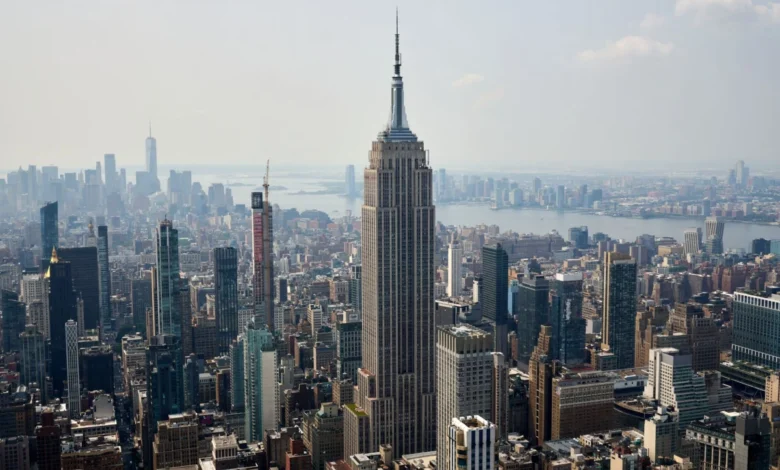
Despite residing in the New York metropolitan area for half a decade—having lived in adjacent New Jersey before relocating to Manhattan proper—this author had long delayed ascending the Empire State Building. For generations of residents and tourists alike, this quintessential Art Deco skyscraper has remained a permanent fixture of the Midtown skyline, admired exclusively from street level. Recently, on a clear September morning, a visit to 350 Fifth Avenue finally rectified this omission, providing an opportunity to evaluate one of the world’s most famous architectural and cinematic landmarks.
Architectural Legacy and Historical Chronology
Standing proudly in the heart of Midtown Manhattan, the Empire State Building is a 102-story neoclassical and Art Deco skyscraper designed by the architectural firm Shreve, Lamb & Harmon. Its construction remains one of the most astonishing feats of modern engineering. Ground was broken on March 17, 1930, during the depths of the Great Depression, and the building officially opened its doors just 13 months later on May 1, 1931.
This breakneck construction pace meant that workers erected approximately 4.5 stories per week—a velocity virtually unmatched in the history of large-scale urban development. Rising to a total architectural height of 1,454 feet, including its lightning rod spire, the skyscraper claimed the title of the world’s tallest building, a distinction it held for nearly four decades until the completion of the World Trade Center’s North Tower in 1970. Today, it stands as the eighth-tallest building in New York City, accommodating over 150 corporate offices, including major tenants such as LinkedIn, Workday, and Expedia.
The building’s cultural imprint is equally monumental. Welcoming more than 2.5 million visitors annually to its observation decks, the skyscraper shares status with the Statue of Liberty as New York City’s most photographed icon. Its silhouette has appeared in more than 250 films and television programs, most famously cemented in cinematic history by the climatic 1933 blockbuster King Kong, as well as romance classics like Sleepless in Seattle.
To maintain its modern appeal, ownership completed a massive four-year, $165 million renovation in 2019. This overhaul reimagined the 102nd-floor observatory with floor-to-ceiling glass windows and thoroughly modernized the historical exhibition spaces located on the 2nd and 80th floors.
Ticketing Options, Pricing, and Logistics
Operating 365 days a year, rain or shine, the Empire State Building offers continuous access to tourists, accommodating even holiday crowds seeking unique vantage points of events like the Macy’s Thanksgiving Day Parade. Securing admission involves navigating a tiered pricing structure primarily split between two major observatory levels.
Standard admission to the renowned 86th-floor open-air observatory is priced at $46, while a combined ticket granting access to both the 86th and the glass-enclosed 102nd floors costs $81. Both tiers include entry to the immersive museum exhibits housed within the building, along with flexible policies permitting ticket rescheduling for any time on the selected date.
For travelers planning a comprehensive tour of the city’s broader infrastructure, bundled sightseeing passes—such as the New York CityPass or GoCity’s New York Pass—provide discounted admission to the Empire State Building alongside other major metropolitan attractions over a designated number of multi-day periods.
While premium packages exist, such as the "Flex" or "Express" add-ons designed to bypass queues, observation management notes that same-day ticketing remains highly accessible. During weekday morning slots, touchscreen kiosks and online portals frequently show immediate availability. Consequently, expensive line-skipping add-ons are often unnecessary unless visiting during peak holiday windows.
Expert Guidance and Advanced Reservations
In the wake of shifting post-pandemic tourism patterns, the Empire State Building has transitioned successfully to a timed-ticketing framework. This operational adjustment mitigates severe congestion at ground-floor kiosks and smooths pedestrian flow through security and elevator banks.

Dan Rogoski, senior vice president and observatory general manager, emphasizes the institutional preference for forward planning. "We strongly recommend that guests purchase tickets in advance on our website to secure their preferred date and time, particularly during holidays and other peak periods, such as sunset," Rogoski notes. Nevertheless, for travelers maintaining adaptable itineraries, spontaneous same-day admissions remain viable due to the facility’s year-round operating schedule.
For visitors seeking an exclusive or highly curated encounter, specialized guided programs are available at a substantial premium. The "Premium Experience" starts at $175 per person, offering a private guided tour for small groups capped at seven participants, complete with expedited entry. Alternatively, the comprehensive "All Access Tour" commands a $500 fee, granting guests access to a private VIP entrance, entry into the exclusive celebrity green room featuring complimentary refreshments, and a personalized, private architectural tour.
The Visitor Experience: From Security to the Spire
The designated public entrance for standard ticketholders is situated at 20 West 34th Street, a short walk from major transportation hubs including Penn Station, the Port Authority Bus Terminal, and numerous subway lines spanning the 1, 2, 3, A, C, E, and local PATH networks.
Upon arrival, visitors undergo standard airport-style security screenings before being directed to the second-floor exhibition spaces. Here, interactive historical displays detail the grueling construction timeline of the 1930s. Guests are subsequently escorted by staff toward elevators bound for the 80th floor.
The 80th floor introduces visitors to panoramic interior views, highlighted by the permanent art installation NYC: Above and Beyond. This sweeping mural of the Manhattan street grid was constructed entirely from memory by artist Stephen Wiltshire over a five-day period, following a brief 45-minute helicopter reconnaissance flight.
Ascending further leads to the primary destination: the 86th-floor open-air observatory. Protected by historic Art Deco metal grillwork and supplemented by overhead heating lamps during winter months, this 360-degree promenade offers unobstructed sightlines across the metropolitan area. On exceptionally clear days, visibility extends across six distinct states: New York, New Jersey, Pennsylvania, Connecticut, Massachusetts, and Delaware.
For those holding tickets to the 102nd floor, a final elevator ride delivers passengers to an intimate, climate-controlled chamber featuring floor-to-ceiling glass panes that elevate the field of vision, particularly toward Central Park and the northern reaches of the borough. While there are no strict time limits imposed on the observation decks, travel planners generally advise allocating one to two hours to fully absorb the exhibits and vistas.
Upon descent, visitors exit through the official gift shop before passing through the building’s meticulously restored Art Deco lobby on Fifth Avenue—officially designated as a New York City interior landmark by the Landmarks Preservation Commission. For dining options, the complex houses several upscale and casual establishments, including the State Grill and Bar, a Starbucks Reserve, and a Tacombi outpost.
Optimal Timing and Seasonal Considerations
Experiencing major global cities is invariably optimized during shoulder seasons, and New York is no exception. Visiting the Empire State Building during the spring or autumn months yields moderate outdoor temperatures while framing the urban landscape with natural beauty, such as cherry blossoms or autumnal foliage sweeping across Central Park. Conversely, the winter holiday season brings dense crowds clad in heavy outerwear, yet delivers a distinct festive charm illuminated by citywide seasonal displays.
Regarding daily schedules, early mornings and late afternoons leading up to sunset represent peak visitation windows. For early risers, the seasonal "Sunrise Experience" ticket permits a limited number of guests to summit the tower before public hours, offering breakfast items and unobstructed dawn views over architectural neighbors like the Chrysler Building.
Conversely, general operational data indicates that the post-lunch window between 1:00 PM and 4:00 PM experiences the lowest visitor density, making it an ideal slot for a streamlined experience. For travelers eager to capture both daylight vistas and the illuminated nocturnal skyline, the "AM/PM" ticket tier permits a single daytime entry paired with a return visit after dark.
Ultimately, while newer observation decks like the Top of the Rock or One World Observatory offer alternative perspectives, the Empire State Building retains its throne not merely as a structure to look at, but as the foundational vantage point from which the modern New York City skyline is best understood.