Mikel Arteta has revealed he is actively compiling a video archive of rival Premier League managers repeatedly stepping outside their technical areas, lightheartedly joking that he may resort to installing sensors on the sidelines. The Arsenal manager’s comments follow his second yellow card of the season during his side’s hard-fought 2-0 victory over Everton at the Emirates Stadium.
Referee Tony Harrington booked the Spaniard in the second half of the contest after Arteta once again ventured beyond the designated coaching zone to remonstrate with match officials. Having already picked up a caution earlier in the campaign, Arteta now finds himself walking a disciplinary tightrope, facing an automatic one-match touchline ban should he receive a third yellow card. Rather than accepting the caution without question, however, the Arsenal boss has chosen to challenge what he perceives to be inconsistent enforcement of technical area regulations across the division, pointing fingers at rival managers whom he claims regularly flout the rules without facing similar sporting sanctions.
The fixture itself saw Arsenal draw level on points with early-season league leaders Manchester City, courtesy of goals from central defenders Ezri Konsa and Gabriel Magalhães. Yet, amidst the jubilation of a crucial home victory that reinforced the Gunners’ title credentials, Arteta’s post-match press conference was dominated by his humorous yet pointed grievance regarding officiating standards and touchline protocol.
Disciplinary Tightrope and Tactical Sensors
The implementation of stricter technical area guidelines by the Professional Game Match Officials Limited (PGMOL) has been a persistent talking point in English football. Referees have been instructed to clamp down on managers and coaching staff leaving their designated boxes to influence match proceedings or pressure officials. For Arteta, whose animated touchline demeanor is a well-documented aspect of his managerial style, these regulations have proved particularly challenging to navigate.
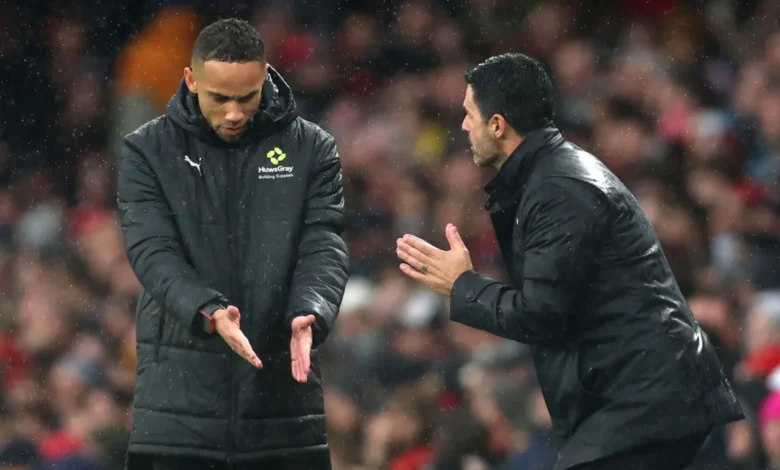
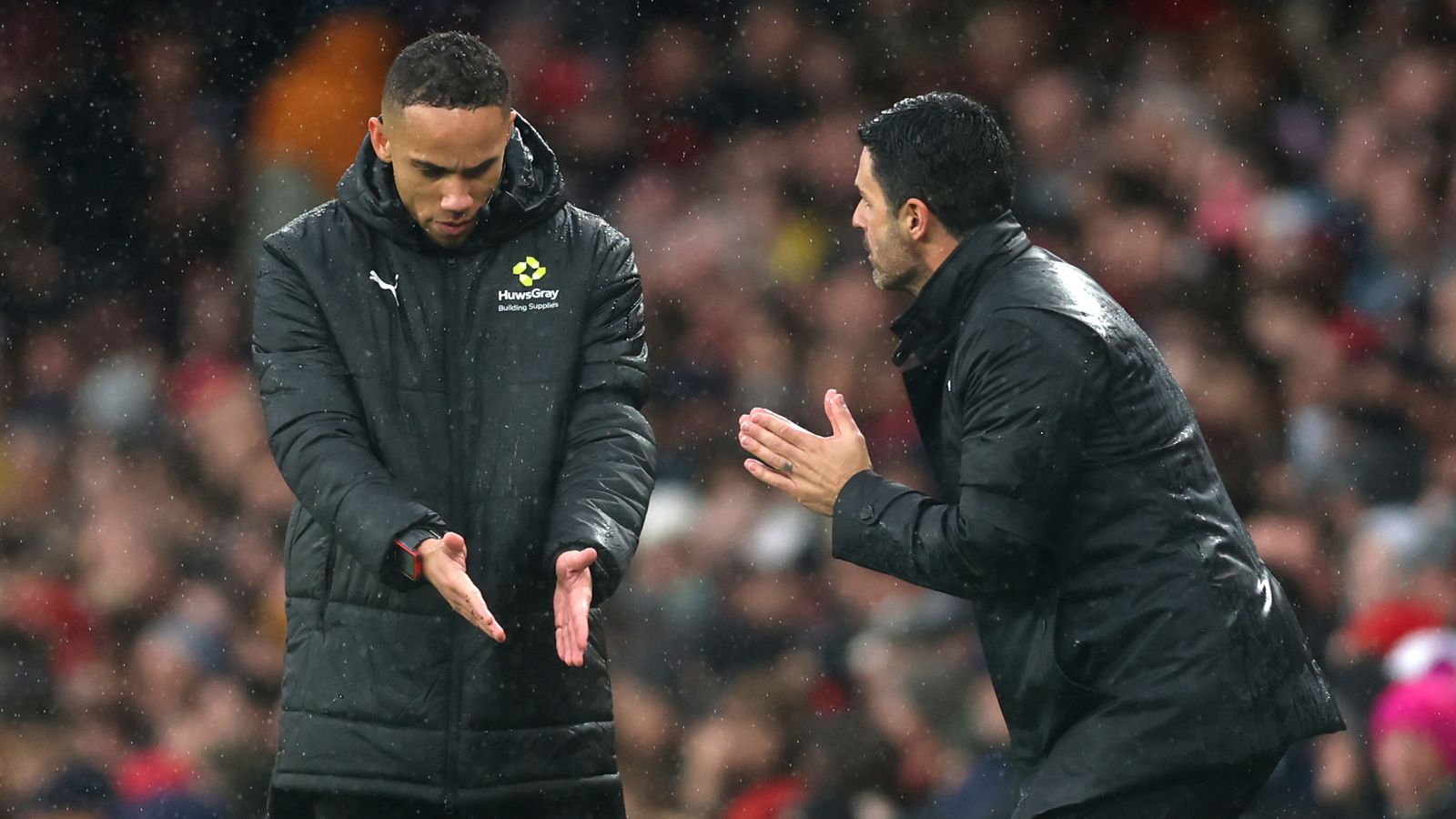
Speaking to the media after the final whistle against Everton, Arteta did not hide his frustration regarding how the rules are applied to him compared to his peers in the Premier League dugout. "I do have to be careful, yeah," Arteta remarked with a wry smile before offering a glimpse into his defensive strategy regarding the disciplinary tally. "I’m going to put sensors there! There are other managers, there are managers that have the record in the league: 36 times in 10 minutes they leave the touchline, no yellows. So I am clipping all of that so I have a massive storage of images, so if somebody comes to me [I can say] I’m not in the record yet, somebody else has the record."
While delivered with a dose of humor, the underlying message highlights a growing sentiment among Premier League managers regarding a perceived lack of uniformity in disciplinary actions. Referees operate under immense pressure, and while fourth officials are tasked with monitoring technical areas, the subjectivity involved in penalizing managers often leads to accusations of bias or inconsistency. Arteta’s self-appointed role as an archivist of touchline wanderers underscores the psychological pressure bosses face as they attempt to balance tactical communication with the strict parameters enforced by matchday referees.
Match Chronology: Breaking Down the 2-0 Win Over Everton
While the disciplinary subplot captured headlines, the match itself was a testament to Arsenal’s tactical efficiency and defensive resilience against a typically stubborn Everton side managed by the experienced David Moyes.
The tone for the evening was set remarkably early. Just seven minutes into the encounter, Arsenal found the breakthrough through summer signing Ezri Konsa. The central defender, adapting seamlessly to life in North London following his arrival from Aston Villa, reacted quickest inside the penalty area to convert from close range following an expertly delivered corner kick by team captain Martin Ødegaard. Notably, the strike marked Arsenal’s first goal originating from a set-piece situation this season—a surprising statistic for a side that built much of its recent success on dead-ball dominance.
With an early lead established, Arsenal controlled the tempo of the first half, restricting Everton to very few attacking opportunities. David Moyes’s side arrived at the Emirates looking to bounce back from a disappointing 2-0 defeat to Chelsea the previous weekend, but their tactical plan was effectively undone by the early concession.
The second half followed a similar pattern, though a moment of genuine concern silenced the Emirates Stadium in the 64th minute. Brazilian central defender Gabriel Magalhães went down clutching himself after an awkward landing, sparking immediate panic among teammates and coaching staff alike. However, following a brief evaluation by the medical team, Gabriel defied expectations by signaling his desire to remain on the pitch.
Just four minutes after his injury scare, Gabriel cemented his status as a talismanic figure for the Gunners. Rising highest in the penalty box during another phase of sustained pressure, the defender powered home a header to double Arsenal’s advantage in the 68th minute, effectively putting the game beyond Everton’s reach and sealing a clean sheet for Arteta’s backline.
Character and Squad Depth Under the Microscope
Following the conclusion of the match, Arteta was quick to heap praise on the collective mentality of his squad, highlighting Gabriel’s rapid recovery and subsequent goal as symbolic of the resilience running through the team.
"The mentality of the team is the mentality of the individuals in the team," Arteta stated during his post-match analysis. "Gabi’s a great example of that, because we were all scared, not because of the way he went down, but the reaction of the players that were next to him. Immediately he says he wants to continue and then he scores a goal to help us win the game. That’s what we need from our players."
Arteta also took time to commend Ezri Konsa, whose transition into the Arsenal squad has exceeded all initial expectations. Joining a club of Arsenal’s stature during the summer transfer window without the benefit of a full pre-season is a daunting task, particularly when stepping into an environment featuring established defensive stalwarts like William Saliba. Yet, Konsa has slotted effortlessly into the starting lineup, forming a formidable and balanced central defensive partnership with Gabriel.
"Unbelievable," Arteta said when assessing Konsa’s performance. "He’s come to a huge club like Arsenal with no pre-season when Saliba is here, with other players that are already here. And to position yourself in that manner, with that naturality and performing at the level that he’s doing and building already a chemistry and a balance with Gabi that seems so solid, it’s very, very difficult to do and we are really lucky to have him."
Despite the positives, the match was not without its physical casualties. Arteta confirmed that substitute Riccardo Calafiori picked up a "slight" issue during his cameo appearance, adding the Italian defender to a monitoring list as the medical staff assess his fitness ahead of a demanding upcoming fixture schedule.
Everton’s Struggles and David Moyes’ Assessment
For Everton, the result compounded a frustrating week. Having suffered a 2-0 defeat to Chelsea in their preceding fixture, the Toffees failed to find any sustained attacking rhythm against Arsenal’s well-drilled defense, marking their second consecutive loss in the Premier League.
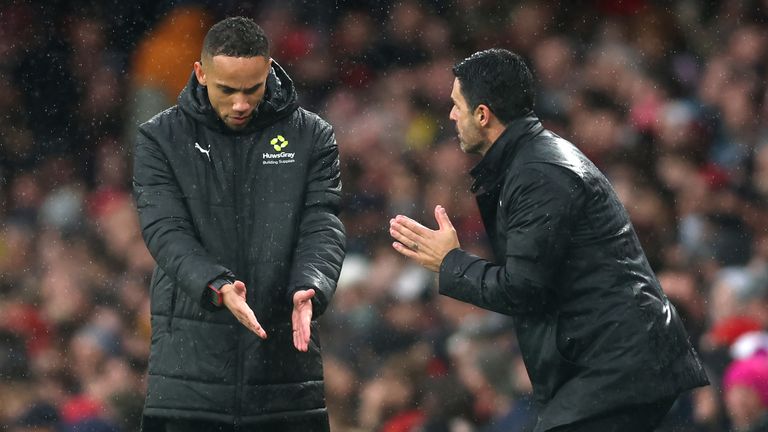
Manager David Moyes offered a candid, albeit concise, assessment of his team’s performance when questioned by reporters after the final whistle. The veteran Scottish manager pointed directly to the disastrous start as the primary catalyst for the defeat, noting that chasing a game against a defensively sound side like Arsenal is an uphill battle few teams can conquer.
"Not an awful lot, really. I don’t have big thoughts on it," Moyes admitted when asked for his overall evaluation. "I just felt we didn’t really get to a level which I think would have been good enough to win on the day. We gave away a goal very early which meant we were chasing [the game]."
Moyes acknowledged that while his side showed marginal improvements after the interval—managing to narrow the physical spaces and disrupt Arsenal’s rhythm momentarily—they lacked the cutting edge required in the final third to truly threaten David Raya’s goal. "I felt we’d got a bit better in the second half, got a bit back into it a little bit more, got a bit closer to Arsenal and then they come up with the second goal," Moyes continued. "Some good stuff on the defensive side of it. I didn’t feel we did enough on the attacking part of the game."
Broader Implications and Strategic Outlook
As the Premier League season approaches its frantic winter period, the intersecting narratives from the Emirates Stadium carry significant weight for both clubs involved.
For Arsenal, drawing level on points with Manchester City at the summit of the table validates their status as legitimate title contenders. The ability to grind out a professional 2-0 victory while diversifying their tactical output—evidenced by their first set-piece goal of the campaign—demonstrates an ongoing evolution under Arteta. However, the manager’s disciplinary situation cannot be entirely dismissed. As the intensity of the title race escalates, losing Arteta to a touchline ban could prove to be a minor, albeit avoidable, disruption during a crucial fixture.
For Everton and David Moyes, the immediate priority is rediscovering the offensive spark that deserted them in successive defeats against Chelsea and Arsenal. Sitting further down the table, the Toffees must address their tendency to start matches slowly if they are to avoid being dragged into the lower reaches of the Premier League standings.
As Arteta continues to compile his digital dossier of wandering rival managers, his primary focus will undoubtedly shift back to maintaining Arsenal’s domestic momentum, ensuring his players remain as disciplined on the pitch as he attempts to prove his peers should be off it.