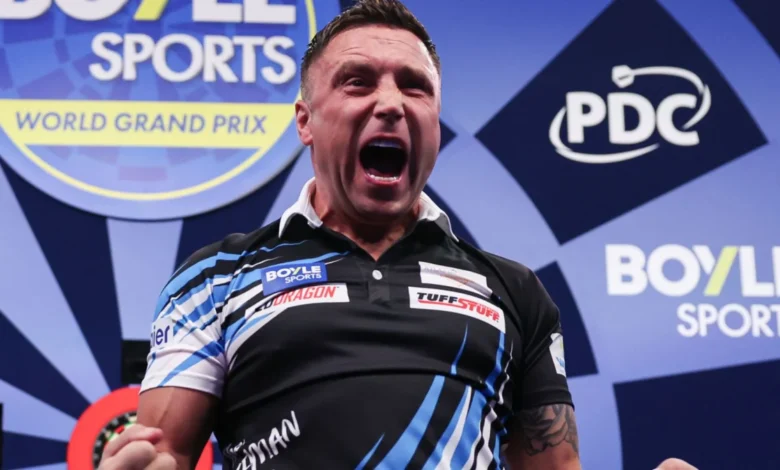
The Mattioli Arena in Leicester bore witness to a masterclass in scoring and finishing as the 2020 World Grand Prix champion Gerwyn Price powered through to the quarter-finals with a commanding straight-sets victory over Ross Smith. Following the seismic early exit of teenage sensation Luke Littler, who was ousted in the opening round by Luke Woodhouse, the darting landscape in Leicester shifted dramatically, elevating established heavyweights like Price into the role of firm tournament favourites. Price embraced this elevated status on Wednesday evening, dismantling Smith 3-0 while dropping just four legs in total, despite having been outscored numerically on the oche by his opponent during extended spells of the encounter.
The emphatic victory sets up a mouth-watering all-Welsh quarter-final showdown on Friday evening against his long-time World Cup of Darts partner and compatriot, Jonny Clayton. Clayton himself booked his place in the last eight earlier in the session, showcasing an exhibition of ruthless finishing to overcome the 12th seed Wessel Nijman 3-1. With Ryan Joyce and Nathan Aspinall also securing their respective pathways into the next phase of the Professional Darts Corporation (PDC) prestigious double-in, double-out major, the tournament field has narrowed significantly, setting the stage for a dramatic climax to the week’s proceedings.
A Tactical Breakdown of Price Versus Smith
Heading into the second-round fixture, Ross Smith held significant momentum, having posted the highest tournament average of the opening round. That blistering form initially threatened to derail the Welshman’s ambitions, as Smith continually pressured Price with heavy maximums and formidable scoring power. However, the unique double-in format of the World Grand Prix—which requires players to start every single leg with a double—often neutralises pure scoring superiority if the finishing percentages begin to fluctuate.
Price, renowned for his tenacity and elite temperament under pressure, capitalised on crucial doubling errors from Smith. Although Smith outscored the "Ice Man" across several statistical categories, Price maintained a clinical edge when it mattered most. He efficiently closed out legs with calculated precision, eventually completing a 3-0 scoreline that masked the genuine competitiveness of the exchanges. Dropping a mere four legs across the entire match, Price demonstrated the ruthless efficiency that propelled him to world glory in Coventry four years prior.
Following the triumph, Price did not shy away from addressing the impending clash with his compatriot and friend, Jonny Clayton. Boasting openly about his historical head-to-head record against Clayton, Price acknowledged the deep mutual respect between the two Welsh darting icons while underlining his competitive desire to advance further in the tournament. The upcoming quarter-final guarantees that at least one Welsh representative will feature prominently in the tournament’s penultimate stages.
Jonny Clayton’s Clinical Checkout Exhibition
Jonny Clayton’s path to the quarter-final was defined by a mesmerizing display of clinical finishing against Wessel Nijman. The 12th seed entered the contest with high expectations, but he ran into a vintage performance from "The Ferret," who orchestrated a masterclass in pressure-checkout mastery.
Clayton ignited his performance by opening the match with three consecutive ton-plus checkouts, stunning both the crowd and his opponent with his unerring accuracy on the outer ring. Over the course of the four-set encounter, Clayton accumulated four checkouts exceeding 100 points, maintaining a commendable 93.08 tournament average. While Nijman demonstrated moments of brilliant scoring potential, he was systematically dismantled by Clayton’s relentless ability to punish missed doubles. The 3-1 victory underlined Clayton’s resurgence in major individual ranking events, setting the stage for an emotionally charged and tactically fascinating battle against Price.
Ryan Joyce and Nathan Aspinall Progress Comfortably
While the Welsh contingent captured headlines, the remainder of Wednesday evening’s schedule produced equally decisive scorelines. Ryan Joyce breezed into the quarter-finals with a methodical and polished straight-sets victory over Danny Noppert. Joyce, known for his metronomic rhythm and tactical intelligence on the dartboard, completely nullified Noppert’s scoring threats, dictating the pace of the match from the outset. Noppert struggled to find consistency with his starting doubles, allowing Joyce to capitalize and close out the match without dropping a single set.
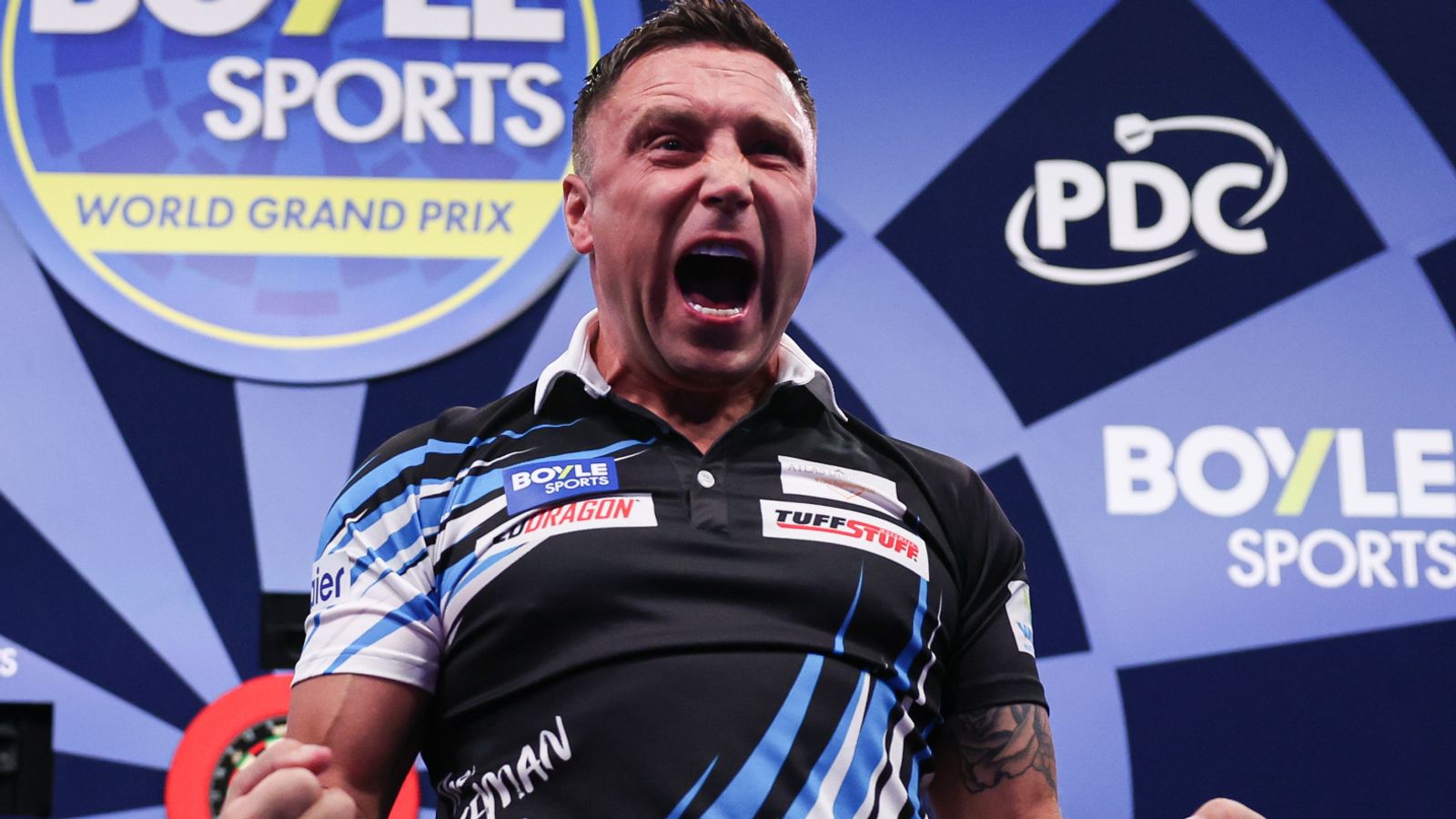
Meanwhile, the ripples of Luke Woodhouse’s stunning opening-round elimination of Luke Littler had barely settled when Woodhouse returned to the stage to face Nathan Aspinall. Unlike his heroic giant-killing exploits against Littler, Woodhouse found the going considerably tougher against "The Asp." Aspinall delivered a thoroughly professional, one-sided performance, sweeping Woodhouse aside 3-0. Aspinall’s relentless energy and formidable doubling consistency ensured that the underdog was given no foothold in the match, sealing a comprehensive victory and stamping his authority as a genuine contender for the World Grand Prix title.
Background Context and the Unique Nature of the World Grand Prix
The BoyleSports World Grand Prix remains one of the most distinctive and unforgiving majors on the PDC calendar. Staged annually in Leicester at the Mattioli Arena, the tournament is universally celebrated—and simultaneously dreaded by players—due to its unique double-in, double-out format. Unlike traditional 501 events where players can open their legs with any single-scoring segment, participants at the World Grand Prix must hit a double segment before a single dart is subtracted from their starting total. Furthermore, legs must also conclude on a double.
This format routinely produces high drama, massive upsets, and psychological battles that do not manifest in standard set-play formats. The early elimination of teenage sensation Luke Littler—who fell victim to a brilliant display by Luke Woodhouse earlier in the week—highlighted the extreme volatility of the event. Littler’s exit blew the top half of the tournament draw wide open, creating unexpected opportunities for players like Aspinall, Joyce, and Woodhouse to carve a deep path toward the televised latter stages.
Chronology of the Tournament’s Evolution
The World Grand Prix was first established in 1998, originally staged in venues such as Dublin before finding its current spiritual and logistical home in England. Over nearly three decades, the tournament has cemented its status as the ultimate test of versatility. Players who rely solely on heavy scoring frequently struggle if their doubling statistics falter, whereas tacticians and elite finishers often thrive.
Gerwyn Price’s victory in 2020 remains a watershed moment in his career, showcasing his ability to master the unique structural demands of the event. His current run in Leicester suggests he is recapturing that championship-winning mindset. With veterans and former major champions finding their rhythm concurrently, the second half of the tournament promises high-intensity encounters that will test the psychological resilience of every remaining competitor.
Implications and Broader Analysis of the Draw
The convergence of Gerwyn Price and Jonny Clayton in the quarter-finals carries profound significance not only for Welsh darts but for the broader hierarchy of the PDC Order of Merit. Both players have shared memorable triumphs together, most notably capturing the World Cup of Darts for Wales, yet they remain fierce competitors when individual silverware is on the line.
Price’s status as a tournament favourite has been reinforced by his comprehensive victory over Ross Smith, yet his psychological resilience will be severely tested by Clayton’s current checkout efficiency. Clayton’s ability to secure legs with high-ton checkouts, as demonstrated against Wessel Nijman, proves that he can punish any lapse in concentration from the heavier scorers.
Concurrently, the progress of Ryan Joyce and Nathan Aspinall injects further intrigue into the bottom half of the draw. Aspinall, who has repeatedly demonstrated his capacity to deliver under the brightest lights of televised majors, looks increasingly dangerous as he builds momentum match by match. Joyce, operating with quiet efficiency, represents the type of methodical, unflappable opponent who can derail higher-ranked players if they fail to maintain their scoring equilibrium.
As the tournament transitions from the second round into the business end of the competition, fans and analysts alike are preparing for a thrilling weekend of action. With coverage continuing live on Sky Sports+ and Sky Sports Main Event, the race for the prestigious World Grand Prix trophy enters its most critical phase, culminating in Sunday’s grand final where the ultimate test of double-in mastery will crown a new or returning champion.