Walmart Cancels Inventory Tracking Robots sets the stage for this enthralling narrative, offering readers a glimpse into a story that is rich in detail and brimming with originality from the outset.
In a surprising move, retail giant Walmart has decided to cancel its use of inventory tracking robots. This decision has sparked a wave of speculation and debate within the industry, with experts questioning the reasoning behind this shift and its potential implications for the future of retail.
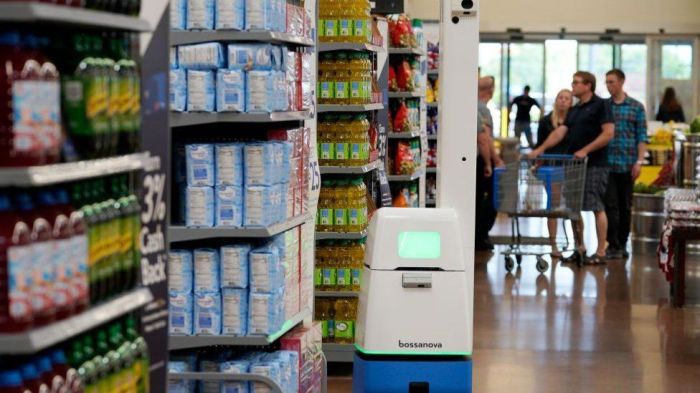
The robots, which were designed to automate inventory management tasks, were seen as a cutting-edge solution to improve efficiency and reduce labor costs. However, Walmart’s decision suggests that there are more complexities to consider, and the future of robotics in retail might not be as straightforward as initially perceived.
Walmart’s Decision to Cancel Inventory Tracking Robots

Walmart’s recent decision to cancel its inventory tracking robots has sent shockwaves through the retail industry. This move, which came after a pilot program in several stores, raises questions about the future of robotics in retail and the challenges of implementing automation in complex environments.
Reasons Behind Walmart’s Decision
The decision to cancel the robot program was likely influenced by a combination of factors. One key reason was the robots’ inability to consistently and accurately track inventory. While robots are capable of navigating complex environments and scanning items, they struggled to distinguish between different items, particularly those with similar packaging or in cluttered areas.
This resulted in inaccurate inventory data, leading to stockouts and overstocking, which ultimately hurt customer satisfaction and operational efficiency. Another factor was the robots’ high cost. The robots themselves were expensive, and their maintenance and repair required significant investment. Additionally, the robots required human oversight and intervention, which added to the overall cost.
Walmart’s decision to cancel their inventory tracking robots has sparked a lot of debate. Some see it as a sign of the times, while others believe it’s a temporary setback. Regardless, I’m more interested in baking a delicious ricotta and raspberry pie than analyzing the future of retail automation.
After all, a good pie is always a win, and maybe that’s the real lesson here – sometimes the simplest solutions are the best. Maybe Walmart should focus on perfecting their pies instead of robots.
Walmart likely concluded that the cost of deploying and maintaining the robots did not outweigh the benefits in terms of improved inventory accuracy and efficiency.
Financial and Operational Implications
Walmart’s decision to cancel the robot program has significant financial and operational implications. The company will likely save millions of dollars by avoiding further investment in the technology. However, the decision also highlights the challenges of implementing automation in complex environments like retail stores.
While robots can offer advantages in terms of speed and efficiency, they are not a silver bullet for all operational challenges.
Benefits and Drawbacks of Using Robots for Inventory Management
The use of robots for inventory management offers several potential benefits, including:
- Increased efficiency:Robots can scan and track inventory much faster than humans, potentially reducing the time required for inventory checks and freeing up employees for other tasks.
- Improved accuracy:Robots are less prone to human error and can provide more accurate inventory data, leading to better stock management and reduced losses due to stockouts or overstocking.
- Reduced labor costs:By automating inventory tracking tasks, companies can potentially reduce their labor costs, freeing up employees for more customer-facing roles.
However, there are also drawbacks to using robots for inventory management:
- High initial investment:Robots are expensive to purchase, deploy, and maintain, making them a significant investment for businesses.
- Limited flexibility:Robots are designed for specific tasks and may not be adaptable to changes in inventory or store layout. This can limit their usefulness in dynamic environments.
- Potential for downtime:Robots can malfunction or require repairs, which can disrupt operations and lead to delays in inventory tracking.
Walmart’s decision to cancel its inventory tracking robots highlights the need for careful consideration of the benefits and drawbacks of using automation in complex environments. While robots can offer advantages in certain areas, they are not a perfect solution for all inventory management challenges.
Walmart’s decision to ditch their inventory tracking robots might seem like a step backward, but it’s a reminder that technology isn’t always the answer. Perhaps they’re taking a cue from Alibaba, which has alibaba dominates b2b in india through a more human-centric approach.
Maybe Walmart is realizing that efficient inventory management requires more than just robots – it needs a blend of human intuition and technological support.
Impact on Walmart’s Operations
Walmart’s decision to cancel its inventory tracking robots will likely have a significant impact on the company’s operations, potentially affecting its efficiency, cost management, and overall customer experience. While robots offered a promising solution for automation, their discontinuation will necessitate adjustments to Walmart’s existing processes and workforce.
Walmart’s decision to cancel their inventory tracking robots might seem like a step back, but it’s a reminder that sometimes the simplest solutions are the best. Instead of relying on complex technology, why not embrace a DIY approach to organization?
You could even make your own photo wall clock like this one to keep track of time while adding a personal touch to your space. Just like a well-organized home, efficient inventory management requires a clear vision and a commitment to finding the right tools for the job.
Potential Challenges in Inventory Management
The absence of robots will present challenges for Walmart in managing its vast inventory. Robots were instrumental in automating tasks like stock-taking and shelf-scanning, providing real-time data on inventory levels and ensuring product availability. Without these automated systems, Walmart will need to rely on manual processes, which can be more time-consuming and prone to errors.
- Increased Labor Costs:Manual inventory management requires a larger workforce, leading to increased labor costs for Walmart.
- Inventory Discrepancies:Manual stock-taking can be less accurate than automated systems, potentially resulting in inventory discrepancies and stockouts.
- Slower Response Times:Without robots to monitor inventory levels, Walmart might experience delays in identifying and addressing stock shortages, impacting customer satisfaction.
Adjustments to Workforce and Processes
To mitigate the impact of robot cancellation, Walmart will need to adjust its workforce and processes. This might involve:
- Increased Hiring:Walmart may need to hire additional staff to handle the increased workload associated with manual inventory management.
- Training and Upskilling:Existing staff might require training and upskilling to effectively manage inventory without robots.
- Process Optimization:Walmart will need to optimize its existing processes to improve efficiency and minimize the impact of manual inventory management.
Technological Advancements in Inventory Management
The retail industry is constantly evolving, driven by technological advancements that are transforming how businesses manage their inventory. From traditional methods to cutting-edge solutions, technology plays a crucial role in optimizing inventory levels, reducing costs, and enhancing customer satisfaction.
Current State of Technology in Inventory Management
The current state of technology in inventory management is characterized by a blend of traditional methods and innovative solutions. Many retailers still rely on manual processes like barcode scanning and spreadsheet tracking, while others have embraced advanced technologies such as:
- Radio Frequency Identification (RFID):RFID tags attached to products provide real-time visibility into inventory levels and location. These tags emit radio waves that can be read by RFID readers, allowing retailers to track inventory movement, identify missing items, and optimize stock levels.
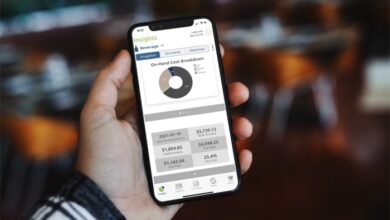
- Cloud-Based Inventory Management Systems:These systems offer centralized data storage, real-time insights, and seamless integration with other business processes. They provide a comprehensive view of inventory across multiple locations, enabling retailers to make informed decisions based on real-time data.
- Artificial Intelligence (AI):AI-powered algorithms analyze historical data and current trends to predict demand, optimize inventory levels, and automate replenishment processes. This helps retailers avoid stockouts and overstocking, leading to cost savings and improved customer satisfaction.
- Internet of Things (IoT):IoT sensors can be integrated into various aspects of the supply chain, from warehouse shelves to delivery trucks. These sensors collect data on inventory levels, temperature, humidity, and other critical factors, providing real-time insights that can be used to improve inventory management.
Alternative Technologies for Walmart
In light of Walmart’s decision to cancel its inventory tracking robots, the company could consider alternative technologies that offer similar benefits. These technologies include:
- Computer Vision:Computer vision systems use cameras to analyze images and identify objects, including inventory items. These systems can track inventory levels, monitor shelf space, and identify product placement errors. This technology could be particularly useful for Walmart’s large-scale operations.
- Drone Technology:Drones equipped with cameras and sensors can be used to conduct inventory audits, identify missing items, and track stock levels in warehouses and distribution centers. This technology offers a cost-effective and efficient alternative to manual inventory checks.
- Augmented Reality (AR):AR technology overlays digital information onto the real world, allowing workers to see inventory levels, product details, and other relevant information in real time. This technology can enhance warehouse efficiency and improve picking accuracy.
Future of Automation in Retail
The future of automation in retail is bright, with advancements in AI, robotics, and other technologies poised to transform inventory management and other aspects of the industry.
- Automated Warehouses:Automated warehouses are becoming increasingly common, with robots handling tasks such as picking, packing, and shipping. These warehouses offer significant efficiency gains and reduce labor costs.
- Predictive Analytics:AI-powered predictive analytics will play a crucial role in inventory management, enabling retailers to anticipate demand fluctuations, optimize stock levels, and minimize waste. This will lead to more efficient inventory management and reduced costs.
- Personalized Shopping Experiences:Automation will also enhance customer experiences by providing personalized recommendations, faster delivery, and more efficient order fulfillment. This will lead to increased customer satisfaction and loyalty.
Consumer Perspective: Walmart Cancels Inventory Tracking Robots
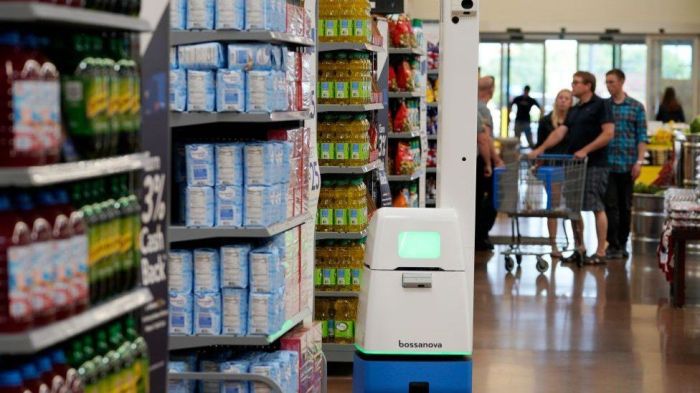
Walmart’s decision to cancel its inventory tracking robots could have a significant impact on the consumer experience. While the robots were intended to improve efficiency and accuracy, their absence might lead to changes in product availability and pricing. This shift also raises questions about consumer sentiment towards the use of robots in retail settings.
Impact on Product Availability and Pricing, Walmart cancels inventory tracking robots
The absence of robots might affect product availability in several ways.
- Increased Out-of-Stock Rates:Without robots to accurately track inventory levels, there is a higher chance of items being out of stock. This could lead to frustration for customers who are unable to find the products they need.
- Longer Wait Times:Manually tracking inventory can be time-consuming, potentially leading to longer wait times for customers, especially during peak hours.
- Price Fluctuations:Without real-time inventory data, Walmart might struggle to accurately assess demand and adjust prices accordingly. This could result in price fluctuations, potentially impacting customer perception of value.
Consumer Sentiment Regarding Robots in Retail
Consumer sentiment towards robots in retail settings is complex and multifaceted.
- Concerns about Job Displacement:Some consumers may be concerned about the potential for robots to displace human workers. This concern is particularly relevant in the current economic climate, where job security is a major issue.
- Privacy Concerns:The use of robots in retail settings raises privacy concerns, as they may collect data about customer behavior. This data could be used for targeted advertising or other purposes, which some consumers may find intrusive.
- Desire for Human Interaction:Despite the potential benefits of robots, some consumers prefer human interaction in retail settings. They may value the ability to ask questions, receive personalized recommendations, and build relationships with store staff.