
Zoom Elevates Enterprise Capabilities with New Advanced Offerings: A Deep Dive into Enhanced Efficiency, Reliability, Security, and Compliance
Zoom, a ubiquitous name in video conferencing and team collaboration, has unveiled a suite of advanced enterprise offerings designed to fundamentally enhance operational efficiency, bolster system reliability, strengthen security postures, and ensure stringent compliance for organizations of all sizes. This strategic expansion targets the unique and evolving demands of the enterprise sector, moving beyond standard video meetings to provide a comprehensive platform for critical business communication and workflow integration. The core of these new offerings lies in their ability to deliver a more robust, scalable, and secure environment, addressing the burgeoning need for unified communication solutions that can support complex organizational structures and data-sensitive operations. Businesses today require not just the ability to connect virtually, but to do so with an assurance of seamless operation, protected data, and adherence to a growing landscape of regulatory requirements. Zoom’s latest innovations aim to fulfill these requirements with a multi-faceted approach, integrating advanced features across its communication spectrum.
Boosting Efficiency: Streamlining Workflows and Enhancing Productivity
At the forefront of Zoom’s new enterprise advancements is a significant focus on boosting operational efficiency. This is achieved through several key innovations, including enhanced meeting management tools, deeper integrations with business applications, and more intelligent automation capabilities. For enterprise organizations, where time is a critical commodity and complex workflows are the norm, these features translate directly into tangible productivity gains. Advanced meeting management allows for more granular control over participant experiences, scheduling, and post-meeting follow-ups. This includes features like intelligent scheduling that can find optimal meeting times across distributed global teams, factoring in time zones and individual availability. Furthermore, the ability to assign roles and permissions within meetings with greater precision ensures smoother moderation and facilitates specialized tasks. The introduction of enhanced whiteboarding capabilities, with persistent boards and advanced annotation tools, transforms virtual collaboration from ephemeral discussions into actionable, documented workflows. These whiteboards can be saved, shared, and integrated directly into project management tools, bridging the gap between ideation and execution.
Beyond internal meeting efficiency, Zoom’s expanded offerings deeply integrate with existing enterprise software ecosystems. This means seamless data flow and reduced context switching for employees. Native integrations with leading CRM, project management, and productivity suites allow for meeting summaries, action items, and participant data to be automatically logged, creating a connected and efficient operational hub. For instance, a sales team can initiate a Zoom call directly from a Salesforce record, with meeting notes and outcomes automatically appended to the relevant client profile. This eliminates manual data entry and ensures all communication touchpoints are comprehensively tracked. Automation plays a crucial role in this efficiency drive. Zoom is introducing more sophisticated AI-powered features that can automatically transcribe meetings, generate summaries, and even identify key decisions or action items. This frees up participants to focus on the discussion itself, rather than on meticulous note-taking. For managers, these automated summaries provide quick overviews of team activities and progress, enabling more agile decision-making. The goal is to transform communication from a standalone activity into an embedded, intelligent component of daily business operations, directly contributing to faster project completion and improved resource utilization.
Enhancing Reliability: Unwavering Uptime and Scalable Performance
For enterprise-level deployments, reliability is paramount. Downtime in communication can have cascading negative effects, from missed business opportunities to significant operational disruptions. Zoom’s new advanced offerings are engineered with a heightened emphasis on reliability, leveraging a robust global infrastructure and advanced network management techniques. The platform is built for immense scalability, capable of handling massive concurrent user loads without performance degradation. This is achieved through a distributed architecture that ensures optimal performance regardless of geographic location. Redundancy is a core tenet of this enhanced reliability. Critical components of the Zoom infrastructure are duplicated to ensure continuous operation even in the event of hardware failures or localized network issues. This proactive approach to system resilience minimizes the risk of service interruptions.
Zoom’s commitment to reliability extends to its network optimization. Advanced Quality of Service (QoS) mechanisms are in place to prioritize real-time audio and video traffic, ensuring smooth and uninterrupted communication even on less-than-ideal network conditions. This intelligent traffic management actively adapts to network fluctuations, making it more resilient to packet loss and latency. For enterprises with distributed workforces or remote operations, this means a consistent and high-quality experience for all users. Furthermore, Zoom is introducing enhanced monitoring and diagnostics tools for IT administrators. These tools provide real-time insights into network performance, application health, and user experience metrics. This proactive visibility allows IT teams to identify and address potential issues before they impact end-users, further solidifying the platform’s reliability. The ability to track usage patterns, identify bandwidth constraints, and monitor application performance across the enterprise empowers IT departments to proactively manage their communication infrastructure and ensure optimal performance at all times. This focus on underlying infrastructure and intelligent management systems creates a communication backbone that businesses can truly depend on.
Fortifying Security: Comprehensive Data Protection and Access Control
In today’s threat landscape, security is not an afterthought; it’s a foundational requirement. Zoom’s advanced enterprise offerings introduce a multi-layered security framework designed to protect sensitive data and intellectual property. End-to-end encryption (E2EE) is now a cornerstone feature, providing a robust layer of privacy for meetings. This ensures that only the intended participants can access the content of the communication, making it suitable for highly confidential discussions. Beyond E2EE, Zoom has implemented granular access controls and authentication mechanisms to manage who can join meetings and access sensitive information. This includes advanced features for setting up waiting rooms, requiring meeting passwords, and controlling participant permissions in real-time. For enterprises, this granular control is essential for managing access to proprietary information and ensuring that unauthorized individuals cannot disrupt or infiltrate sensitive communications.
The platform offers enhanced security management capabilities for IT administrators. This includes centralized policy management, allowing organizations to define and enforce security settings across all Zoom accounts within their enterprise. This ensures consistency in security posture and reduces the risk of misconfigurations. Single Sign-On (SSO) integration with existing enterprise identity providers streamlines user authentication and enhances security by centralizing credential management. This also simplifies the user experience, as employees can access Zoom using their existing corporate login credentials. Furthermore, Zoom is bolstering its auditing and reporting capabilities, providing detailed logs of meeting activity, user access, and security-related events. This comprehensive audit trail is crucial for compliance purposes and for investigating any potential security incidents. Proactive security threat detection mechanisms are also being integrated, leveraging AI and machine learning to identify and flag suspicious activity. This includes anomaly detection in user behavior and network access patterns, providing an additional layer of defense against evolving threats. The commitment to ongoing security updates and transparent vulnerability management further underscores Zoom’s dedication to providing a secure communication environment for enterprise organizations.
Ensuring Compliance: Meeting Evolving Regulatory Demands
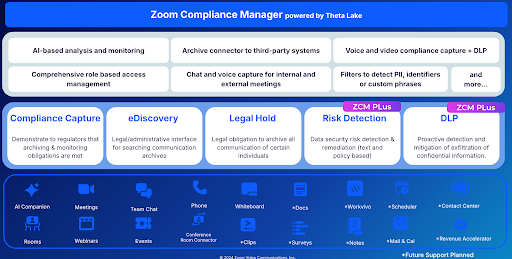
Navigating the complex and ever-evolving landscape of regulatory compliance is a significant challenge for enterprises. Zoom’s advanced enterprise offerings are designed to address these critical needs with features that support adherence to industry-specific regulations and global data privacy laws. The platform provides enhanced data residency options, allowing organizations to specify where their meeting data is stored, which is crucial for compliance with regulations like GDPR and CCPA. This control over data location helps organizations meet their legal obligations regarding data sovereignty and cross-border data transfer. Furthermore, Zoom’s enhanced audit trails and reporting capabilities are invaluable for demonstrating compliance. Detailed records of meeting participation, data access, and administrative actions provide the necessary documentation for audits and regulatory reviews.
The platform’s commitment to security, including E2EE and granular access controls, directly contributes to compliance efforts. By ensuring the confidentiality and integrity of communications, organizations can better meet the requirements of data protection regulations. For industries with strict compliance mandates, such as healthcare (HIPAA) or finance, Zoom is investing in features and certifications that specifically address these sector-specific needs. This includes enhanced Business Associate Agreement (BAA) support and features designed to facilitate secure handling of protected health information. Administrators can leverage advanced policy management to enforce compliance-related settings, ensuring that all users adhere to organizational guidelines and regulatory requirements. This includes controls over data retention, recording policies, and permissible integrations. Zoom’s proactive approach to transparency regarding its security practices and compliance certifications provides enterprises with the confidence that the platform is built to support their regulatory obligations. By offering a robust and auditable platform, Zoom empowers enterprises to conduct their business with assurance, knowing that their communication tools are not only efficient and reliable but also compliant with the stringent demands of the modern regulatory environment.

