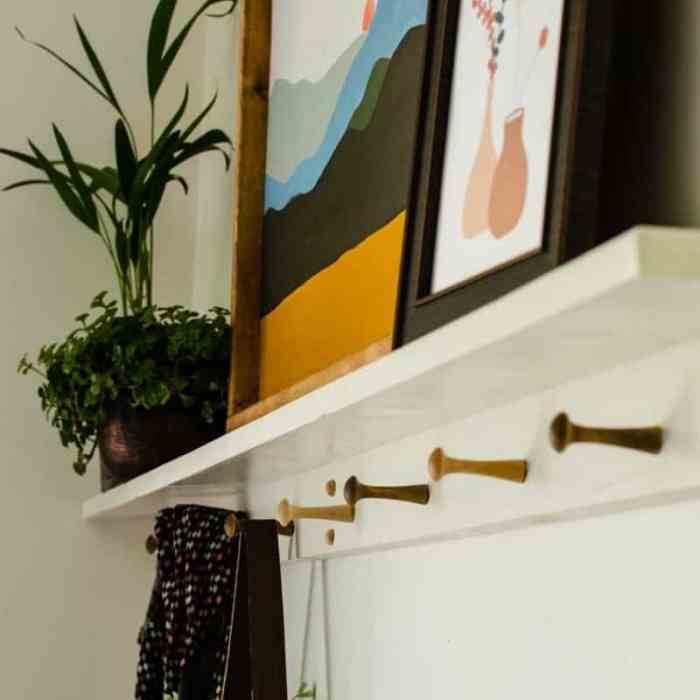

DIY Modern Peg Rail Shelf: A Comprehensive Guide to Stylish, Functional Storage
The modern peg rail shelf is a versatile and highly sought-after piece for contemporary homes, offering a blend of minimalist aesthetics and practical storage. This DIY guide will walk you through the entire process of building your own, from understanding the core components and necessary tools to selecting materials, executing the build, and achieving a professional finish. We’ll delve into design considerations, cost-effectiveness, and various customization options, empowering you to create a functional and visually appealing storage solution that complements any room. The beauty of a DIY peg rail shelf lies in its adaptability; it can be tailored to specific dimensions, chosen wood types, and desired aesthetic preferences. Whether you’re a seasoned woodworker or a beginner looking to tackle a rewarding project, this comprehensive guide will equip you with the knowledge and confidence to succeed.
Understanding the Modern Peg Rail Shelf: Design Principles and Functionality
At its heart, a modern peg rail shelf is a minimalist design that prioritizes clean lines and unadorned functionality. The defining feature is the integrated peg rail, typically a horizontal wooden bar with evenly spaced pegs or dowels protruding from it. These pegs serve as hooks for hanging items, while the shelf itself provides a flat surface for display or storage of lighter objects. The "modern" aspect often translates to a preference for natural wood finishes (or crisp painted surfaces), simple joinery, and a lack of ornate detailing. This approach results in a piece that is both visually understated and highly effective for organizing everyday essentials. Functionally, the peg rail shelf excels in areas where accessible storage is paramount. Think kitchen walls for utensils and towels, entryways for coats and keys, bedrooms for scarves and bags, or even bathrooms for towels and toiletries. The open design promotes easy access and visibility, reducing clutter and enhancing the perceived spaciousness of a room. The shelf component adds another layer of utility, allowing for the placement of decorative items, small plants, or frequently used necessities. This dual functionality makes it an indispensable element in maximizing vertical space and maintaining a tidy living environment.
Essential Tools and Materials for Your DIY Peg Rail Shelf Project
Successful execution of any DIY project hinges on having the right tools and materials. For a modern peg rail shelf, the list is relatively straightforward, making it an accessible project for many skill levels.
Tools:
- Measuring Tape: Essential for accurate measurements of your space and the shelf components.
- Pencil: For marking cut lines and drilling points.
- Saw: A miter saw is highly recommended for precise, straight, and angled cuts, especially for the shelf and the rail. A hand saw can be used, but will require more effort and may result in less clean cuts.
- Drill/Driver: For drilling pilot holes, driving screws, and potentially using a spade bit or Forstner bit for larger peg holes.
- Screwdriver Bits: To match your chosen screws.
- Clamps: To hold pieces together while gluing or screwing, ensuring stability and accuracy.
- Sandpaper/Sander: For smoothing rough edges and preparing the wood for finishing. Grit sizes will range from coarse (e.g., 80-120) for initial shaping to fine (e.g., 220-320) for a smooth finish.
- Wood Glue: A high-quality wood glue is crucial for strong, lasting joints.
- Stud Finder: To locate wall studs for secure mounting.
- Level: To ensure your shelf is mounted straight and parallel to the floor.
- Safety Glasses: Non-negotiable for protecting your eyes from sawdust and debris.
- Dust Mask: To prevent inhalation of fine wood dust, especially during sanding.
- Optional: Router (for decorative edges), countersink bit (for flush screw heads), spirit level (for precise alignment).
Materials:
- Wood for the Shelf: Common choices include pine, poplar, oak, or walnut. Pine and poplar are budget-friendly and easy to work with, while oak and walnut offer a more premium look and durability. Consider the desired aesthetic and your budget. Boards will typically be in the range of 1×4, 1×6, or 1×8 (nominal dimensions) depending on desired shelf depth.
- Wood for the Peg Rail: This can be the same wood as the shelf or a contrasting species. Consider solid wood dowels of appropriate diameter (typically 1/2 inch to 1 inch) or pre-made peg rail sections.
- Wood Screws: Choose screws that are appropriate in length and gauge for your wood thickness and the load the shelf will bear.
- Wall Anchors (if not mounting directly into studs): If your mounting location lacks studs, appropriate drywall anchors will be necessary for secure attachment.
- Finishing Supplies: This will depend on your desired look. Options include:
- Wood Stain: To color the wood.
- Wood Sealer/Varnish/Polyurethane: To protect the wood and provide a durable finish.
- Paint: For a solid color finish.
- Primer: If painting.
- Brushes/Rollers/Rags: For application of finishes.
Design and Planning: Dimensions, Layout, and Wood Selection
Before cutting any wood, meticulous planning is key to a successful and aesthetically pleasing peg rail shelf. This phase involves determining the exact dimensions, the spacing of your pegs, and the most suitable wood species for your project.
Dimensions:
- Length: This will be dictated by the available wall space and your intended use. Measure the wall area where the shelf will be installed. For entryways, a longer shelf might be ideal for multiple coats. In a kitchen, a shorter, more focused shelf might suffice for frequently used utensils.
- Depth (Shelf Width): This depends on what you intend to place on the shelf. A 4-6 inch depth is common for decorative items and smaller objects. A 6-8 inch depth is more practical for larger items or if you plan to use it as a primary display surface.
- Height (Shelf Thickness and Rail Height): The thickness of your shelf board will influence its perceived sturdiness and aesthetic. Standard shelf thicknesses are typically 3/4 inch to 1 inch. The height of the peg rail itself will determine how much vertical space is available below the shelf for hanging items. Consider the length of the items you will hang; longer items will require more clearance.
Peg Spacing and Layout:
- Spacing: Consistent spacing is crucial for both visual appeal and functionality. A common spacing is 3-6 inches between peg centers. Measure your intended items to hang and determine the optimal spacing to prevent overcrowding or insufficient room.
- Edge Clearance: Ensure there’s adequate space between the outermost pegs and the ends of the shelf to prevent items from hanging off the sides. A margin of 2-4 inches is generally recommended.
- Layout: Sketch out your design on paper. This will help visualize the proportions and ensure everything aligns.
Wood Selection:
The choice of wood significantly impacts the final look, durability, and cost of your peg rail shelf.
- Pine: An economical and readily available option. It’s soft and easy to work with, but can dent and scratch more easily. Ideal for painted finishes or if you’re on a budget.
- Poplar: A step up from pine in terms of hardness and grain. It takes paint and stain well and is a good mid-range choice.
- Oak: A hardwood known for its strength, durability, and attractive grain patterns. It’s more expensive but offers a premium, classic look.
- Walnut: Another premium hardwood, prized for its rich, dark color and beautiful grain. It’s excellent for a sophisticated, modern aesthetic.
- Maple: A hard, durable wood with a fine grain that takes finishes beautifully. It’s a good choice for a clean, modern look.
Consider the overall style of your home. A rustic farmhouse might favor knotty pine, while a modern minimalist space would benefit from the clean lines of oak or walnut.
Step-by-Step Building Instructions: Constructing the Peg Rail Shelf
With your plans finalized and materials gathered, it’s time to bring your modern peg rail shelf to life. Follow these steps meticulously for a strong and beautiful result.
Step 1: Cutting the Wood
- Shelf Board: Measure and cut your chosen shelf wood to the desired length. Ensure your cuts are perfectly square, especially if using a miter saw.
- Peg Rail Backer (Optional but recommended): If you are not using pre-made peg rail, you will need a backer board for the pegs to attach to. This should be the same length as your shelf board and a suitable width to accommodate the pegs.
- Dowels (for pegs): Cut your dowels to the desired peg length. Common lengths are 2-4 inches, depending on how much protrusion you want.
Step 2: Preparing the Shelf Board
- Sand Edges: Thoroughly sand all cut edges of the shelf board, starting with a coarser grit (e.g., 80-120) to remove saw marks and progressively moving to finer grits (e.g., 220-320) for a smooth finish. Pay particular attention to the front edge, which will be most visible.
- Optional: Rounding Edges: For a softer look, you can slightly round over the front edge of the shelf board with sandpaper or a router.
Step 3: Attaching the Pegs to the Backer Board (if applicable)
- Mark Peg Locations: Using your measuring tape and pencil, carefully mark the positions for your pegs on the backer board, ensuring consistent spacing and edge clearance as planned.
- Drill Pilot Holes: Drill pilot holes at each marked peg location. The diameter of the pilot hole should be slightly smaller than the diameter of your dowels to ensure a snug fit. Drill to a depth that will securely anchor the dowel.
- Apply Glue and Insert Dowels: Apply a generous amount of wood glue into each pilot hole. Insert the dowels into the holes, tapping them gently with a mallet if needed.
- Wipe Away Excess Glue: Immediately wipe away any excess glue that squeezes out with a damp cloth.
- Allow to Dry: Let the glue dry completely according to the manufacturer’s instructions.
Step 4: Assembling the Shelf and Rail
- Positioning: Place the shelf board upside down on a clean, flat surface. Position the peg rail backer (with attached pegs) onto the underside of the shelf board. The top edge of the peg rail backer should be flush with the back edge of the shelf board, and the pegs should be pointing downwards.
- Pre-drilling Pilot Holes: Pre-drill pilot holes through the backer board and into the shelf board. Space these holes to provide adequate support without being too close to the edge of the shelf. Countersink these holes if you want the screw heads to be flush with the surface of the backer board.
- Apply Glue and Screw: Apply wood glue to the contacting surfaces of the backer board and shelf board. Then, drive screws through the pilot holes to secure the two pieces together. Ensure screws are not so long that they penetrate the top surface of the shelf.
- Clamp and Dry: Clamp the assembled unit firmly together and allow the glue to dry completely.
Step 5: Finishing Touches
- Sanding: Once the glue is dry, sand the entire assembled shelf. Start with a medium-grit sandpaper to smooth out any imperfections, then move to finer grits for a super smooth finish. Pay attention to all surfaces and edges.
- Cleaning: Thoroughly remove all dust with a tack cloth or a damp cloth.
- Applying Finish:
- Stain: Apply wood stain according to the product’s instructions, using a brush or rag. Wipe off excess stain after the recommended time.
- Paint: Apply a primer first, followed by two or more coats of paint, allowing adequate drying time between coats.
- Sealer/Topcoat: Once your stain or paint is dry, apply a clear protective finish like polyurethane or varnish. Apply multiple thin coats for maximum durability, sanding lightly between coats with very fine grit sandpaper (e.g., 320-400).
Mounting Your Modern Peg Rail Shelf: Secure and Level Installation
Proper mounting is critical for the longevity and safety of your peg rail shelf. It’s not just about aesthetics; it’s about ensuring it can hold the weight it’s intended for.
Step 1: Locate Wall Studs
- Using a stud finder, identify the location of wall studs behind where you plan to mount the shelf. Marking these stud locations with a pencil is essential. Mounting directly into studs provides the most secure attachment.
Step 2: Mark Mounting Points on the Wall
- Hold the assembled peg rail shelf against the wall at your desired height.
- Using a level, ensure the shelf is perfectly straight.
- Mark the wall through the back of the shelf at the stud locations you identified. If you are using a backer board that extends beyond the shelf, you can drill mounting holes in this backer board at the stud locations.
Step 3: Pre-Drill Pilot Holes in the Wall
- Remove the shelf from the wall.
- At the marked locations that align with studs, drill pilot holes into the studs. The diameter of these pilot holes should be slightly smaller than the diameter of your mounting screws.
Step 4: Install Mounting Hardware
- Into Studs: If you’ve hit studs, drive long wood screws directly through the back of your shelf (or its backer board) and into the pre-drilled pilot holes in the studs.
- Into Drywall (No Studs): If you cannot hit studs at all desired locations, you will need to use heavy-duty drywall anchors. Follow the anchor manufacturer’s instructions for installation. This usually involves drilling a larger hole, inserting the anchor, and then driving a screw into the anchor.
Step 5: Attach the Shelf to the Wall
- Hold the shelf back up to the wall, aligning the pre-drilled holes in the shelf with the pilot holes (or anchors) in the wall.
- Drive screws through the shelf and into the wall studs or anchors. Tighten them securely, but avoid overtightening, which can strip the screws or damage the wall.
- Use your level again to confirm the shelf is straight before fully tightening all screws.
Customization and Styling: Personalizing Your Peg Rail Shelf
The beauty of DIY lies in its inherent customizability. Here are several ways to personalize your modern peg rail shelf to perfectly suit your style and needs.
- Wood Type and Finish: As discussed earlier, the choice of wood and finish is paramount. Experiment with different stains – from light washes to dark, rich tones. Consider a matte polyurethane for a contemporary look or a high-gloss finish for a more dramatic effect. For painted shelves, opt for bold colors or subtle pastels.
- Peg Material and Shape: While wooden dowels are standard, consider alternatives. Metal rods, leather-wrapped dowels, or even repurposed vintage hooks can add unique character. You could also carve or shape the ends of wooden dowels for a subtle decorative touch.
- Shelf Edging: Beyond a simple square edge, consider adding a routed edge profile. A subtle chamfer, a cove, or a decorative bead can elevate the shelf’s appearance.
- Integrated Compartments: For enhanced organization, consider incorporating small built-in compartments or dividers on the shelf itself. This is particularly useful in entryways for keys, mail, or sunglasses.
- Lighting Integration: For a truly modern and functional piece, consider integrating subtle LED strip lighting under the shelf for ambient illumination.
- Backplate or Accent Panel: Instead of mounting directly to the wall, you could attach the peg rail shelf to a larger decorative backplate made of contrasting wood, metal, or even a tiled surface.
- Size and Scale: Don’t be afraid to deviate from standard dimensions. A long, narrow peg rail shelf can be a striking vertical element, while a shorter, deeper shelf might be more suitable for specific display needs.
- Adding a Drawer: For added concealed storage, consider incorporating a shallow drawer beneath the shelf. This adds complexity but significantly increases functionality.
Troubleshooting Common DIY Peg Rail Shelf Issues
Even with careful planning, DIY projects can sometimes present challenges. Here are some common issues and their solutions.
- Wobbly Shelf: This is almost always a mounting issue.
- Solution: Ensure you are mounting into wall studs whenever possible. If not, use appropriate heavy-duty drywall anchors. Double-check that all mounting screws are securely tightened. If the shelf itself is wobbly (not the mounting), you may need to reinforce the glue joints or add additional screws during assembly.
- Pegs Loosening:
- Solution: Ensure you used enough wood glue and that the pilot holes were the correct size for a snug fit. If a peg is already loose, you can often remove it, clean out the old glue, and re-glue it with a good quality wood glue, tapping it back into place. For a more permanent fix, consider drilling a small pilot hole through the backer board and into the peg, then driving a small screw.
- Uneven Peg Spacing:
- Solution: This is a planning or execution error. Ideally, measure and mark spacing carefully before drilling. If the issue is minor, you might be able to live with it. For significant unevenness, you might need to re-drill new holes and fill the old ones, which can be challenging to make look seamless.
- Rough Sanding Marks:
- Solution: You may have skipped a grit of sandpaper or not sanded long enough with each grit. Go back and re-sand the affected areas, progressing through the grits from coarse to fine. Ensure you are sanding with the grain of the wood.
- Finish Blotchiness (Stain):
- Solution: This can happen with certain wood species (like pine) that absorb stain unevenly. Ensure you’ve sanded thoroughly and used a pre-stain conditioner if recommended for your wood type. If the blotchiness is severe, you might need to sand it down and reapply the stain, or consider a solid paint finish to cover it.
- Screw Head Protrusion:
- Solution: If screw heads are sticking out, you should have countersunk them during assembly. If they are slightly proud, you can fill them with wood filler and then sand smooth before finishing. If they are significantly below the surface, you might need to use a slightly longer screw or re-drill.
Conclusion: The Rewarding Outcome of a DIY Modern Peg Rail Shelf
Building your own modern peg rail shelf is a project that offers a significant return on investment, both in terms of cost savings and the satisfaction of creating a functional, stylish piece of home decor. This comprehensive guide has outlined the essential steps, materials, and considerations for a successful build. From the initial design phase, where you meticulously plan dimensions and aesthetics, to the hands-on construction, and finally to the secure mounting, each stage contributes to the final product. The inherent adaptability of the peg rail shelf design allows for endless customization, enabling you to tailor it to your specific needs and integrate it seamlessly into your existing home décor. By following these detailed instructions, armed with the right tools and materials, you can confidently embark on this rewarding DIY journey. The result will be a bespoke storage solution that not only organizes your belongings but also adds a touch of modern elegance to your living space, proving that high-quality design and functionality are well within reach through your own creative efforts. The ability to personalize every aspect, from the wood grain to the finish, ensures that your DIY peg rail shelf will be a unique and cherished addition to your home for years to come.

