When the NASDAQ exchange opens on Wednesday morning, investors will witness the arrival of a new ticker symbol, FRVO, marking what analysts describe as a watershed moment for the renewable energy sector. Fervo Energy, a Houston-based leader in next-generation geothermal technology, is moving forward with an initial public offering (IPO) that aims to raise $1.8 billion, a figure that would position it as one of the most significant Wall Street debuts for a clean energy company in United States history. With a projected valuation of approximately $7.4 billion, Fervo’s entry into the public markets serves as a critical test of investor appetite for "deep tech" solutions to the global climate crisis.
The magnitude of the offering has sent ripples through both the financial and environmental sectors. Gernot Wagner, a climate economist at Columbia Business School, emphasized the symbolic and practical weight of the move, noting that in the transition to a green economy, "money speaks." The success or failure of FRVO is expected to serve as a bellwether for the broader cleantech industry, which has recently grappled with high interest rates and shifting political landscapes.
The Evolution of Geothermal: From Niche to Utility-Scale
At its most fundamental level, geothermal energy is a process of harnessing the subterranean heat of the Earth to produce steam, which in turn spins turbines to generate electricity. Unlike solar and wind energy, which are intermittent and dependent on weather conditions, geothermal provides "baseload" power—a steady, 24/7 supply that is essential for stabilizing the power grid. However, traditional geothermal has historically been limited to rare geographic locations where natural heat, water, and rock permeability coexist near the surface, such as in parts of Iceland or California.
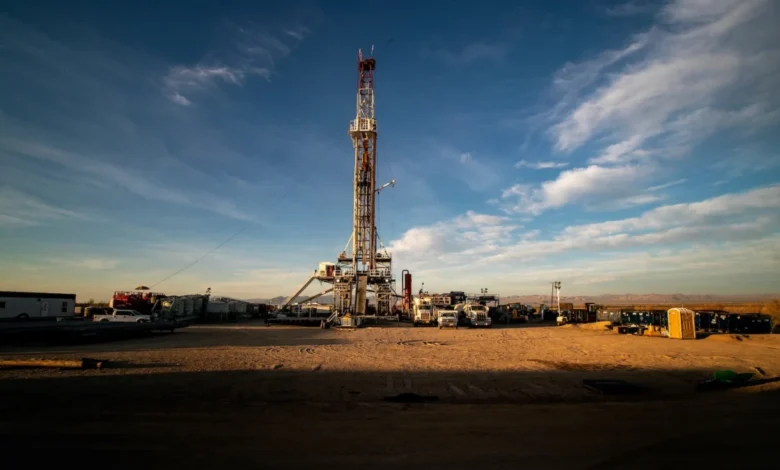
Fervo Energy is attempting to break these geographic constraints through the application of "Enhanced Geothermal Systems" (EGS). The company’s innovation lies in its adaptation of horizontal drilling and multi-stage hydraulic fracturing techniques—technologies perfected by the shale oil and gas industry—combined with proprietary fiber-optic sensing. By drilling deep into hot, dry rock and injecting fluid to create artificial reservoirs, Fervo can harvest heat from locations previously deemed non-viable for energy production.
Zainab Gilani, a geothermal analyst with the Cleantech Group, observes that this crossover of fossil fuel techniques into the renewable sector is the key to scalability. Fervo’s stated goal is to leverage these efficiencies to drive down the cost of geothermal power from its current average of $7,000 per kilowatt to approximately $3,000 per kilowatt as the technology matures. If successful, this would bring geothermal into direct competition with natural gas and coal on a cost-per-megawatt basis, without the associated carbon emissions.
Market Dynamics: The AI Boom and Grid Strain
The timing of Fervo’s IPO coincides with an unprecedented surge in domestic electricity demand. For the first time in decades, U.S. utilities are projecting a sharp upward trajectory in power consumption, driven largely by the rapid expansion of data centers required to sustain the artificial intelligence (AI) revolution. These facilities require massive amounts of reliable, around-the-clock electricity, putting immense pressure on aging power grids.
Technology giants, facing internal mandates to reach net-zero emissions, are increasingly looking toward advanced nuclear and geothermal energy to power their operations. Alphabet, the parent company of Google, has already established a pioneering partnership with Fervo, signing contracts to supply carbon-free power to its data centers. Similarly, Bill Gates’ Breakthrough Energy Ventures has been a prominent early-stage investor, signaling a high degree of confidence in Fervo’s ability to meet the rigorous demands of the tech sector.
The urgency for new energy sources has been further heightened by global geopolitical instability. Ongoing conflicts, including the war involving Iran, have introduced significant volatility into global energy markets, driving up the price of fossil fuels and making domestic, renewable alternatives more attractive to both policymakers and private investors. In response to this "insatiable" demand, Fervo recently upsized its IPO target, increasing its offering from 55.6 million shares to 70 million shares, with an expected price range between $25 and $26 per share.
A Chronology of Breakthroughs: From Nevada to Utah
Fervo’s path to the NASDAQ has been marked by a series of technical milestones that demonstrated the commercial viability of EGS.
- 2023: Project Red (Nevada): Fervo successfully deployed its technology in a commercial pilot project in Nevada. The facility produced enough clean energy to power roughly 2,600 homes, proving that its horizontal drilling and sensing techniques could maintain consistent flow rates and temperatures.
- 2024: Cape Station Expansion (Utah): Building on the Nevada success, Fervo broke ground on "Cape Station" in Beaver County, Utah. This facility is designed to produce 400 megawatts of electricity—more than 100 times the output of the Nevada pilot—and is scheduled to begin delivering power to the grid later this year.
- Early 2026: Financial Scaling: Ahead of the IPO, Fervo secured $421 million in non-recourse project financing for Cape Station, a move that allowed the company to continue construction despite broader market fluctuations.
- May 2026: The Public Offering: Following a surge in investor interest, the company officially filed for its upsized IPO, targeting a $7.4 billion valuation.
Navigating Political and Regulatory Headwinds
The political environment surrounding the Fervo IPO is complex. The 2022 Inflation Reduction Act (IRA), signed by President Joseph Biden, provided a massive tailwind for the industry, offering billions in tax credits and grants for geothermal and other green technologies. However, the political landscape shifted dramatically following the return of Donald Trump to the presidency.
The current administration and Congress have moved to dismantle key provisions of the IRA, rolling back incentives for wind and solar and refocusing federal energy policy on the expansion of domestic fossil fuel production. Many clean energy projects across the country have been canceled or placed in limbo due to this policy reversal.
Despite these challenges, Fervo has managed to maintain its momentum. Industry experts suggest that geothermal’s reliance on oil and gas expertise may provide it with a degree of political "armor" that other renewables lack. By employing workers and technologies from the petroleum sector, geothermal projects often enjoy more bipartisan support in energy-producing states like Utah and Texas.
Jigar Shah, a managing partner at the investment firm Multiplier and a former senior official at the Department of Energy, argues that the "alternative energy" label is no longer accurate. "When you’re 90 percent of everything that gets added to the grid every year, you’re no longer alternative," Shah noted. He believes that the sheer economic necessity of new power generation will outweigh political shifts in the long run.
Broader Implications and the Road to 2040
The Fervo IPO follows the successful $1 billion public offering of X-Energy, an Amazon-backed nuclear reactor developer, earlier this year. Together, these moves suggest a shift in the capital markets toward "firm" carbon-free power—technologies that can replace the coal and gas plants that currently provide the backbone of the industrial economy.
However, significant hurdles remain. Rob Gramlich, president of the consulting firm Grid Strategies, cautioned that while Fervo’s technology is revolutionary, it is not yet available at a scale that can solve today’s immediate grid shortages. "They are great 2040 and 2050 options," Gramlich said, suggesting that the true impact of geothermal will be felt in the coming decades as the technology is refined and costs continue to fall.
The immediate focus for Fervo will be the successful commissioning of Cape Station. If the Utah facility meets its performance targets, it will provide the definitive "proof of concept" required to unlock even larger tranches of institutional capital. For the broader cleantech sector, a successful debut for FRVO would signal that the transition to renewable energy is being driven by fundamental market demand and technological innovation, rather than just government subsidies.
As the ticker FRVO begins to flash on the NASDAQ screens, the eyes of the energy world will be on Fervo. The company is not just selling shares; it is selling the vision of a world where the heat beneath our feet provides a permanent, carbon-free solution to the modern world’s insatiable hunger for power. Whether the stock "sinks or sails," the scale of the offering confirms that the race for the next generation of energy is now a multi-billion-dollar reality.