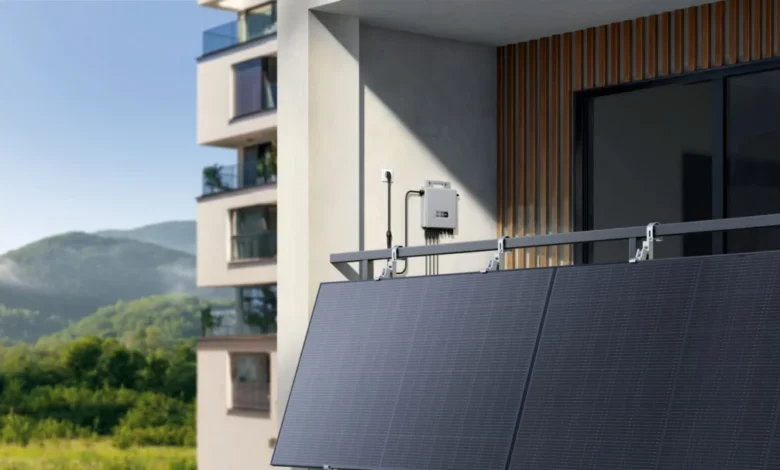
The landscape of American residential energy is undergoing a quiet but significant transformation, sparked by a legislative move in Utah that is now reverberating across the United States. Utah state Representative Raymond Ward, a Republican from Bountiful, catalyzed this shift after reading a report in The New York Times regarding a burgeoning energy trend in Europe. What began as an observation of German "balcony solar" systems has evolved into a legislative framework that could democratize renewable energy for millions of Americans, particularly renters and those for whom traditional rooftop solar remains financially out of reach.
Known formally as plug-in solar, this technology allows residents to generate electricity by plugging portable solar panels directly into a standard 120-volt wall outlet. Unlike traditional residential solar, which requires complex permitting, professional installation, and often a $30,000 price tag, plug-in systems are designed to be "plug-and-play." By passing House Bill 340 (HB 340) last year with unanimous, bipartisan support, Utah became the first state in the nation to explicitly legalize and regulate the practice of plugging solar systems directly into residential outlets, setting a precedent that over 30 other states and the District of Columbia are now racing to follow.
The European Inspiration and the Birth of HB 340
The genesis of Utah’s legislation lies in the "Balkonkraftwerk" or balcony power plant movement that swept through Germany and much of Western Europe over the last three years. Following Russia’s invasion of Ukraine and the subsequent spike in natural gas prices, European households sought immediate ways to reduce their reliance on the centralized grid. In Germany alone, balcony solar panels added 10 percent more solar capacity to the national grid in just a few months during the peak of the energy crisis.
Representative Ward recognized that the same physics and economic pressures applied to the American West. While Utah is known for its conservative political landscape, the ethos of energy independence and fiscal pragmatism resonates deeply with its constituency. "It’s great for anyone who wants a little solar power but does not want to pay $30,000 for a roof install," Ward noted. The bill was crafted not as a subsidy-heavy climate mandate, but as a deregulation measure designed to give consumers more choices in how they manage their utility bills.
Technical Paradigms: Upstream vs. Downstream Power
The primary hurdle to adopting plug-in solar in the United States is not the solar panels themselves, but the way American homes are wired. For over a century, residential electrical systems have been designed for "downstream" flow: power moves from the utility grid, through a meter, into a circuit breaker, and finally to an outlet to power a device. Plug-in solar flips this architecture on its head.
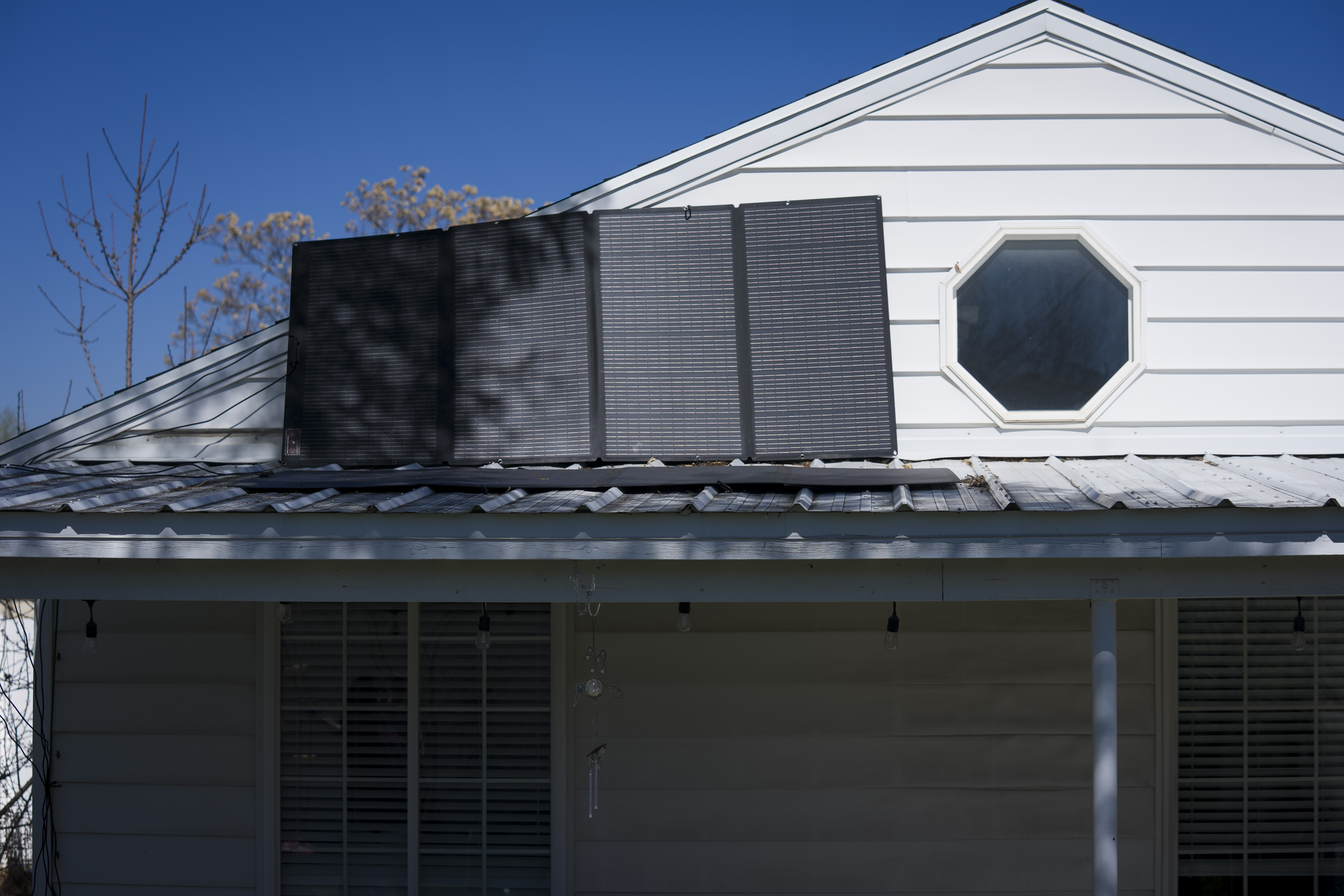
When a solar panel is plugged into an outlet, it pushes electricity "upstream" into the home’s wiring. If the home is consuming more power than the panel is producing, the solar energy simply reduces the amount of power drawn from the grid. However, if the panel produces more than the home needs, the excess energy can theoretically flow back out into the utility grid.
This reversal of flow creates two primary challenges: safety and utility cooperation. Utilities have historically resisted decentralized power generation because it complicates grid management and threatens the traditional "vendor-customer" business model. More importantly, there are legitimate safety concerns for utility line workers. If a power line is damaged and workers attempt to repair it, they rely on the assumption that the line is "dead" once the main breaker is pulled. If thousands of balcony solar systems are still pumping electricity back into the grid, it could create a lethal hazard for those workers.
The Role of Safety Standards and UL Certification
To address these risks, HB 340 mandated a partnership with Underwriters Laboratories (UL), the global leader in safety science. While UL has long certified individual components like inverters and solar panels, the Utah legislation marked the first time the organization was tasked with certifying an entire "plug-in system" as a consumer appliance.
In November, UL issued a comprehensive white paper outlining potential hazards. Researchers focused on ensuring that plug-in panels do not cause circuit breakers to trip unexpectedly or cause Ground Fault Circuit Interrupter (GFCI) outlets—standard in kitchens and bathrooms—to malfunction. The goal is to develop a "UL-certified" stamp for plug-in solar kits, similar to the safety labels found on toasters or hair dryers.
Kenneth Boyce, vice president of engineering for UL, stated that while no complete systems have received certification yet, several manufacturers are in the final stages of testing. He expects UL-certified plug-in solar kits to hit the shelves of major American big-box retailers within months. This certification is the "missing link" that will allow homeowners’ associations (HOAs) and insurance companies to feel comfortable with the technology.
Economic Implications for Renters and Low-Income Households
One of the most significant impacts of the plug-in solar movement is its potential to close the "green divide." Traditional solar installations are largely restricted to homeowners with high credit scores and suitable roofs. Renters, who make up approximately 36 percent of U.S. households, have historically been excluded from the benefits of the renewable energy transition.
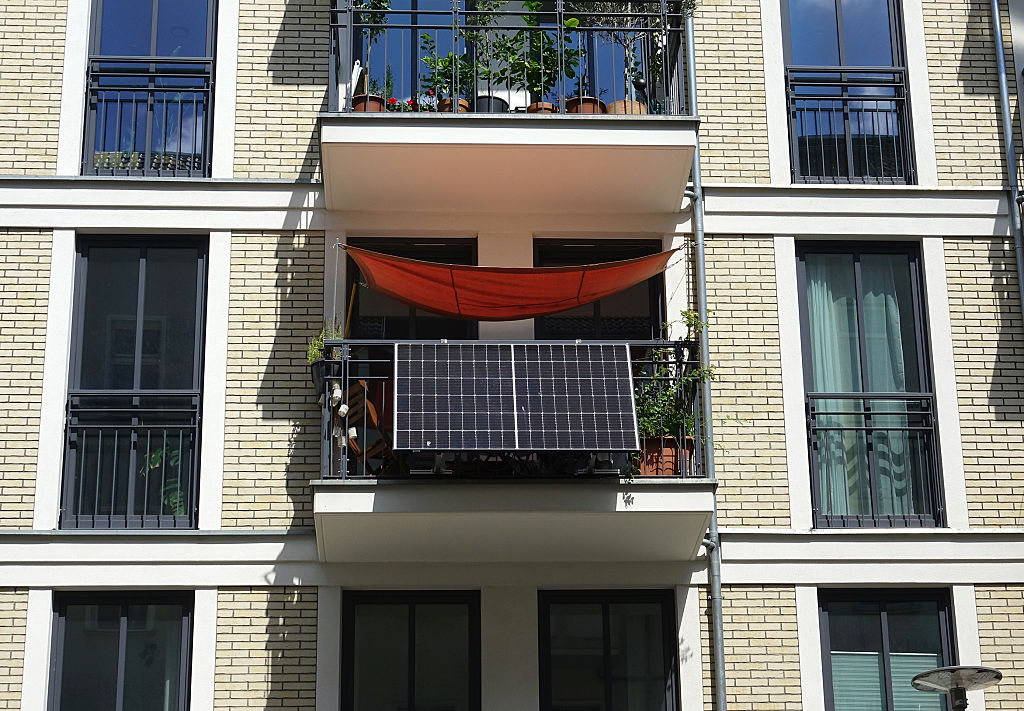
A basic plug-in system, including a micro-inverter and a portable panel, can cost as little as $500 to $1,000. For an apartment dweller with a south-facing balcony, such a system can offset roughly 10 to 15 percent of their monthly electricity bill. In Utah, where HB 340 caps the output of these systems at 1,200 watts, users like popular tech YouTuber JerryRigEverything have reported saving approximately one dollar per day. While this may seem modest, the return on investment (ROI) for a $600 system is significantly faster than that of a $30,000 rooftop array, often paying for itself within three to five years.
Furthermore, these systems are portable. If a renter moves to a new apartment, they can simply unplug their solar panels and take their energy source with them, a flexibility that is impossible with traditional installations.
National Momentum and State-by-State Progress
Utah’s legislative experiment has triggered a domino effect across the country. According to Bright Saver, a lobbying group focused on plug-in solar, more than 30 states are now considering or have already passed similar measures.
- Maine: The governor recently signed a bill that mirrors Utah’s approach, focusing on consumer access and safety standards.
- Virginia: A plug-in solar bill has passed both chambers and is currently awaiting the governor’s signature.
- Colorado and Maryland: Both states have seen bipartisan support for legislation that would prevent utilities from blocking the use of certified plug-in systems.
- Hawaii and New Jersey: These states are looking at plug-in solar as a way to alleviate some of the highest electricity rates in the country.
The speed at which this legislation is moving suggests a rare moment of national consensus on energy policy. By focusing on consumer rights and safety rather than controversial climate mandates, proponents have found a path forward in even the most politically divided statehouses.
Utility Reactions and Grid Management Challenges
Despite the legislative success, the utility industry remains cautious. Rocky Mountain Power, Utah’s largest electricity provider, took a neutral position on HB 340 but continues to express concerns regarding uncertified products. A spokesperson for the utility emphasized that while the law removes liability from the utility for accidents involving these panels, the physical risk to workers remains a priority.
To mitigate these risks, the Utah law includes a "no-payment" clause. Owners of plug-in panels are not eligible for net-metering credits; they cannot sell their excess power back to the grid for a profit. This provision was essential for gaining utility cooperation, as it ensures that the systems are used primarily for behind-the-meter self-consumption rather than commercial generation.
The Broader Context: AI, Data Centers, and Energy Demand
The push for plug-in solar comes at a critical juncture for the American energy grid. The rapid expansion of data centers, driven by the explosion of artificial intelligence (AI), is projected to put unprecedented strain on electrical infrastructure. In Utah, data center energy consumption is expected to spike significantly over the next decade, likely leading to higher residential utility rates to pay for grid upgrades.
Simultaneously, federal shifts in energy policy, including the potential reduction of large-scale solar and wind subsidies under various administrations, have made "self-generation" more attractive to the average citizen. As Josh Craft, director of government relations for Utah Clean Energy, noted, plug-in solar aligns with the Western value of self-reliance. "It’s consistent with Utah’s values of wanting to supply your own energy and letting people make their own decisions around meeting their needs," Craft said.
Conclusion: A New Era of Decentralized Energy
The "Utah Model" for plug-in solar represents a pragmatic bridge between the centralized energy past and a decentralized, renewable future. By shifting the focus from massive infrastructure projects to individual consumer appliances, Representative Ward and his colleagues have unlocked a market that was previously non-existent in the United States.
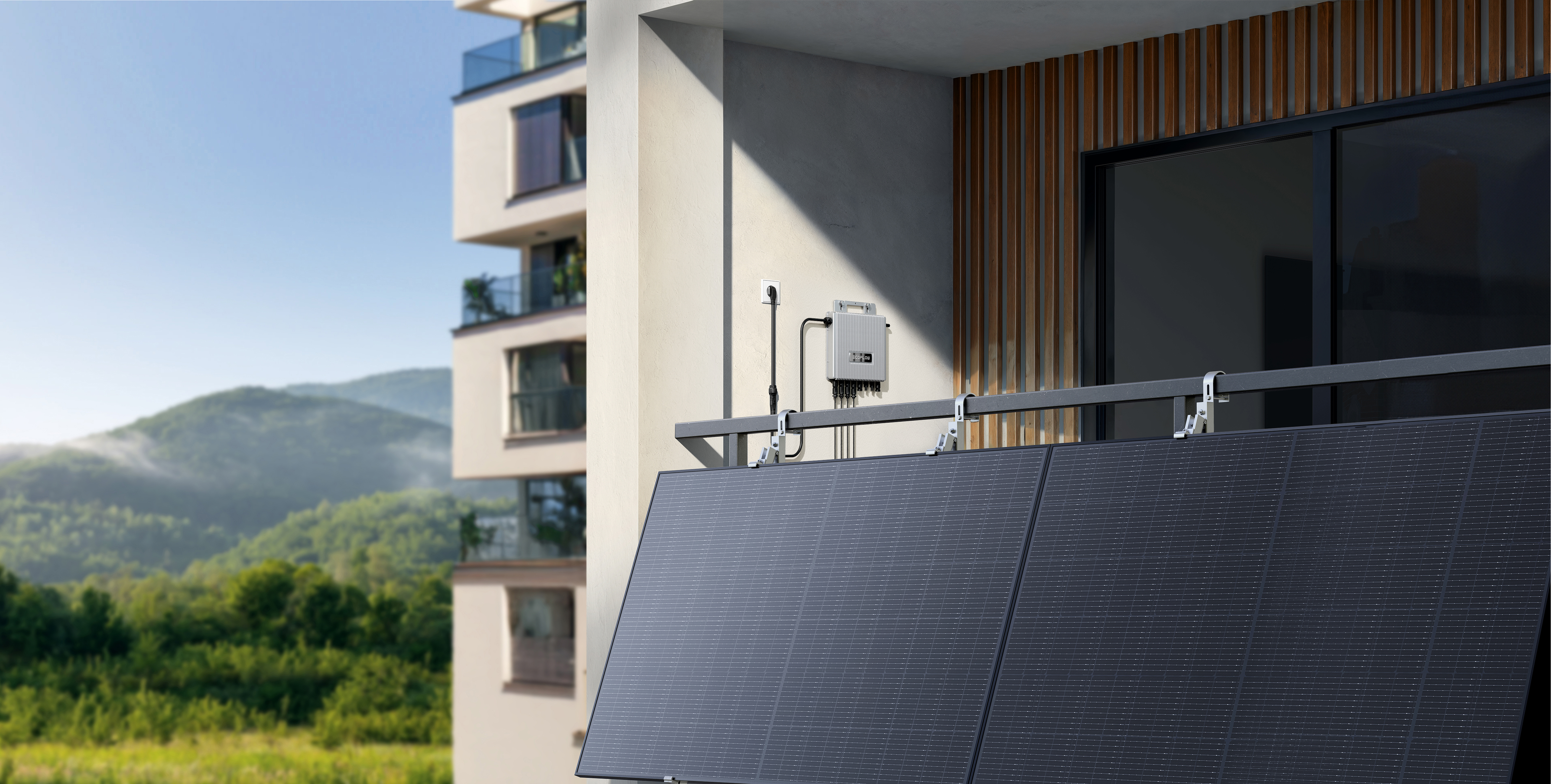
As UL certification nears completion and more states adopt the HB 340 framework, the sight of solar panels hanging from apartment balconies and suburban patios is likely to become as common in the U.S. as it is in Germany. For the millions of Americans looking for relief from rising energy costs, the solution may soon be as simple as finding a sunny spot and an open outlet. The "no-brainer" movement, as supporters call it, is no longer just a European trend—it is the new American reality.