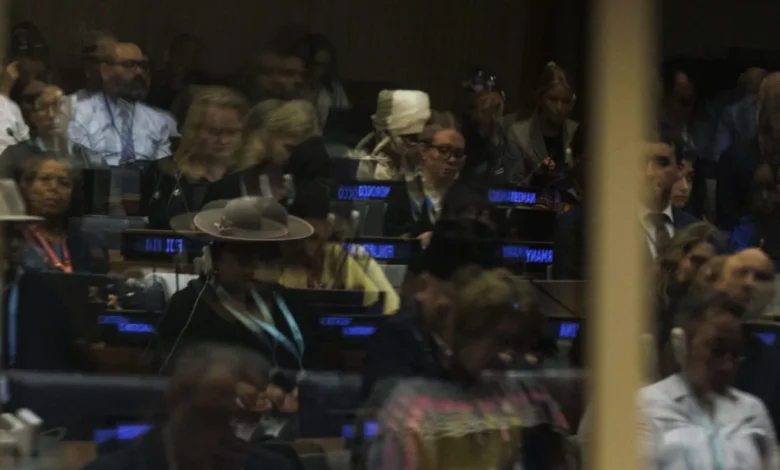
The divide between high-level international legal victories and the lived reality of Indigenous communities has reached a critical juncture, as delegates at the United Nations Permanent Forum on Indigenous Issues (UNPFII) this week questioned the efficacy of global justice systems. From the cyclone-battered islands of the Pacific to the oil-slicked tributaries of the Amazon, Indigenous leaders are reporting a disturbing trend: while international courts are increasingly recognizing the legal obligations of states to combat climate change, national governments are simultaneously accelerating resource extraction and ignoring judicial mandates. This "implementation gap" has become the central focus of the 2026 forum, as advocates seek mechanisms to transform advisory opinions into enforceable domestic policies.
The Global Legal Landscape: A New Frontier of Accountability
The current movement for "green justice" is anchored by two landmark judicial developments from the previous year. The International Court of Justice (ICJ), the world’s highest judicial body, issued a historic advisory opinion establishing that state governments contributing significantly to climate change can be held legally accountable for the resulting harm. This ruling was particularly focused on the "transboundary harm" suffered by small island developing states (SIDS), many of which face existential threats from rising sea levels and intensified storm surges.
Parallel to the ICJ’s findings, the Inter-American Court on Human Rights (IACHR) released a sweeping decision that explicitly linked climate stability to fundamental human rights. The IACHR mandated that governments must not only reduce fossil fuel emissions but also integrate Indigenous traditional knowledge into their national climate strategies. These rulings were initially hailed as a paradigm shift in international law, providing a legal framework that moves beyond voluntary pledges—such as those found in the Paris Agreement—toward a more rigorous "duty of care."
However, the transition from legal theory to territorial protection remains stalled. Luisa Castañeda-Quintana, executive director of the advocacy group Land is Life, emphasized to hundreds of advocates in New York that these rulings must be viewed as "instruments of power" rather than symbolic gestures. "They can and must be used to strengthen Indigenous Peoples’ advocacy at every level," Castañeda-Quintana stated. "But to do so, Indigenous Peoples must claim them, integrate them into the rights narratives, and take them into every space where their futures are being decided."
The Paradox of Latin America: Constitutional Rights vs. Industrial Reality
The struggle for enforcement is perhaps most visible in Latin America, a region characterized by what U.N. Special Rapporteur on Indigenous Peoples Albert Kwokwo Barume calls a "paradox." In his recent thematic report, Barume noted that while Latin America possesses some of the world’s most progressive legal frameworks for Indigenous and environmental rights, it also suffers from persistent failures in implementation.
Ecuador serves as the primary case study for this disconnect. In 2008, Ecuador became the first nation in the world to codify the "Rights of Nature" (Pacha Mama) within its constitution. Magaly Ruiz Cajas, a member of Ecuador’s Judiciary Council, reminded the forum that "green justice is not an option; it is an obligation" under Ecuadorian law. She cited the 2011 Vilcabamba River case, where the court ruled in favor of nature’s right to exist and maintain its vital cycles, as a foundational precedent.
Despite these constitutional protections, the reality on the ground tells a different story. Juan Bay, President of the Waorani Nation, testified that the Ecuadorian government continues to allow oil wells to pump in sensitive regions, defying court orders and ignoring the rights of Indigenous peoples living in voluntary isolation. The situation escalated in February 2026, when the Ecuadorian legislature passed a controversial reform law designed to accelerate mining investments. The law significantly weakened environmental impact requirements, a move Bay described as "incompatible with climate action and with the rights of Indigenous Peoples."
This industrial expansion has come at a human cost. In recent years, Indigenous land defenders in the Amazon have faced a surge in state-sponsored persecution and violence. Data from environmental monitors indicate that Ecuador has become one of the most dangerous places for activists, with several high-profile killings linked to resistance against mining and oil concessions.
Geopolitical Resistance and the "Charade" of Reparations
The push for climate accountability has also met stiff resistance from global superpowers. Vanuatu, a Pacific nation at the forefront of the climate crisis, recently introduced a U.N. resolution aimed at "operationalizing" the ICJ ruling. The resolution calls for a managed phase-out of fossil fuels and the establishment of a robust mechanism for climate reparations—financial transfers from high-emitting nations to those suffering the worst impacts of warming.
The response from the United States was swift and critical. The administration of President Donald Trump issued a directive to U.S. embassies worldwide, characterizing the Vanuatu resolution as "disturbing" and a "charade." U.S. diplomats were urged to pressure Vanuatu into withdrawing the proposal, arguing that it bypassed established diplomatic channels and imposed unfair economic burdens on industrialized nations.
While Vanuatu refused to back down, the geopolitical pressure resulted in the General Assembly vote being delayed until May 2026. Joie Chowdhury, an attorney at the Center for International Environmental Law (CIEL), noted that while the legal obligations are now clear, the political will to fulfill them is lacking. "It remains important to translate that legal clarity now into action," Chowdhury said, highlighting the need for grassroots pressure to force compliance.
Northern Realities: Flooding and Poverty in Canada
The implementation gap is not limited to the Global South. In Northern Ontario, Canada, Indigenous Nations are grappling with the immediate consequences of climate-driven disasters that they argue are exacerbated by the government’s failure to honor treaty obligations.
The Attawapiskat and Kashechewan First Nations have faced recurring spring flooding, leading to large-scale evacuations and the contamination of local water supplies. Ryan Fleming of the Attawapiskat First Nation told the forum that the crisis is a direct reflection of "Canada’s failure to honor treaty obligations." He pointed out that in 2026, many Indigenous communities in one of the world’s wealthiest nations are living in a "poverty state."
"This is not just an implementation gap. This becomes a human rights issue," Fleming said. He argued that the intersection of climate change and historical marginalization has created a state of permanent vulnerability for Northern communities. For these nations, international forums like the UNPFII are essential for applying external pressure on the Canadian government to provide the infrastructure and support necessary for climate adaptation.
Oceania and the Māori Quest for Self-Determination
In Aotearoa (New Zealand), the Māori people are facing a similar lack of state support as they deal with increasingly frequent and severe weather events. Janell Dymus-Kurei, representing the National Iwi Chairs Forum Pou Tikanga, noted that while international courts offer new avenues for justice, they remain underutilized by many Indigenous groups.
"We’re just not really making the most of those mechanisms," Dymus-Kurei said. She emphasized that for Māori, climate action is inextricably linked to self-determination. Without the authority to manage their own lands and resources according to traditional ecological knowledge, Māori communities find themselves at the mercy of state policies that often prioritize national economic interests over local resilience.
Chronology of Key Legal and Environmental Milestones
To understand the current tension at the UN, a timeline of the preceding two decades reveals a steady buildup of legal standards met by industrial pushback:
- 2008: Ecuador adopts a new constitution recognizing the "Rights of Nature."
- 2011: The Vilcabamba River case in Ecuador sets a global precedent for environmental litigation.
- 2019: The Waorani Nation wins a landmark legal battle against the Ecuadorian government, temporarily halting oil auctions in the Amazon.
- 2023: Vanuatu successfully petitions the U.N. General Assembly to request an advisory opinion from the ICJ on climate change.
- 2025: The ICJ and the Inter-American Court on Human Rights issue their respective rulings on state accountability and human rights in the context of climate change.
- February 2026: Ecuador passes a new mining law, sparking widespread Indigenous protests.
- April 2026: The U.N. Permanent Forum on Indigenous Issues convenes to address the failure of states to implement these rulings.
Implications and the Path Forward
The discussions at the UNPFII suggest that the "legal era" of climate activism is entering a more aggressive phase. Indigenous leaders are no longer satisfied with winning court cases; they are now demanding the creation of enforcement bodies and the use of economic sanctions or trade conditions to ensure compliance.
If governments continue to ignore international rulings, legal experts predict a rise in "domesticated international law," where local lawyers use the ICJ and IACHR opinions as the basis for lawsuits in national courts. This strategy aims to create a "judicial pincer movement," pressuring governments from both the international and domestic levels.
Furthermore, the momentum is spreading to other regions. The African Court on Human and Peoples’ Rights is currently deliberating on a case regarding climate-related displacement, which could set a similar precedent for the African continent.
As Ryan Fleming of Attawapiskat concluded, the goal of participating in these international forums is to "leverage these mechanisms" to protect the basic human rights of those on the front lines. The coming months, particularly the delayed General Assembly vote in May, will serve as a litmus test for whether the world’s most powerful nations are prepared to move beyond rhetoric and accept the legal consequences of their environmental impact. For Indigenous communities, the stakes are nothing less than survival.