
Mastering the Art of TTV Photo Falsification: A Comprehensive Guide
The realm of digital manipulation, often referred to as "faking," extends to various image formats, and "TTV photos" are no exception. TTV, which stands for "Time Travel Television," is a fictional concept often used within online communities and creative endeavors to depict imagined historical broadcasts or alternate realities. Faking a TTV photo involves creating an image that convincingly mimics the aesthetic of a television screen from a bygone era, displaying content that appears to originate from a past period. This process requires a nuanced understanding of vintage television technology, broadcast signal degradation, and the visual styles prevalent in older media. The goal is to create an image that is not just visually plausible but also evokes a specific nostalgic or speculative sentiment. This comprehensive guide will delve into the technical and artistic aspects of faking TTV photos, covering everything from selecting appropriate source material to achieving authentic-looking visual artifacts.
The foundational step in faking a TTV photo is the selection and preparation of your base image, which will represent the content displayed on the television screen. This content can range from archival footage or photographs that you wish to recontextualize, to entirely fabricated scenes designed to fit a particular narrative. For instance, if you’re aiming for a 1950s news broadcast, sourcing black-and-white footage of historical events or even staged modern footage shot with a vintage aesthetic in mind would be ideal. Conversely, a fictional sci-fi broadcast from the 1980s might require neon-drenched imagery or early CGI-style graphics. Regardless of the chosen era, consider the aspect ratio and resolution typical of televisions from that period. Older televisions, especially pre-widescreen models, had different aspect ratios (often closer to 4:3) than modern HD displays. Ensuring your base image adheres to these proportions will lend an initial layer of authenticity. Furthermore, the quality of the source material is crucial. If you’re using existing photographs or video, aim for sources that have a certain degree of grain, color inaccuracy, or softness that can be further exaggerated to mimic the limitations of older recording and display technologies. If you’re creating new content, consider shooting it with specific cameras or lenses that can impart a vintage feel, or using filters that mimic the color palettes and focal characteristics of past eras. Ultimately, the base image is the canvas upon which you will build the illusion of a TTV broadcast.
Once your base image is selected, the next critical phase involves simulating the characteristics of vintage television screens themselves. This is where the distinct visual signature of TTV photos truly begins to emerge. Older televisions, particularly cathode ray tube (CRT) sets, exhibited unique visual artifacts that are absent in modern flat-screen displays. One of the most prominent is the scanline effect. CRTs produced an image by sweeping a beam of electrons across the screen, creating distinct horizontal lines of light. To replicate this, you can use overlay textures or specialized plugins in image editing software. These textures, readily available online, should be applied at a low opacity and blended appropriately to mimic the subtle grid of scanlines. The intensity and spacing of these lines varied between television models and screen sizes, so experimenting with different textures and blend modes is key. Another crucial element is screen curvature. CRTs had convex screens, causing the image to appear slightly warped, particularly towards the edges. This can be simulated using distortion filters in image editing software, applying a subtle bulge effect to the image. The degree of curvature will depend on the perceived size and era of the television you are emulating.
Color reproduction on older televisions was also significantly different from today’s standards. They often lacked the vibrant saturation and accurate color representation of modern displays. To achieve this, you’ll want to desaturate your base image and introduce color casts characteristic of the era. For instance, early color television broadcasts often had a tendency towards warmer tones, with reds and yellows appearing more prominent, while blues and greens could be muted. Black and white television, of course, presents its own set of challenges in terms of contrast and luminance. Adjusting the color balance, hue, and saturation levels in your image editing software is essential. Consider using color lookup tables (LUTs) or pre-made color grading presets designed to mimic the look of vintage film or television. The goal is to create a color palette that feels authentic to the period you are trying to replicate, avoiding the crisp, clean colors of modern digital displays.
Furthermore, the signal itself played a significant role in the visual quality of TTV broadcasts. Analog signals were prone to interference and degradation, resulting in characteristic visual noise, ghosting, and other distortions. Simulating these imperfections is paramount to creating a convincing TTV photo. Noise, often appearing as a fine grain or speckling, can be added using noise filters. Experiment with different types of noise (monochromatic, Gaussian, etc.) and varying levels of intensity. Ghosting, caused by signal reflections, can be replicated by duplicating your image layer and offsetting it slightly, then applying a blur and reduced opacity. This creates a subtle, ethereal echo of the main image. Rolling lines or horizontal "bars" were also common artifacts due to signal fluctuations. These can be simulated by creating thin, horizontal lines with varying opacity and applying them as overlays. The key is to avoid overdoing these effects; they should be subtle enough to suggest degradation rather than completely obscure the content.
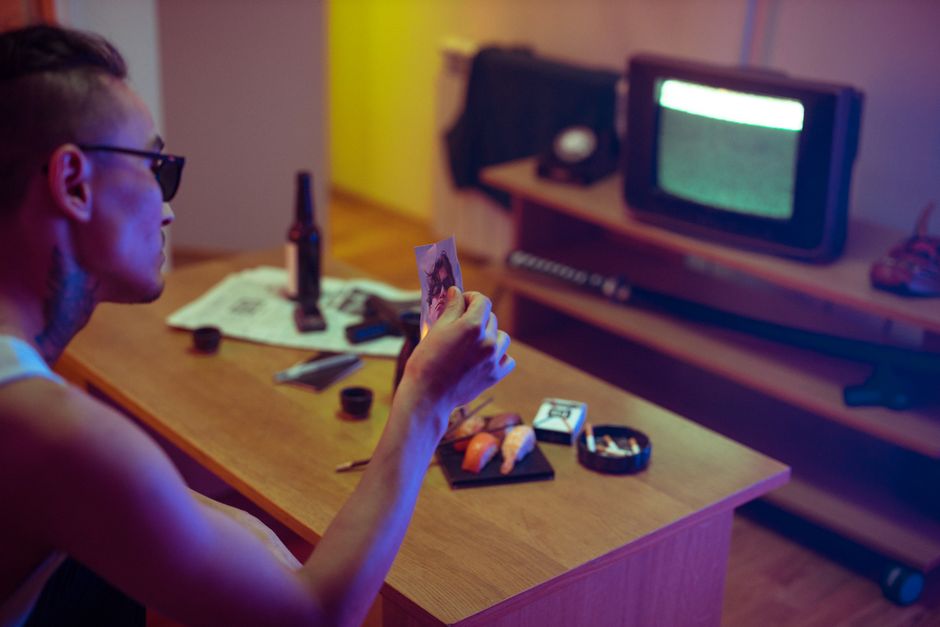
The framing and presentation of the TTV photo are as important as the image manipulation itself. A convincing TTV photo often includes elements that contextualize it within the environment of a television set. This might involve creating or incorporating an image of a vintage television frame. The design and material of this frame will further solidify the perceived era. For example, a bulky, wood-grained frame suggests a 1960s or 70s television, while a sleeker, plastic frame might point to the 1980s. The angle from which the "television" is viewed should also be considered. A slight off-axis perspective can add realism, as few people view television screens perfectly head-on. You can also introduce ambient lighting effects to suggest the environment in which the television is situated. This might include subtle reflections on the screen from nearby light sources or a faint glow emanating from the television itself, mimicking the way a lit screen would affect its surroundings in a darkened room.
The inclusion of on-screen elements that are characteristic of older broadcasts can significantly enhance the illusion. This could include a visible channel number or station logo in a vintage font, typically positioned in a corner of the screen. Static bars or "test pattern" graphics, often displayed during off-air periods or program transitions, can also be incorporated to add authenticity. If your TTV photo depicts a news broadcast, consider adding a ticker tape or news crawl at the bottom of the screen, replicating the style of on-screen text from that era. The font choice, size, and animation of these elements are critical. Many vintage fonts have a distinct character that can be difficult to replicate with modern typefaces. Similarly, the motion of animated elements should be more rudimentary than contemporary digital animations. The overall composition, including the placement of the television within the frame and the interplay of light and shadow, should contribute to the overall narrative of the image.
To achieve a truly convincing result, thorough research into the specific era you are trying to emulate is indispensable. Each decade had its own prevailing broadcast technologies, visual aesthetics, and content trends. For example, a 1950s TTV photo might feature grainy black-and-white footage with a very limited color palette, while an 1980s TTV photo could showcase the vibrant, sometimes garish, colors and early digital effects characteristic of that decade’s television programming. Study actual photographs and video footage from the target period to identify recurring visual motifs, common screen artifacts, and typical content. Look at the way titles were displayed, the style of commercials, and the general presentation of programming. Understanding the limitations of the technology – the resolution, the color fidelity, the susceptibility to interference – will inform your manipulation techniques. For instance, understanding that early video recorders had lower resolution than broadcast cameras will guide you in how much you choose to soften or degrade your base image.
Furthermore, consider the psychological impact of these visual cues. The imperfections and limitations of older television technology can evoke a sense of nostalgia, authenticity, or even a sense of wonder in viewers. By effectively recreating these elements, you can tap into those emotions and create a more resonant and engaging TTV photo. This goes beyond mere technical replication; it’s about capturing the feeling of watching television from a bygone era. The subtle inaccuracies, the unavoidable grain, the slight color shifts – these are the very things that make a TTV photo feel believable. It’s a testament to the fact that perfection in digital art often lies in the artful introduction of imperfections.
Finally, the post-processing and final presentation are crucial for the overall impact of your TTV photo. After applying all the desired visual effects, take a step back and critically assess the image. Does it look like a genuine photograph of an old television screen, or does it appear overtly manipulated? Look for areas where the effects might be too uniform or too exaggerated. Fine-tuning the opacity, blending modes, and application of textures can make a significant difference. Consider adding a subtle vignette to draw the viewer’s eye towards the center of the screen, mimicking the way older lenses often produced darker edges. You might also want to add a slight paper or film grain overlay to the entire image, unifying the various manipulated elements. The way you export and display the image can also contribute. Saving it in a format that preserves a certain level of fidelity, and displaying it within a context that emphasizes its vintage nature, will further enhance its believability. The ultimate goal is to create an image that can transport the viewer back in time, or into an imagined past, with a convincing illusion of authenticity.

