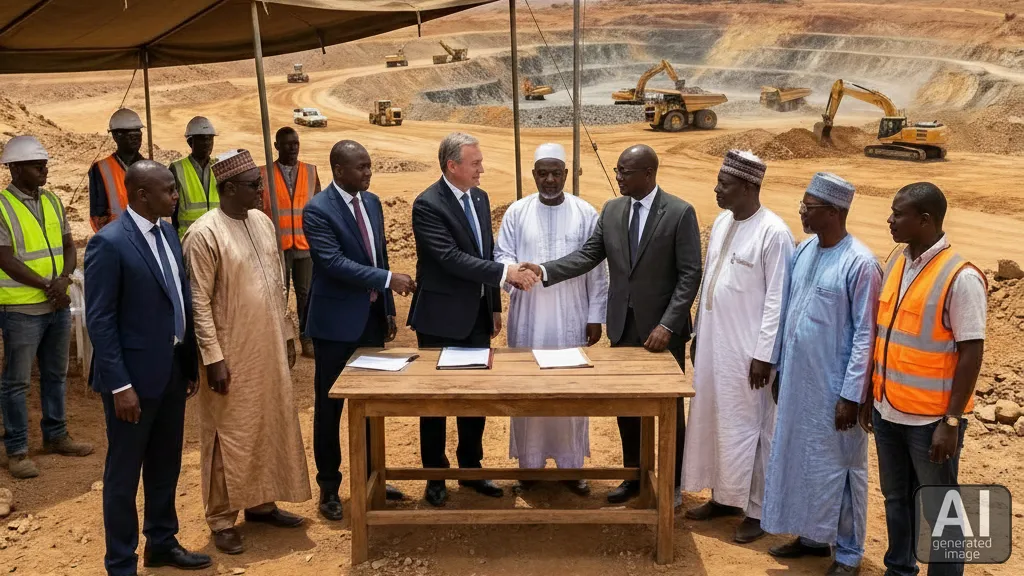

Barrick and Mali Reach Agreement to Settle Disputes, Paving Way for Enhanced Mining Operations
The resolution of long-standing disputes between Barrick Gold Corporation and the Republic of Mali marks a significant turning point for both parties, promising a renewed era of stability and potential for growth in the nation’s vital mining sector. This agreement, reached after extensive negotiations, addresses a complex web of issues that had previously hampered operations and strained the relationship between the global mining giant and the West African government. The settlement’s core tenets revolve around a recalibrated ownership structure, a clarified tax and royalty framework, and a commitment to enhanced community engagement and social development. This comprehensive understanding signifies a pragmatic approach to reconciliation, aiming to unlock the full economic potential of Mali’s rich mineral resources while ensuring a more equitable distribution of benefits and a more sustainable operational environment for Barrick.
At the heart of the agreement lies a revised ownership stake in the Loulo-Gounkoto mining complex, one of Barrick’s flagship operations. Previously, the Malian government, through its state-owned mining company SML, held a significant but contentious minority stake. The new accord sees SML’s ownership increase, bolstering national participation and aligning more closely with Mali’s stated policy of increasing local equity in its natural resource sector. This move is crucial for fostering a sense of national ownership and ensuring that the economic dividends generated by mining directly contribute to the country’s development. For Barrick, this recalibration provides greater clarity and stability regarding its operational control and future investment decisions. The reduction of ambiguity surrounding ownership has been a key driver for Barrick in seeking a definitive resolution, allowing for more predictable long-term planning and investment in exploration and expansion. The specific percentage increases and the mechanisms for the transfer of shares have been meticulously negotiated, reflecting a balanced compromise that acknowledges both Barrick’s investment and Mali’s sovereign aspirations. This enhanced Malian stake is not merely symbolic; it is designed to create a more robust partnership, fostering greater collaboration and shared responsibility in the management and success of the Loulo-Gounkoto operations.
Furthermore, the dispute resolution framework has addressed critical aspects of the fiscal regime governing Barrick’s activities in Mali. Ambiguities and disagreements concerning taxation, royalties, and potential tax liabilities have been a persistent source of friction. The newly forged agreement establishes a clear and predictable tax and royalty structure, providing a stable foundation for future operations and investments. This clarity is paramount for Barrick, as it allows for more accurate financial forecasting and reduces the risk of unforeseen financial burdens. For Mali, the agreement ensures a consistent and fair stream of revenue from its mineral wealth, which is vital for funding public services and national development initiatives. The precise details of the revised fiscal terms, including any adjustments to royalty rates or the resolution of past tax disputes, have been meticulously documented to prevent future misunderstandings. This structured approach to revenue generation demonstrates a commitment to transparency and accountability, building trust between the government and the mining company. The agreement likely includes provisions for regular reviews of the fiscal regime to ensure its continued relevance and fairness in a dynamic global commodity market.
Beyond financial and ownership considerations, the settlement places a significant emphasis on community engagement and social development. Barrick has committed to strengthening its social license to operate by increasing investment in local infrastructure, education, healthcare, and employment opportunities for Malian citizens. This renewed focus on corporate social responsibility is not only a concession to address past criticisms but also a strategic imperative for sustainable mining. The Loulo-Gounkoto complex operates in proximity to numerous local communities, and their well-being and development are inextricably linked to the long-term success of the mining operations. By investing in these areas, Barrick aims to foster positive relationships, mitigate social risks, and contribute meaningfully to the socio-economic fabric of the regions where it operates. The agreement likely outlines specific projects and investment targets, along with mechanisms for monitoring and evaluating their impact. This proactive approach to community development is essential for building enduring partnerships and ensuring that the benefits of mining are broadly shared.
The historical context of the disputes is crucial for understanding the significance of this agreement. Barrick Gold inherited the Loulo-Gounkoto complex through its acquisition of Randgold Resources. Prior to this, Randgold had already established a strong presence and operational expertise in Mali. However, as commodity prices fluctuated and global mining governance evolved, a series of tax and regulatory challenges emerged. These challenges were exacerbated by political transitions within Mali, leading to periods of uncertainty and strained relations. The disagreements often centered on interpretations of existing mining codes and tax laws, as well as broader questions about the equitable distribution of resource wealth. For Barrick, these unresolved disputes posed a significant risk to its investments and its reputation. The potential for protracted legal battles and ongoing operational disruptions loomed large, diverting management attention and financial resources.
The path to this agreement was undoubtedly arduous, involving multiple rounds of high-level discussions and expert consultations. Both Barrick and the Malian government demonstrated a willingness to compromise and find common ground, recognizing the mutual benefits of a stable and productive mining sector. The Malian government, under President Ibrahim Boubacar Keïta’s administration, has consistently emphasized the importance of its mining sector as a driver of economic growth and employment. Similarly, Barrick, as a leading global gold producer, prioritizes operational stability and predictable regulatory environments. The agreement thus represents a victory for pragmatic diplomacy and a commitment to fostering a mutually beneficial relationship between foreign investors and host nations. The technical teams from both sides, alongside legal and financial advisors, played a critical role in meticulously dissecting the complex issues and devising innovative solutions. This collaborative effort ensured that the agreement was not only a political statement but also a practical framework for the future.
The economic implications of this settlement are substantial. For Mali, it signals a renewed commitment to attracting and retaining foreign investment in its resource sector. A stable and predictable mining environment is essential for attracting further capital for exploration and development of other mineral deposits. The increased revenue streams from improved tax and royalty collection will provide much-needed resources for public investment in infrastructure, education, and healthcare, thereby contributing to poverty reduction and overall economic development. For Barrick, the resolution of these disputes removes significant operational impediments and reputational risks. It allows the company to focus on optimizing its existing operations, exploring new opportunities within Mali, and potentially expanding its footprint. The Loulo-Gounkoto complex is a world-class asset, and with this agreement in place, Barrick can unlock its full potential, ensuring continued production and contribution to global gold supply. The certainty provided by the agreement will also bolster investor confidence in Barrick, potentially leading to a more favorable valuation for the company.
From a broader perspective, this agreement serves as a model for other resource-rich nations seeking to establish equitable and sustainable partnerships with international mining companies. It underscores the importance of clear legal and fiscal frameworks, transparent governance, and a genuine commitment to community development. By embracing these principles, countries can maximize the benefits derived from their natural resources while ensuring that mining operations are conducted responsibly and with respect for local communities and the environment. The success of this resolution can encourage other African nations facing similar challenges to pursue dialogue and negotiation, fostering a more stable and prosperous mining landscape across the continent. It demonstrates that even complex and protracted disputes can be resolved through good-faith negotiations and a shared vision for mutual benefit.
The implementation of the agreement will be a critical phase. Both Barrick and the Malian government will need to actively monitor the progress of various initiatives, particularly those related to community development and social impact. Transparent reporting and regular communication will be vital for maintaining trust and ensuring that the commitments made are fulfilled. The establishment of joint oversight committees or working groups could be a mechanism for facilitating this ongoing collaboration and addressing any emergent issues proactively. The long-term success of this partnership will depend on the continued commitment of both parties to uphold the spirit and letter of the agreement, fostering a relationship built on mutual respect and shared objectives.
The resolution of these disputes is a testament to the evolving landscape of international resource governance. It highlights a shift towards more collaborative and partnership-based approaches, moving away from purely adversarial dynamics. As global demand for minerals and metals continues to grow, the ability of nations and mining companies to forge successful and mutually beneficial relationships will become increasingly crucial. The Barrick-Mali agreement offers a promising example of how to navigate these complexities, paving the way for a more sustainable and prosperous future for both the company and the nation. The comprehensive nature of the settlement, addressing ownership, fiscal matters, and social development, sets a high bar for future resource agreements and signals a mature approach to managing the opportunities and challenges presented by the mining industry.

