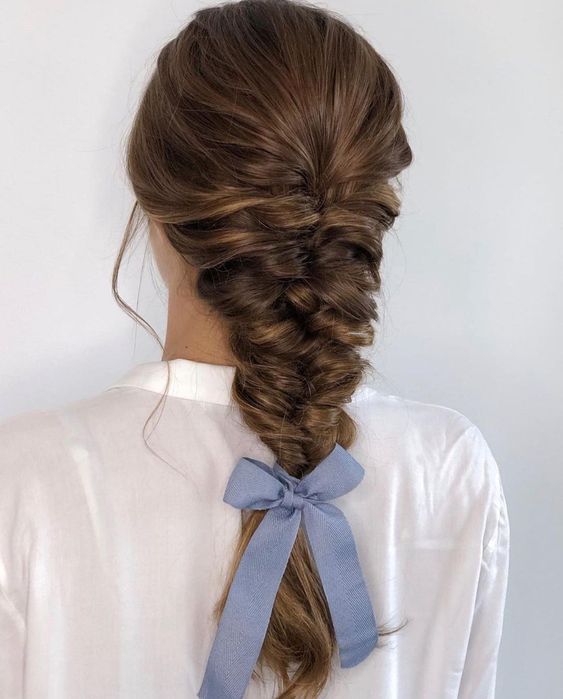
The Bow Braid: A Comprehensive Guide to Styling and Achieving the Perfect Look
The bow braid, a whimsical and eye-catching hairstyle, offers a unique blend of playful charm and sophisticated elegance. This versatile braid allows for creative expression, adaptable to various hair lengths and textures, and can be the focal point of a casual outfit or a stunning accent for more formal occasions. Mastering the bow braid involves understanding the foundational braiding techniques, precise sectioning, and the art of transforming a standard braid into a recognizable bow shape. This comprehensive guide will break down the process step-by-step, offering tips for customization and ensuring a polished, long-lasting result. Whether you’re aiming for a subtle, delicate bow or a bold, statement-making accessory, this guide will equip you with the knowledge to achieve a flawless bow braid every time.
Understanding the Anatomy of a Bow Braid: Essential Components and Variations
Before delving into the styling process, it’s crucial to understand the fundamental structure of a bow braid. At its core, it’s a variation of a standard three-strand braid, but with a strategic twist that creates the iconic bow silhouette. The "loops" of the bow are formed by folding and securing portions of the braid, while the "knot" is typically created by wrapping a small section of hair around the center or by a separate braiding technique. The beauty of the bow braid lies in its adaptability. It can be a singular, dominant feature, or multiple smaller bow braids can be incorporated into a larger hairstyle. Variations exist in the size and placement of the bow, the type of braid used for the loops and knot (e.g., French braid, Dutch braid, fishtail braid), and the overall aesthetic, ranging from delicate and intricate to bold and dramatic. Understanding these core components and potential variations will allow for greater creativity and personalization in your styling.
The Foundational Three-Strand Braid: The Building Block of the Bow
The ability to execute a consistent and neat three-strand braid is paramount to achieving a successful bow braid. This technique forms the basis of both the loops and, in some methods, the knot of the bow. Begin by dividing a section of hair into three equal strands. Designate these strands as Left, Middle, and Right. The fundamental motion involves crossing the Left strand over the Middle strand, making the original Left strand the new Middle. Then, cross the Right strand over the new Middle strand, making the original Right strand the new Middle. Continue this alternating crossing pattern, always bringing the outer strands to the center, maintaining even tension throughout. For a bow braid, it’s often beneficial to practice this on a smaller, manageable section of hair first to ensure a tight and uniform braid that won’t easily loosen. The consistency of your base braid will directly impact the crispness and definition of your final bow.
Sectioning for Success: Dividing Hair for Optimal Bow Formation
Precise sectioning is arguably the most critical step in creating a well-defined bow braid. The way you divide your hair will dictate the size, placement, and overall balance of your bow. For a classic, singular bow positioned at the crown or side of the head, a circular or horseshoe-shaped section is ideal. This section will be isolated and braided to form the bow. For bows integrated into pigtails or ponytails, the hair will already be divided into two main sections, and you’ll then further subdivide a portion from each of these for the bow elements. The key is to ensure that the sections you are working with are clean and distinct, preventing stray hairs from compromising the neatness of the braid and the integrity of the bow shape. Using hair clips to secure unused hair will maintain order and prevent tangles. The size of the initial section will directly correlate to the size of the finished bow; a larger section yields a more prominent bow, while a smaller section creates a more delicate accent.
Method 1: The Direct Braid-to-Bow Technique
This method involves creating the bow directly from a single braided section of hair. Start by taking a desired section of hair from your scalp, typically from the crown or side. Ensure this section is smooth and free of tangles. Begin a standard three-strand braid with this section. As you braid, aim for a consistent tension to maintain a neat appearance. Once you have braided a sufficient length – enough to form both loops and the knot of your bow – you will stop braiding and begin shaping. The exact length required will depend on the desired size of your bow. A good rule of thumb is to have at least 6-8 inches of braided hair before you start shaping.
The shaping process involves strategically folding the braided section. To create the first loop of the bow, take a portion of the braided end and fold it back towards the base of the braid, forming a loop. Secure this loop temporarily with a bobby pin or a small elastic. Next, create the second loop by folding another portion of the braided end back, mirroring the first loop. Again, secure this loop. The remaining tail of the braid will be used to create the knot that binds the loops together. Wrap this tail snugly around the center where the two loops meet. Tuck the end of the tail underneath itself or secure it with a bobby pin, ensuring it’s hidden and holds the loops firmly in place. The goal is to make the knot appear seamless, as if it’s a natural part of the braid. This method is excellent for creating a single, prominent bow as it allows for a more integrated and solid structure.
Method 2: The Loop-and-Knot Construction
This technique offers more control over the individual components of the bow and is often preferred for its ability to create very precise and defined loops. Begin by sectioning out the hair you want to use for the bow. You will need to create the loops and the knot separately, or at least with distinct braiding actions.
For the loops: Take a portion of your sectioned hair and begin a three-strand braid. Braid a specific length, then fold this braid in half to create a loop. Secure this folded loop with a bobby pin at its base. Repeat this process with another portion of your sectioned hair to create the second loop, ensuring it’s of a similar size and shape to the first.
For the knot: You have a few options here. You can take a very small section of the remaining hair and braid it into a thin, three-strand braid. Alternatively, you can twist a small section of hair tightly. This thin braid or twist will then be used to wrap around the center of the two secured loops. Wrap it tightly and securely, tucking the end underneath to conceal it, or using a discreet bobby pin. The key here is to ensure the knot is tight enough to hold the loops in place but not so tight that it pulls on the scalp or creates discomfort. This method allows for greater flexibility in bow size and definition, as you can control the length of each braided component.
Method 3: Incorporating into Existing Styles (Ponytails and Pigtails)
The bow braid isn’t limited to being a standalone style; it can be beautifully integrated into other common hairstyles. For a bow braid in a ponytail: Secure your hair into a ponytail. From the ponytail, take a section of hair, approximately 1-2 inches wide, and begin a three-strand braid. Braid this section, leaving a few inches of unbraided hair at the end. Now, take this braided section and fold it to create the loops of the bow. You can fold it back towards the base of the ponytail, securing the loops with bobby pins. Use the remaining unbraided tail to wrap around the center of the loops, creating the knot and securing it with bobby pins. This method creates a charming accent to a simple ponytail.
For bow braids in pigtails: Divide your hair into two pigtails. From each pigtail, take a smaller section of hair (similar to the ponytail method) and braid it. Once braided, fold these braids to create loops and secure them with bobby pins. Use the remaining tails to form the knots around the center of the loops. You can opt for a single bow on each pigtail or even create multiple smaller bows along the length of the pigtails for a playful effect. This approach offers a fun and manageable way to incorporate the bow braid into everyday hairstyles for all ages.
Securing the Bow: Techniques for Longevity and a Polished Finish
The longevity of your bow braid depends heavily on secure fastening. Bobby pins are your best friend for this style. When securing the loops, insert bobby pins discreetly at the base of each loop, angling them against the direction of hair growth to prevent slippage. For the knot, ensure it’s snug against the loops and tuck the end of the hair used for the knot underneath itself or secure it with a bobby pin that’s well-hidden. Consider using pins that match your hair color for a truly seamless look. For added security, especially on fine or slippery hair, a light mist of texturizing spray or hairspray on the sectioned hair before braiding can provide extra grip. If you’re going for a larger, more elaborate bow, consider using small, clear elastics at key points of the folded loops before wrapping the knot, providing an internal structure that the knot can then secure.
Customization and Advanced Techniques: Elevating Your Bow Braid
Once you’ve mastered the basic bow braid, the possibilities for customization are endless. Experiment with different braiding techniques for the loops and knot. A Dutch braid, where the strands are crossed under instead of over, will create a raised, more prominent braid that can add dimension to your bow. A fishtail braid can lend a more intricate and textured look. Varying the thickness of the hair sections used for the loops and knot will also alter the final appearance. Thicker sections create bolder, more dramatic bows, while thinner sections result in delicate, understated accents. Consider adding embellishments like ribbons, small flowers, or decorative pins to further personalize your bow braid. For a more avant-garde look, try creating multiple, smaller bow braids woven together or incorporated into an updo. You can also experiment with color by using temporary hair chalk or clip-in extensions in a contrasting color for the braid itself.
Troubleshooting Common Bow Braid Issues: Achieving Perfection
Even with practice, some common issues can arise when styling a bow braid. One frequent problem is uneven loops. This is often due to inconsistent sectioning or uneven tension during braiding. If your loops are uneven, don’t despair. You can often adjust them by gently pulling and reshaping them after they’ve been secured. Another issue is a loose or messy knot. Ensure you’re using enough hair for the knot and that it’s wrapped tightly and secured well. If the knot is too loose, the entire bow can start to unravel. If stray hairs are a persistent problem, a light application of pomade or hair wax to the section before braiding can help tame flyaways and create a smoother finish. If your braid is becoming too loose as you work, try to maintain consistent tension and re-tighten as you go. For very fine hair, consider braiding slightly tighter than you normally would.
The Bow Braid as a Statement Piece: Styling for Different Occasions
The versatility of the bow braid allows it to transcend casual wear and become a sophisticated accent for special events. For a casual daytime look, a simple bow braid incorporated into a ponytail or pigtail is effortlessly charming. It adds a touch of playful femininity to jeans and a t-shirt. For a wedding or a formal event, a larger, more intricately crafted bow braid positioned at the crown or as part of an elegant updo can be a stunning focal point. Consider pairing it with delicate jewelry that complements the hairstyle. For a romantic evening look, a soft, slightly undone bow braid with loose tendrils framing the face can be incredibly alluring. The key is to match the complexity and size of the bow to the formality of the occasion and the overall outfit.
Maintaining Your Bow Braid: Tips for Keeping it Fresh
To ensure your bow braid stays looking its best throughout the day, a few maintenance tips are helpful. Avoid excessive touching or pulling at the bow, as this can loosen the securing pins and unravel the braid. If any part of the bow starts to come loose, discreetly reinforce it with additional bobby pins. For longer wear, a light mist of a strong-hold hairspray can help keep all the strands in place. If you’ve used texturizing spray, be mindful that some can make hair slightly sticky, so a gentle touch is advisable. When removing the bow braid, gently unpin and unravel it to avoid snagging or damaging your hair. It’s often best to start from the knot and work your way outwards.
Conclusion: Mastering the Art of the Bow Braid for Endless Styling Possibilities
The bow braid, with its delightful aesthetic and surprising versatility, is a hairstyle that rewards practice and creativity. By understanding the fundamental braiding techniques, mastering precise sectioning, and employing careful securing methods, anyone can achieve this eye-catching style. From subtle accents to bold statements, the bow braid offers a unique way to express personal style and elevate any look. This comprehensive guide has provided the foundational knowledge and detailed steps to empower you to create flawless bow braids for any occasion, unlocking a world of creative hair styling possibilities.

