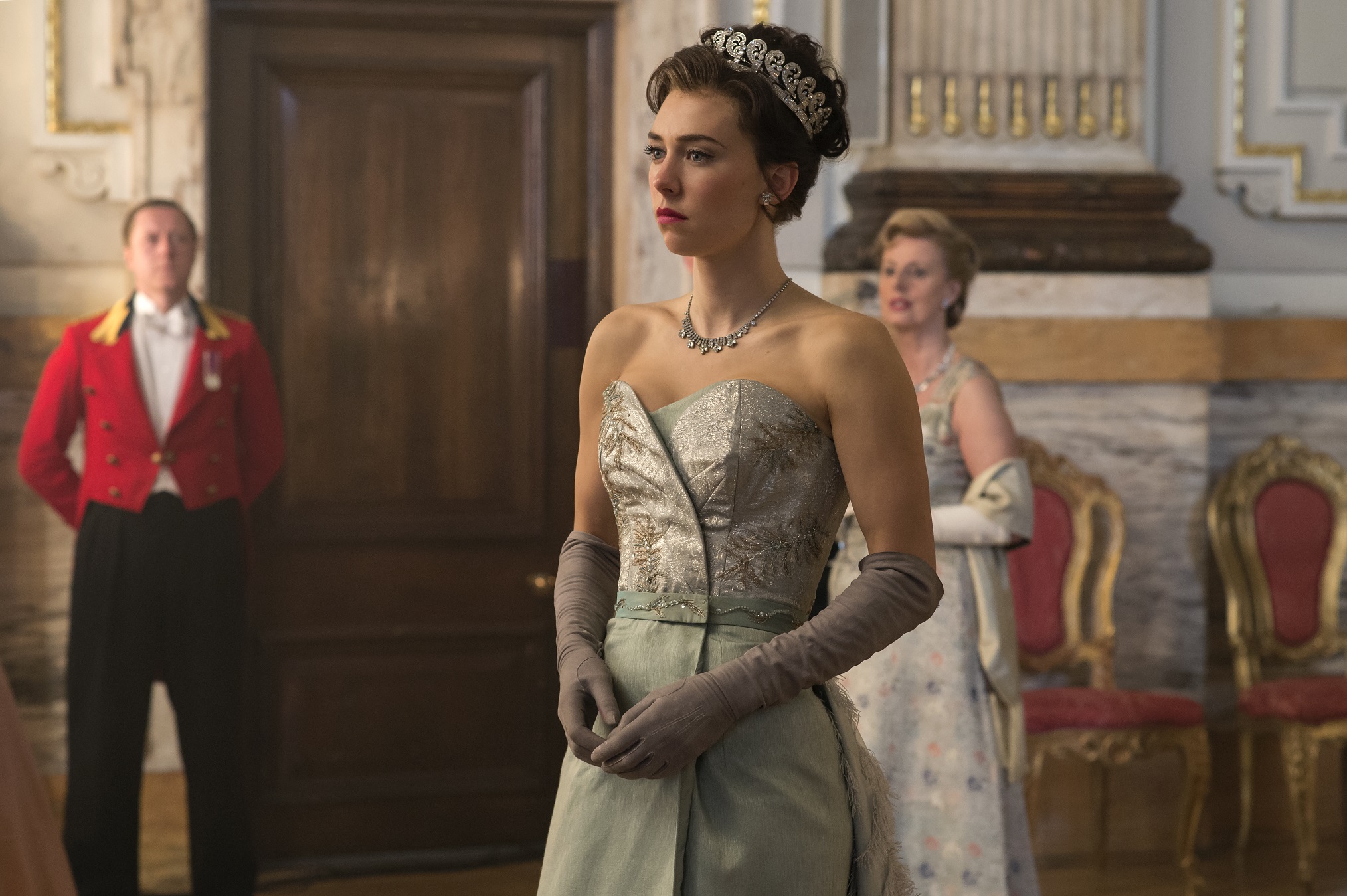
Celebrating the Award-Winning Actresses Who Embody Princess Margaret in The Crown Season 2
The second season of Netflix’s critically acclaimed historical drama, The Crown, delved deeper into the tumultuous reign of Queen Elizabeth II, and a pivotal figure in this exploration was her younger sister, Princess Margaret. Her complex, often turbulent life, marked by a fierce independent spirit clashing with royal duty and societal expectations, was brought to captivating life by two exceptional actresses who both earned significant accolades for their performances: Vanessa Kirby and Helena Bonham Carter. While Bonham Carter took over the role in subsequent seasons, it was Kirby’s nuanced portrayal in The Crown Season 2 that cemented the character’s trajectory and earned her a BAFTA Television Award for Best Supporting Actress and a Primetime Emmy Award nomination for Outstanding Supporting Actress in a Drama Series. This article will celebrate the brilliance of Vanessa Kirby as Princess Margaret in Season 2, analyzing her performance, the character’s evolution, and the lasting impact of her portrayal, and also acknowledge the groundwork laid by Helena Bonham Carter in the earlier seasons which provided a foundation for the character’s development.
Vanessa Kirby’s interpretation of Princess Margaret in The Crown Season 2 was a masterclass in portraying a woman grappling with both immense privilege and profound personal dissatisfaction. Season 2 sees Margaret, still reeling from the heartbreak of her thwarted romance with Peter Townsend, attempting to forge her own path within the confines of her royal obligations. Kirby brilliantly captured the character’s duality: the dazzling, witty socialite who captivated the press and her admirers, and the deeply insecure, often resentful woman yearning for love and recognition beyond her designated role. Her performance was characterized by an exquisite control of subtle gestures, vocal inflections, and facial expressions. A fleeting flicker of longing in her eyes as she observed happier couples, a brittle edge to her laughter when her wit was met with indifference, or the almost imperceptible slump of her shoulders when confronted with her sister’s unwavering sense of duty – all these details painted a portrait of a woman perpetually on the precipice of emotional breakdown.
One of the key arcs for Margaret in Season 2 revolved around her burgeoning relationship with Antony Armstrong-Jones, later Lord Snowdon. Kirby’s chemistry with Matthew Goode, who played Snowdon, was palpable, crackling with a volatile mix of attraction, intellectual sparring, and a shared sense of rebellion against the stuffiness of their world. Their early scenes together were electric, filled with a sense of liberation and exhilaration. Kirby conveyed Margaret’s enchantment with Snowdon’s bohemian charm and artistic sensibility, a stark contrast to the more staid figures of the royal court. She allowed the audience to see the genuine joy and hope that flickered within Margaret as she believed she had finally found a kindred spirit. However, as their relationship progressed and the realities of royal life began to encroach upon their unconventional union, Kirby masterfully showcased the cracks appearing in their seemingly perfect facade. Her portrayal of Margaret’s growing dependence on Snowdon, the subtle hints of his own insecurities and controlling nature, and Margaret’s increasing isolation, were all delivered with a heartbreaking authenticity.
The critical acclaim and awards bestowed upon Vanessa Kirby for her performance in The Crown Season 2 were a testament to her profound understanding of the character. The BAFTA win, in particular, recognized her ability to imbue Margaret with a complex emotional landscape that resonated deeply with viewers. Her portrayal wasn’t just about reciting lines; it was about inhabiting the spirit of a woman who felt both larger than life and utterly invisible. She captured the inherent loneliness of being a princess, the constant awareness of her position, and the internal struggle to reconcile her personal desires with the unyielding demands of the monarchy. The vulnerability she revealed beneath Margaret’s glamorous exterior was what made the character so compelling and, at times, so tragic. Her ability to shift from a vivacious, captivating presence to a woman on the verge of tears, all within a single scene, was a remarkable feat of acting.
While Vanessa Kirby dominated the screen in Season 2, it is crucial to acknowledge the foundational work established by Helena Bonham Carter in the preceding seasons, who took over the role of Princess Margaret from the third season onwards. Bonham Carter’s portrayal, which earned her a Golden Globe Award and two Primetime Emmy nominations, was characterized by a more flamboyant, often theatrical, yet equally deeply felt interpretation of the princess. Her performance brought out Margaret’s bolder, more rebellious spirit, her penchant for drama, and her outward defiance of convention. Bonham Carter’s Margaret was a force of nature, a vibrant splash of color against the muted tones of royal protocol. She skillfully navigated the character’s more audacious moments, her passionate affairs, and her struggles with alcoholism, all while hinting at the underlying pain and insecurity that fueled these behaviors. The transition between Kirby and Bonham Carter, while a common practice in long-running series, was handled with remarkable grace, with each actress bringing their unique strengths to the character’s evolving narrative. Kirby laid the groundwork for the audience’s understanding of Margaret’s internal conflicts and her search for identity, and Bonham Carter then amplified these traits with her signature theatricality and raw emotional power, offering a more mature and weathered iteration of the princess. The success of both actresses in embodying such a complex and multifaceted royal is a testament to the depth of the character and the skill of the casting directors.
The evolution of Princess Margaret from Season 1, where she was introduced as a more youthful and optimistic figure, to the increasingly disillusioned woman in Season 2, was a central narrative thread. Kirby’s performance expertly navigated this transition. Her Margaret in Season 2 is no longer simply seeking romantic fulfillment; she is actively trying to find her purpose and identity within a system that often relegates her to a secondary role. Her artistic aspirations, her flirtations with political and social activism, and her attempts to carve out a public persona beyond simply being the Queen’s sister, are all subtly conveyed by Kirby. The scene where she travels to the Caribbean and experiences a brief period of unburdened freedom and self-discovery is a particularly poignant moment in Season 2, showcasing Kirby’s ability to convey a sense of genuine joy and liberation that is so often elusive for the character.
Furthermore, Kirby’s portrayal highlighted the societal constraints placed upon women of Margaret’s station in the mid-20th century. The expectation was for them to marry well, produce heirs, and maintain a dignified public image. Margaret’s fierce desire for personal happiness and creative expression often clashed with these expectations, leading to internal conflict and external criticism. Kirby’s nuanced performance allowed the audience to empathize with Margaret’s plight, even when her actions were self-destructive or inconsiderate. She didn’t shy away from the character’s flaws, her moments of selfishness, or her occasional petulance, but she always managed to imbue these aspects with a vulnerability that prevented the audience from fully condemning her. Instead, it fostered a sense of pity and understanding for a woman trapped by circumstance and her own passionate nature.
The visual language of The Crown also played a significant role in enhancing Kirby’s performance. The exquisite costumes, the opulent settings, and the meticulous attention to historical detail all contributed to the immersive experience of the series. Kirby, with her striking looks and innate elegance, was perfectly suited to embody the glamorous Princess Margaret. However, the series also used these visual elements to underscore Margaret’s inner turmoil. The restrictive nature of her elaborate gowns often mirrored her own feelings of being constrained by her royal duties, and the glittering parties and events she attended sometimes served to highlight her underlying loneliness and the superficiality of her social circle. Kirby’s ability to convey a sense of melancholy or dissatisfaction even amidst such outward splendor was a testament to her powerful acting.
In conclusion, Vanessa Kirby’s portrayal of Princess Margaret in The Crown Season 2 was a tour de force performance that rightfully earned her critical acclaim and prestigious awards. She captured the essence of a complex and fascinating royal figure, showcasing her wit, her vulnerability, her longing, and her defiance with an unparalleled depth and authenticity. Her work not only illuminated a pivotal character in British royal history but also contributed significantly to the overall success and enduring legacy of The Crown. While Helena Bonham Carter subsequently took the reins, it was Kirby’s nuanced and award-winning performance in Season 2 that truly cemented Princess Margaret as a character of profound depth and captivating tragedy, leaving an indelible mark on television history and prompting a widespread appreciation for the talented actresses who have brought this iconic royal to life. The legacy of these performances continues to resonate, offering viewers a compelling and often heartbreaking glimpse into the life of a princess who dared to live on her own terms, even within the gilded cage of the monarchy.

