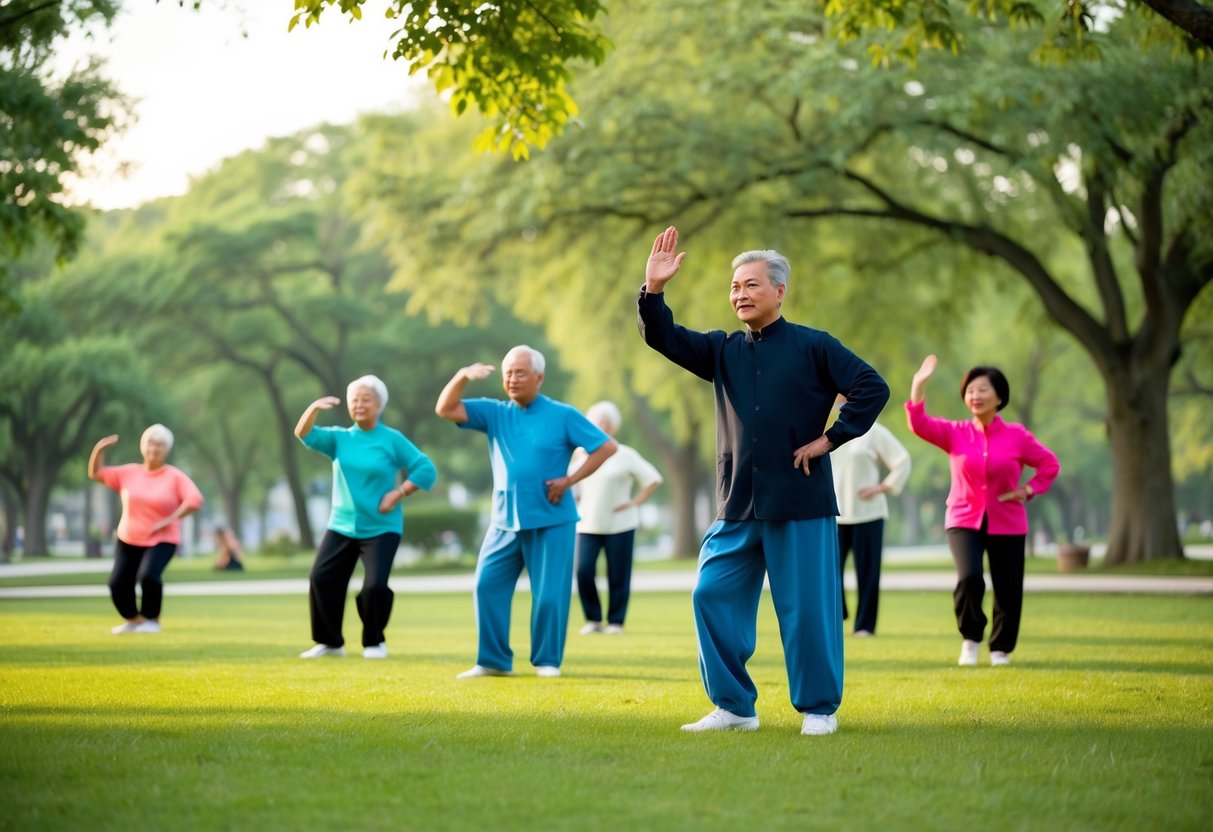
Tai Chi for Parkinson’s: Slowing the Progression of Symptoms Through Gentle Movement
Parkinson’s disease (PD) is a chronic, progressive neurodegenerative disorder primarily affecting motor function. Characterized by tremors, rigidity, bradykinesia (slowness of movement), and postural instability, PD significantly impacts an individual’s quality of life. While there is currently no cure, a growing body of research suggests that certain exercise interventions can play a crucial role in managing symptoms and potentially slowing disease progression. Among these, Tai Chi, an ancient Chinese martial art, has emerged as a particularly promising therapeutic modality for individuals with Parkinson’s. Its gentle, low-impact, and flowing movements, coupled with a focus on breath and mindfulness, offer a multifaceted approach to addressing the diverse challenges posed by PD.
The core principles of Tai Chi involve slow, deliberate, and continuous movements that are performed with deep diaphragmatic breathing and mental focus. This harmonious integration of physical exertion, breath control, and mind-body awareness provides a unique pathway to counteract many of the motor deficits experienced by individuals with Parkinson’s. The disease’s underlying pathology involves the progressive loss of dopaminergic neurons in the substantia nigra, leading to a deficit in dopamine, a neurotransmitter crucial for controlling movement. This dopamine deficiency disrupts the basal ganglia’s motor circuitry, resulting in the hallmark symptoms of PD. Tai Chi’s focus on controlled, coordinated movements, balance, and proprioception can help retrain and strengthen neural pathways, potentially compensating for some of the lost dopaminergic function or enhancing the effectiveness of existing dopamine.
One of the most significant benefits of Tai Chi for Parkinson’s patients lies in its ability to improve balance and reduce the risk of falls. Postural instability is a pervasive and dangerous symptom of PD, leading to an increased incidence of falls, fractures, and a subsequent decline in mobility and independence. Tai Chi’s postures and transitions inherently challenge and improve balance. Movements like "parting the wild horse’s mane" or "white crane spreads its wings" require precise weight shifts, coordinated limb movements, and constant adjustments to maintain equilibrium. Regular practice strengthens the muscles responsible for postural control, enhances proprioceptive feedback (the body’s sense of its position in space), and improves anticipatory postural adjustments, all of which are impaired in Parkinson’s. Studies have consistently demonstrated that Tai Chi participants experience fewer falls and improved balance measures compared to control groups. This improvement in balance not only reduces the risk of injury but also empowers individuals to move with greater confidence, fostering a sense of agency and reducing the fear of falling.
Beyond balance, Tai Chi demonstrably enhances motor coordination and fluidity. Parkinson’s disease is characterized by bradykinesia, rigidity, and tremors, all of which contribute to stiff, jerky, and imprecise movements. The slow, continuous, and circular nature of Tai Chi movements encourages a more fluid and coordinated execution of actions. By practicing these movements repeatedly, individuals can retrain their motor control systems, improve the timing and sequencing of muscle activation, and increase the amplitude of their movements. The emphasis on connecting different body parts in a unified flow helps to break down the segmented and hesitant movements often seen in PD. This can translate to improved performance in daily activities, such as walking, reaching, grasping, and dressing, thereby enhancing functional independence and reducing the burden of the disease on daily life.
The impact of Tai Chi extends to addressing rigidity and improving range of motion. Muscle rigidity, a feeling of stiffness and resistance to passive movement, is another debilitating symptom of Parkinson’s. The gentle, sustained stretching and the continuous, flowing nature of Tai Chi movements help to gradually release muscle tension and increase flexibility. Unlike forceful stretching, Tai Chi promotes a more gentle and integrated approach to improving joint mobility. By moving through a wide range of motion in a controlled manner, Tai Chi helps to lubricate joints, improve circulation to muscles, and reduce the feeling of stiffness. This increased flexibility can alleviate pain, improve posture, and make everyday movements more comfortable and less effortful.
While primarily known for its motor benefits, Tai Chi also offers significant non-motor advantages for individuals with Parkinson’s. These include improvements in mood, cognitive function, and sleep quality. The meditative aspect of Tai Chi, with its focus on the present moment and mindful execution of movements, can act as a powerful stress reliever and mood enhancer. Many individuals with Parkinson’s experience depression and anxiety, which can exacerbate their motor symptoms. The calming and centering effects of Tai Chi can help reduce these psychological burdens. Furthermore, studies suggest that Tai Chi can improve executive functions, such as attention, working memory, and cognitive flexibility, which are often affected in PD. The intricate sequences of movements and the need for constant focus can provide a cognitive workout. Finally, improved physical activity and reduced stress can contribute to better sleep patterns, a common challenge for individuals with Parkinson’s, leading to increased energy levels and an overall improvement in well-being.
The scientific evidence supporting Tai Chi’s efficacy in Parkinson’s is substantial and continues to grow. Numerous randomized controlled trials (RCTs) and systematic reviews have investigated the benefits of Tai Chi for PD. For example, studies published in reputable journals like the Journal of the American Medical Association (JAMA) and Movement Disorders have demonstrated significant improvements in balance, gait, and quality of life in individuals with Parkinson’s who participate in Tai Chi programs. Meta-analyses of these studies often conclude that Tai Chi is an effective intervention for improving motor function and reducing the risk of falls in PD patients. These findings are crucial for informing clinical practice and encouraging healthcare professionals to recommend Tai Chi as a complementary therapy.
Implementing Tai Chi for Parkinson’s requires careful consideration. It is essential for individuals to participate in classes led by instructors trained in both Tai Chi and working with individuals with Parkinson’s. These instructors can modify movements to accommodate varying levels of ability and ensure safety. The frequency and duration of practice are also important. While even short, regular sessions can be beneficial, most studies demonstrating significant improvements involve participants practicing Tai Chi for at least 30-60 minutes, two to three times per week, over a period of several months. Consistency is key to reaping the long-term benefits.
The progressive nature of Parkinson’s disease necessitates ongoing management strategies. Tai Chi offers a sustainable and accessible approach to this management. It is a low-impact exercise that can be adapted to different stages of the disease, making it a lifelong practice for many. As individuals progress with Parkinson’s, the challenges they face evolve. Tai Chi can be modified to address these evolving needs, ensuring continued benefit. The emphasis on self-efficacy and empowerment inherent in Tai Chi practice can also be incredibly valuable for individuals navigating a chronic illness. By actively engaging in a practice that demonstrably improves their physical and mental well-being, individuals with Parkinson’s can gain a greater sense of control over their condition.
From an SEO perspective, incorporating relevant keywords is vital for ensuring this information reaches those who need it. Terms such as "Parkinson’s disease," "Tai Chi," "symptoms of Parkinson’s," "Parkinson’s exercise," "balance for Parkinson’s," "fall prevention Parkinson’s," "Parkinson’s treatment," "neurodegenerative disease," and "mind-body exercise" are strategically integrated throughout the text. The comprehensive nature of the article aims to answer a wide range of queries related to Tai Chi and Parkinson’s, making it a valuable resource for search engines.
In conclusion, the evidence strongly supports the role of Tai Chi as a valuable complementary therapy for individuals with Parkinson’s disease. Its unique blend of gentle movement, breath control, and mindfulness addresses a spectrum of motor and non-motor symptoms, including improving balance, reducing falls, enhancing motor coordination, alleviating rigidity, and boosting mood and cognitive function. As research continues to illuminate the intricate mechanisms by which Tai Chi exerts its benefits, its integration into comprehensive Parkinson’s care plans is likely to become increasingly widespread, offering a path towards improved quality of life and a potential slowing of symptom progression for those affected by this challenging neurodegenerative disorder.

