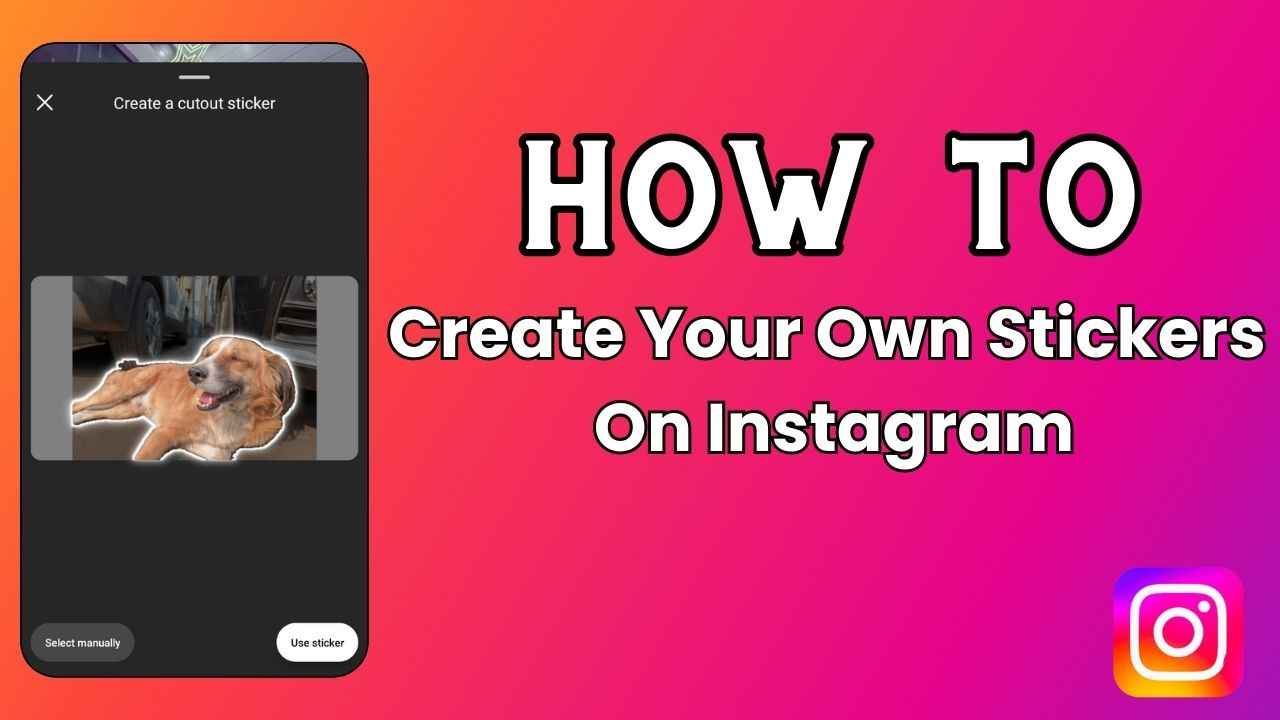

Crafting Custom Instagram Stickers at Home: A Comprehensive Guide
Transforming your digital storytelling on Instagram into a uniquely personal experience is achievable through DIY custom stickers. These aren’t just static images; they are extensions of your brand, your personality, or a specific campaign, offering a dynamic way to engage your audience. Making your own Instagram stickers at home bypasses the limitations of generic digital assets and unlocks a world of creative freedom. This guide provides an in-depth, SEO-friendly exploration of the entire process, from conceptualization and design to the technical aspects of creation and application within the Instagram platform. Understanding the nuances of sticker design for Instagram’s story format, including aspect ratios, file types, and clarity, is paramount. The ultimate goal is to empower you to produce professional-looking, eye-catching stickers that elevate your Instagram presence and resonate with your followers. This approach not only adds a bespoke touch to your content but also fosters a stronger connection with your audience by presenting them with something truly original.
The foundation of any effective custom sticker lies in its concept and design. Before diving into digital tools, a clear understanding of the sticker’s purpose is essential. Are you creating stickers for a personal account to add flair to your daily stories, or are you designing them for a business to promote a new product, service, or event? For businesses, brand consistency is key. Stickers should align with your brand’s existing color palette, typography, and overall aesthetic. Consider the message you want to convey. Is it celebratory, informative, or playful? Brainstorm keywords and visual elements that represent your brand or message. Sketching out ideas on paper can be an invaluable first step, allowing for freeform exploration before committing to digital design. Think about the size and placement of your stickers within an Instagram Story. They need to be legible and impactful even when shrunk to fit a smaller screen. Simple, bold designs often translate best. Avoid overly intricate details that might get lost. For text-based stickers, choose fonts that are easy to read on a mobile device.
When it comes to design software, there’s a spectrum of options catering to different skill levels and budgets. For beginners, free and user-friendly platforms like Canva are excellent starting points. Canva offers a vast library of templates, elements, and fonts that can be easily manipulated. You can upload your own images, create custom shapes, and add text. Its drag-and-drop interface makes it accessible even to those with no prior graphic design experience. For more advanced users or those seeking greater control, Adobe Photoshop and Adobe Illustrator are industry-standard tools. Photoshop is ideal for raster-based designs (pixel-based), such as photo manipulations or detailed illustrations. Illustrator, on the other hand, excels at vector-based designs (mathematically defined paths), which are infinitely scalable without losing quality, making them perfect for logos, icons, and text. Another popular and powerful option is Procreate, a raster-based illustration app for iPads, favored by many digital artists for its intuitive interface and robust features. Regardless of the software chosen, the key principles of good design remain the same: balance, contrast, hierarchy, and repetition.
The technical specifications for Instagram stickers are crucial for optimal performance. Instagram Stories have a specific aspect ratio of 9:16. While you can design stickers in various sizes, it’s beneficial to consider this ratio to ensure they scale well within the story frame. For stickers intended to be transparent, such as those with cut-out elements or text without a background, exporting in a PNG format with a transparent background is non-negotiable. JPGs do not support transparency. When designing, aim for a resolution that is clear but not excessively large, as oversized files can impact loading times. A resolution of 72 DPI (dots per inch) is generally sufficient for digital display. However, if you are using very detailed designs or plan to potentially repurpose them for print, a higher resolution might be considered, though it’s less critical for on-screen stickers. When using vector-based software like Illustrator, you can design at any size and then export at a suitable resolution for Instagram. For raster-based software like Photoshop or Canva, setting your canvas size appropriately before you begin designing is important. A common starting point is to design at a resolution of 1080 pixels wide by 1920 pixels high, which aligns with standard HD screen dimensions and the 9:16 aspect ratio.
The process of creating a sticker within your chosen software involves several key steps. First, establish your canvas with the correct dimensions and ensure it has a transparent background. Next, import or create the visual elements of your sticker. This could be a photograph, an illustration, a logo, or text. If you’re using text, select a font that is legible and consider its color in relation to various potential backgrounds it might appear over. For photographic elements, consider using the ‘selection tools’ (like the magic wand or lasso tool in Photoshop) or the ‘pen tool’ (in Illustrator or Photoshop) to carefully isolate your subject and remove any unwanted background. This is where precision is key to achieving a clean, professional-looking sticker. For illustrations, ensure your lines are crisp and your colors are vibrant. If your sticker has multiple elements, organize them into layers within your software. This allows for easier editing and manipulation. Experiment with different arrangements and sizes until you achieve a composition that is visually appealing and effectively conveys your intended message.
For elements that are not easily selectable, such as hair or complex edges, consider using techniques like layer masks in Photoshop or the ‘image trace’ feature in Illustrator for converting raster images to vectors, which can sometimes simplify the background removal process. When working with text, think about adding a subtle outline or shadow to make it stand out against busy backgrounds. However, avoid overdoing effects, as this can detract from the sticker’s clarity. The goal is to create a sticker that is impactful on its own and also complements the content it’s placed upon. Once your design is finalized, the next critical step is exporting. As mentioned, always export as a PNG file to preserve transparency. In most design software, you’ll find an "Export As" or "Save For Web" option. Select PNG from the file type dropdown and ensure the "Transparency" or "Alpha Channel" option is checked. Pay attention to the file size; while you want good quality, excessively large files can be problematic.
Once your custom stickers are designed and exported as transparent PNG files, the next step is to make them accessible and usable within Instagram Stories. Instagram doesn’t have a built-in sticker creator that directly imports your custom designs into its sticker library. Instead, you’ll be using your created PNGs as a form of "template" to overlay onto your stories. The most effective method for this is to leverage the "Add Photo" or "Add Media" feature within the Instagram Story editor. When you are creating a new Story, tap the "Sticker" icon in the top menu, and then select the "Photo" icon (usually a small image of mountains). This will allow you to browse your phone’s camera roll or photo library and select your custom PNG sticker. Once selected, it will appear as a layer on your Story, and you can resize, rotate, and position it as you would any other sticker.
To streamline this process for frequent use, consider creating a dedicated album or folder on your phone specifically for your custom Instagram stickers. This makes them easy to find when you need them. For businesses or creators who use a consistent set of branded stickers, organizing them this way is highly efficient. You can also leverage cloud storage services like Google Drive or Dropbox to keep your sticker files organized and accessible across devices. When you’re ready to use a sticker, you can access it from your cloud storage and save it to your phone’s camera roll. The key is to ensure that the PNG files are saved to your device’s local storage before you attempt to import them into Instagram Stories. This direct import method is the most straightforward and widely used for personalizing Instagram Stories with custom graphics.
Furthermore, for those who want to offer their custom stickers to their followers or use them in a more integrated way, exploring third-party apps or platforms that can generate shareable sticker packs might be an option. However, for direct personal use within your own stories, the "Add Photo" method remains the most accessible and immediate. The visual impact of a well-designed, custom sticker can significantly enhance your Instagram Story’s aesthetic. It provides a unique branding opportunity, allowing you to inject personality and memorability into your content. For example, a small business could create stickers for seasonal sales, new product launches, or even simple "thank you" messages, all aligned with their brand identity. Influencers can use custom stickers to highlight sponsored content, express emotions, or create recurring visual motifs that followers come to recognize. The ability to create these assets at home democratizes high-quality visual branding, making it accessible to everyone with a smartphone and a creative idea.
When refining your sticker designs, always consider the context of an Instagram Story. Stories are dynamic, often fast-paced, and users are typically viewing them on mobile devices. This means your stickers need to be immediately understandable and visually appealing. Experiment with different types of stickers: simple icons, illustrative characters, text-based designs with unique typography, or even small, attention-grabbing animated GIFs (though creating transparent animated GIFs for direct import as stickers requires a slightly different workflow, often involving saving as a GIF and then importing as a video layer that can be positioned). The key is to ensure that your stickers add value and enhance the storytelling experience, rather than cluttering or distracting from your primary message. For instance, if you’re sharing a behind-the-scenes look at your business, a sticker that says "BTS" with your brand logo could be very effective. If you’re celebrating a milestone, a custom confetti or celebratory graphic can add a festive touch.
The iterative nature of design means you should not be afraid to experiment and refine. Test your stickers on your own stories before widely using them. See how they appear against different backgrounds and in various sizes. Gather feedback from trusted friends or early followers. This feedback loop is invaluable for improving your sticker designs and ensuring they resonate with your target audience. The process of making Instagram stickers at home is not just about graphic design; it’s about creative marketing and personal expression. By mastering the tools and techniques outlined, you can unlock a powerful new way to communicate and connect on one of the world’s largest social media platforms. The investment in learning these skills pays dividends in increased engagement, brand recognition, and a more personalized, professional online presence. Remember that the ultimate goal is to create something that is both aesthetically pleasing and strategically effective within the Instagram Story environment. Continuous learning and adaptation to new features or trends on the platform will further enhance your ability to create impactful custom stickers.

