The proposal for a "hyperscale" data center in rural Box Elder County, Utah, has triggered an unprecedented wave of public and political opposition, testing the limits of a state known for its pro-business stance. Backed by celebrity investor and "Shark Tank" personality Kevin O’Leary, the development—known as the Stratos Project—is designed on a scale so vast that its projected energy consumption would more than double the current total electricity usage of the entire state of Utah. In a region where the state motto is "Industry" and the Republican-led government typically facilitates rapid development, the sheer magnitude of the project’s environmental footprint has created a rare rift between leadership, scientists, and the local community.
The Stratos Project is envisioned as a 40,000-acre complex that, upon completion, would require 9 gigawatts of power. To put this in perspective, the project would cover a land area roughly equivalent to the size of Washington, D.C., potentially making it the largest data center facility on Earth. Beyond its physical footprint, the project’s estimated impact on Utah’s carbon emissions is staggering, with projections suggesting a 64 percent increase in the state’s total output. Furthermore, the facility’s location near the northern tip of the Great Salt Lake has raised alarms regarding water consumption and ecological stability at a time when the lake is facing a historic crisis.
The Thermal Footprint: Transforming the High Desert
While the energy requirements of the Stratos Project are significant, the byproduct of that energy use—heat—has become a central point of concern for the scientific community. Robert Davies, a physics professor at Utah State University, has conducted extensive calculations to model the thermal impact of a 9-gigawatt facility. His findings suggest that the project would generate approximately 16 gigawatts of thermal energy. This discrepancy arises from the inherent inefficiencies of power generation; if the project builds its own natural gas power plants, which are typically about 57 percent efficient, nearly half of the energy produced is lost as waste heat before it even reaches the computer servers.
Once the electricity reaches the data center, the laws of thermodynamics dictate that nearly every watt consumed by the servers is converted into heat. Unlike traditional industrial applications where heat might be dissipated over a wide geographic area, the Stratos Project would concentrate this thermal load within the Hansel Valley. Davies estimates that the facility would release a thermal load equivalent to the energy of 23 atomic bombs every single day.
The resulting "heat island" effect could be transformative for the local climate. According to Davies’ models, the project could raise daytime temperatures by 5 degrees Fahrenheit and spike nighttime temperatures by as much as 28 degrees Fahrenheit. Ben Abbott, an ecology professor at Brigham Young University, noted that such a shift would effectively move the local climate from a semi-arid high desert to something resembling the Sahara Desert. This radical temperature increase could cause the dew point to collapse, devastating local vegetation, increasing evaporation rates in a water-scarce region, and potentially rendering neighboring ranch lands infertile.
Water Scarcity and the Great Salt Lake Crisis
The Stratos Project’s proximity to the Great Salt Lake adds a layer of existential urgency to the controversy. For years, Utah lawmakers have invested hundreds of millions of dollars into conservation efforts to prevent the lake from disappearing. A shrinking lake bed exposes toxic dust containing arsenic and other heavy metals, which can be carried by winds into the Wasatch Front, where the majority of Utah’s population resides.

Critics argue that approving a water-intensive industrial project in the lake’s immediate vicinity contradicts the state’s stated environmental priorities. While the exact water requirements for the full 9-gigawatt build-out remain undisclosed, developers have begun securing water rights. Austin Pritchett, cofounder of West GenCo—the developer partnering with O’Leary Digital Limited—stated that the project plans to purchase 3,000 acre-feet of on-site water rights and has a contract for an additional 10,000 acre-feet from the nearby town of Snowville.
In total, the 13,000 acre-feet of water being discussed would be enough to supply the basic needs of more than 20,000 Utah households. Although an initial application to transfer 1,900 acre-feet from the Bar H Ranch was recently withdrawn, representatives for the ranch indicated the application would be refiled, signaling a firm intent to proceed. The potential for such a massive diversion of water has led residents like Monika Norwid of Salt Lake City to accuse officials of being "blinded by greed," arguing that the project imperils the state’s fragile wildlife and dwindling water reserves.
Political Friction and the Role of MIDA
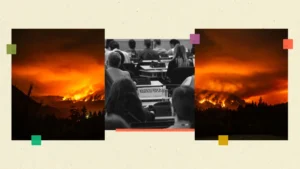
The project’s path to approval has been marked by administrative maneuvers that have frustrated local residents. News of the Stratos Project only became public in April after the three commissioners of Box Elder County granted their approval. The commissioners claimed that the project’s momentum was largely driven by more powerful state agencies, suggesting that local opposition would have little impact on the outcome. During the approval process, the commission refused to hear public comments from a crowd of over 1,000 people who had gathered to voice their concerns.
A key player in the project’s advancement is the Military Installation Development Authority (MIDA), a quasi-governmental state agency. MIDA possesses unique powers to provide tax incentives and bypass certain local zoning regulations to facilitate development near military or strategic sites. Paul Morris, the executive director of MIDA, confirmed in a public meeting that the Hansel Valley location was chosen specifically because of its access to the Ruby Pipeline, a major natural gas corridor stretching from Wyoming to the West Coast.
The political optics of the project have forced Utah Governor Spencer Cox to calibrate his stance. Initially a supporter of the development, Cox recently took to social media to acknowledge the "real concerns" regarding water, air quality, and land use. In a thread on X (formerly Twitter), the governor stated that Utahns should expect "clear standards and accountability," a notable shift toward a more cautious tone following the public outcry.
Energy Infrastructure and Carbon Implications
The decision to fuel the Stratos Project via the Ruby Pipeline highlights the conflict between massive data infrastructure and carbon reduction goals. The Ruby Pipeline, a 680-mile natural gas line, provides the necessary throughput to sustain a 9-gigawatt power plant. However, relying on fossil fuels for a project of this scale would represent a significant setback for regional emissions targets.
The estimated 64 percent increase in Utah’s carbon footprint is tied to the continuous, "always-on" nature of data centers. Unlike residential energy use, which fluctuates, data centers require a steady, massive flow of electricity to keep servers running and cooling systems operational. If the project proceeds with on-site natural gas generation, it would likely become the single largest stationary source of carbon emissions in the state, potentially complicating Utah’s future compliance with federal air quality standards.

The National Context: The Rise of Hyperscale Data Centers
The controversy in Utah is part of a broader national trend where the rapid expansion of artificial intelligence (AI) and cloud computing is outstripping the capacity of local power grids and water supplies. Across the United States, from Northern Virginia’s "Data Center Alley" to the deserts of Arizona, communities are increasingly clashing with tech giants over the "hidden costs" of the digital economy.
Data centers are no longer just warehouses for servers; they have evolved into industrial-scale energy consumers that require specialized infrastructure. As tech companies race to build the hardware necessary for the next generation of AI, they are seeking out rural areas with cheap land and proximity to energy corridors. However, as the Stratos Project demonstrates, the physical requirements of these "hyperscale" facilities can overwhelm local ecosystems and infrastructure.
In Utah, two other large-scale data center projects are currently proposed, but neither matches the Stratos Project in terms of sheer acreage or power demand. The unique combination of the project’s scale, its celebrity backing, and its proximity to the endangered Great Salt Lake has made it a flashpoint for a larger debate about what kind of "industry" Utah is willing to host.
Future Implications and Lack of Due Diligence
As the Stratos Project moves through the regulatory process, scientists and residents continue to call for more rigorous due diligence. Professor Davies expressed concern that a project with the potential to fundamentally alter the state’s climate and ecology is being fast-tracked without comprehensive environmental impact studies. "You literally have a hyperscale project that is getting no due diligence," Davies warned, emphasizing that the long-term consequences could be irreversible.
If the project proceeds as planned, Hansel Valley could become a cautionary tale of the trade-offs between economic development and ecological preservation. While proponents point to the potential for tax revenue and technological prestige, opponents argue that the cost—measured in billions of gallons of water, millions of tons of carbon, and a permanent spike in local temperatures—is too high a price to pay.
The coming months will likely see further legal and administrative battles as developers refile water applications and state agencies weigh the political risks of a project that has united a diverse coalition of environmentalists, ranchers, and urban residents in opposition. The fate of the Stratos Project will ultimately serve as a landmark decision for Utah, defining the state’s priorities in an era of increasing resource scarcity and rapid technological expansion.