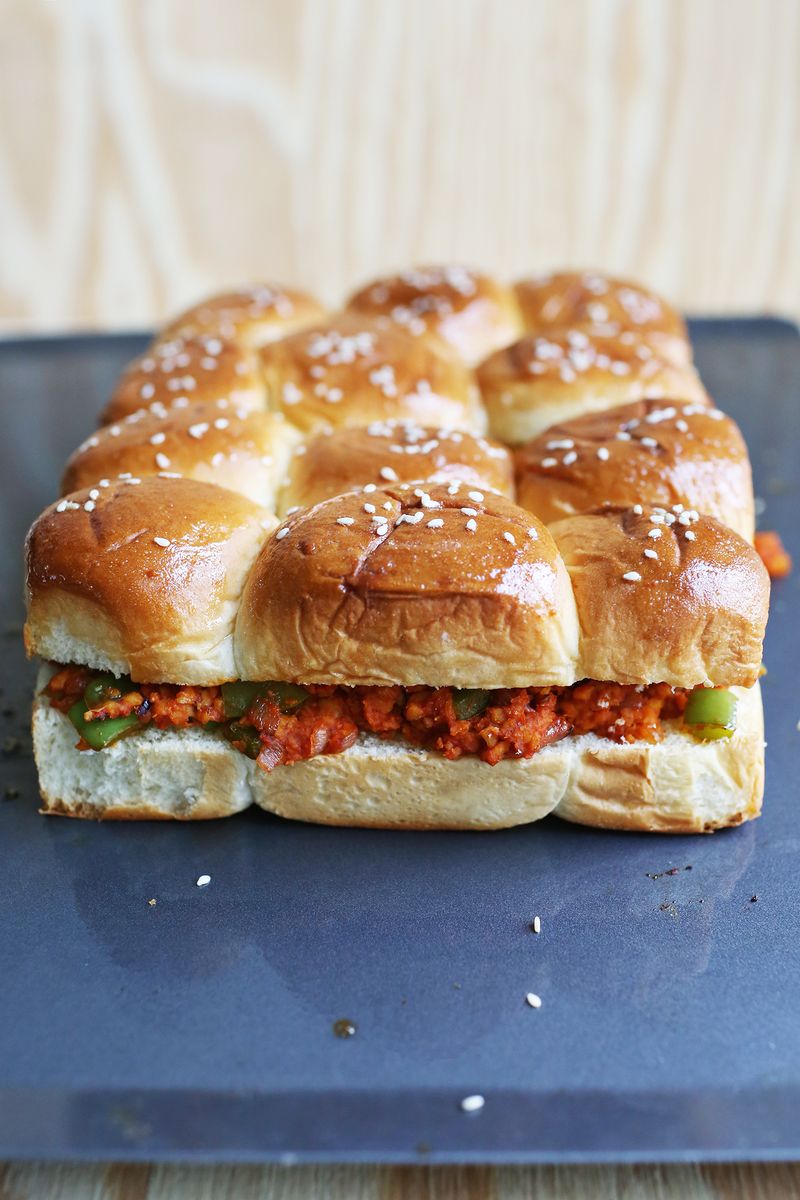

Baked Vegetarian Sloppy Joes: A Flavorful and Healthy Twist on a Classic
Baked vegetarian sloppy joes offer a deeply satisfying and surprisingly healthy alternative to the traditional meat-based dish. This recipe leverages the inherent heartiness of ingredients like lentils, mushrooms, and vegetables to create a rich, savory filling that mimics the texture and umami of ground beef without sacrificing flavor. The baking process further enhances the depth of taste, allowing the spices to meld and the sauce to thicken beautifully, resulting in a comforting and crowd-pleasing meal that is perfect for busy weeknights or casual gatherings. Unlike their stovetop counterparts, baked sloppy joes often boast a more robust and concentrated flavor profile, with a pleasing slight crisping around the edges of the filling that adds an extra textural dimension. This approach also frees up stovetop space if you’re preparing other dishes simultaneously, making meal preparation more efficient. The inherent versatility of this recipe means it can be easily adapted to suit individual dietary needs and preferences, from adding a kick of spice to incorporating a wider array of vegetables. Furthermore, the slow baking allows the ingredients to harmonize, creating a more complex and satisfying flavor that is often difficult to achieve with quick stovetop cooking. The absence of meat also makes this dish significantly lower in saturated fat and cholesterol, while simultaneously boosting its fiber and nutrient content, making it a genuinely wholesome choice for the entire family.
The foundation of any great vegetarian sloppy joe, baked or otherwise, lies in the savory and texturally appealing filling. For this baked iteration, the key is to achieve a robust and satisfying consistency that holds up well during the oven’s heat. A combination of finely chopped vegetables and protein-rich legumes forms the base. Lentils, particularly brown or green varieties, are an excellent choice. They cook down to a tender, slightly mushy texture that effectively absorbs flavors and mimics the texture of ground meat when broken down. They are also a nutritional powerhouse, packed with protein, fiber, and essential minerals like iron and folate. Mushrooms, especially cremini or portobello, contribute a significant amount of umami and a meaty chew. Finely dicing them and sautéing them until their moisture has evaporated concentrates their flavor and improves their texture within the filling. Other foundational vegetables often include finely chopped onions and bell peppers, which provide sweetness and aromatic depth when softened. Garlic, of course, is essential for its pungent flavor. Beyond these staples, consider incorporating other finely diced vegetables for added nutrition and complexity. Carrots add a subtle sweetness and a vibrant color, while celery offers a mild bitterness and a pleasant crunch. Zucchini or yellow squash can also be added, lending a tender texture and absorbing the surrounding flavors. The trick to a successful baked sloppy joe filling is to pre-cook and soften these vegetables thoroughly before they go into the oven. This ensures that they are tender and flavorful, not watery or undercooked, when the dish emerges from the oven. A good starting point is to sauté these vegetables in olive oil or a neutral cooking oil until they are softened and slightly caramelized. This caramelization process is crucial for developing deeper flavors.
The sauce is arguably the most critical component of any sloppy joe, and for baked vegetarian sloppy joes, it needs to be rich, tangy, and slightly sweet to coat the filling beautifully and create that signature sloppy joe experience. A classic sloppy joe sauce typically involves a tomato base, enhanced by a blend of savory and tangy seasonings. Ketchup serves as a primary base, providing sweetness and a familiar tomato flavor. Worcestershire sauce, while traditionally containing anchovies, can be substituted with vegetarian or vegan versions to maintain its distinctive umami depth and tang. This ingredient adds a layer of complexity that elevates the sauce beyond simple tomato. Mustard, usually yellow mustard, contributes a sharp, vinegary bite that cuts through the sweetness and richness of the other ingredients. For a baked version, it’s beneficial to allow the sauce ingredients to simmer and meld together for a period before combining them with the vegetable and lentil mixture. This concentrated flavor will then further develop in the oven. Common additions to the sauce include brown sugar or maple syrup for a touch of sweetness that balances the acidity of the tomatoes and vinegar. A splash of apple cider vinegar or red wine vinegar adds brightness and tang. Spices play a vital role in creating the characteristic sloppy joe flavor. Smoked paprika is a wonderful addition for its smoky depth and subtle heat, while chili powder provides warmth and a more pronounced spice. Onion powder and garlic powder can be used to amplify the allium flavors without adding additional moisture. A pinch of cayenne pepper can be added for those who prefer a spicier kick. Some recipes also benefit from a bay leaf added during the simmering process, which imparts a subtle herbal note that can be removed before serving. The key is to achieve a balanced sauce – not too sweet, not too tangy, and with enough savory depth to complement the hearty filling.
The integration of the sauce with the pre-cooked vegetable and lentil base is crucial for developing a cohesive and flavorful baked sloppy joe filling. Once the vegetables are softened and the lentils are cooked and slightly mashed, they are combined with the simmering sauce. This mixture should be stirred thoroughly to ensure that every component is coated in the rich, savory sauce. The consistency of the filling at this stage is important; it should be moist enough to be saucy but not so wet that it will make the bread soggy during baking. If the mixture appears too dry, a little extra broth or water can be added. Conversely, if it seems too liquid, it can be simmered for a few extra minutes to allow some of the moisture to evaporate. Once the filling is well-combined and has reached the desired consistency, it is ready to be assembled for baking.
The "baked" aspect of this recipe distinguishes it from its stovetop cousin and offers a unique textural and flavor advantage. The filling, prepared as described above, is typically transferred into a baking dish. The choice of baking dish can influence the outcome. A shallower, wider dish will promote more even cooking and a slight crisping of the filling’s surface. A deeper dish will result in a more uniformly saucy and moist filling. Before baking, it’s common practice to top the filling, either by spooning it directly onto split hamburger buns that are then placed on top of the filling in the baking dish, or by serving the filling alongside the buns. For a more integrated bake, splitting hamburger buns lengthwise and placing them cut-side down onto the hot filling in the baking dish is a popular method. This allows the buns to absorb some of the savory juices from the filling, becoming infused with flavor and developing a wonderfully tender texture. Alternatively, some opt to spoon the filling into hollowed-out bell peppers or even over baked potatoes for a complete meal. The baking temperature and time are critical for achieving the desired result. A moderate oven temperature, typically between 350°F and 375°F (175°C to 190°C), is ideal. This allows the flavors to meld and deepen without burning the sauce or drying out the filling. Baking time will vary depending on the oven and the depth of the baking dish, but generally ranges from 20 to 30 minutes. The goal is for the filling to be heated through, the sauce to be bubbling, and the buns (if used) to be softened and lightly toasted. Some recipes suggest covering the baking dish with foil for the initial part of the baking process to prevent the buns from drying out too quickly, then removing the foil for the last 5-10 minutes to allow for browning. This also helps to ensure the filling heats through evenly.
Serving baked vegetarian sloppy joes is a simple yet satisfying affair. The classic accompaniment is a toasted or warmed hamburger bun. The softness of the bun, combined with the rich, saucy filling, creates the quintessential sloppy joe experience. However, the versatility of this dish extends far beyond the traditional bun. Consider serving the filling over fluffy mashed potatoes, creamy polenta, or even a bed of steamed rice for a more substantial meal. For a lighter option, the filling can be piled high on a large baked sweet potato or a halved and roasted bell pepper, offering a vibrant and nutritious presentation. Side dishes that complement the savory and slightly sweet nature of the sloppy joes are also excellent choices. A crisp, refreshing coleslaw provides a welcome textural contrast and a touch of acidity. A simple green salad with a light vinaigrette offers a healthy and balanced counterpoint. Baked beans, especially vegetarian versions, are a classic pairing that enhances the comforting, hearty qualities of the dish. Corn on the cob, whether grilled or boiled, adds a touch of sweetness and a satisfying crunch. For those seeking an extra layer of flavor and texture, a sprinkle of shredded cheddar cheese or a dollop of sour cream (or dairy-free alternatives) can be added on top of the filling. Pickles, whether dill or bread and butter varieties, offer a tangy and crunchy element that cuts through the richness of the sloppy joe. The visual appeal of baked vegetarian sloppy joes is also noteworthy. The rich, reddish-brown filling, studded with visible pieces of vegetables and lentils, paired with a perfectly toasted bun, creates an inviting and appetizing presentation. The slightly caramelized edges of the filling in a baked version add an attractive textural contrast to the smooth sauciness.
Nutritional benefits of baked vegetarian sloppy joes are substantial, making them a smart choice for health-conscious individuals and families. The primary protein source, lentils, are exceptionally nutrient-dense. They are a complete protein when combined with grains, providing essential amino acids. Their high fiber content aids in digestion, promotes satiety, and helps regulate blood sugar levels. This fiber content also contributes to a feeling of fullness, which can be beneficial for weight management. Lentils are also an excellent source of iron, crucial for energy production and oxygen transport, particularly important for vegetarians and vegans who may have lower iron intake. They are rich in folate, vital for cell growth and repair, and also contain minerals like magnesium, potassium, and zinc. Mushrooms contribute antioxidants and B vitamins, and their savory flavor means less reliance on salt. The array of vegetables – onions, peppers, carrots, celery – provides a spectrum of vitamins, minerals, and dietary fiber. Vitamin C, Vitamin A, and various antioxidants are present, supporting immune function and overall well-being. By substituting meat with plant-based protein sources, the dish naturally becomes lower in saturated fat and cholesterol, which are linked to cardiovascular health concerns. The sauce, while containing some sugar from ketchup and added sweeteners, can be controlled by adjusting quantities or opting for reduced-sugar alternatives. Overall, baked vegetarian sloppy joes offer a balanced nutritional profile, delivering protein, fiber, vitamins, and minerals in a delicious and satisfying package. This makes them an excellent option for a healthy and wholesome meal that can be enjoyed guilt-free. The ability to customize the ingredients further enhances their nutritional value; for instance, adding more fiber-rich vegetables like broccoli or spinach can further boost the vitamin and mineral content.
Optimizing baked vegetarian sloppy joes for search engines involves strategic keyword integration and content structure. The primary keyword, "baked vegetarian sloppy joes," should appear prominently in the title, headings, and throughout the content. Secondary keywords like "lentil sloppy joes," "meatless sloppy joes," "healthy sloppy joes," "vegetarian dinner recipes," "easy vegetarian meals," and "vegan sloppy joes" (if applicable and adapted) should be woven organically into the text. Using descriptive language that highlights the benefits and appeal of the dish, such as "flavorful," "savory," "hearty," "easy," "healthy," and "comforting," will attract readers searching for these qualities. The article’s structure, with clear headings and subheadings, enhances readability and SEO by breaking down the content into digestible sections, allowing search engines to better understand the topic. Including information on ingredients, preparation, baking instructions, serving suggestions, and nutritional benefits provides comprehensive coverage that addresses user queries thoroughly. Recipe-specific keywords are crucial for capturing users actively looking for instructions. For example, including terms like "sloppy joe recipe," "vegetarian recipe," and "baked recipe" will direct relevant traffic. The use of longer-tail keywords, such as "best baked vegetarian sloppy joe recipe for family" or "quick and easy meatless sloppy joes recipe," can target more specific search intent and attract highly qualified visitors. Image optimization, by using descriptive alt text for any accompanying photos (e.g., "Close-up of baked vegetarian sloppy joes with bun"), further contributes to SEO. Ensuring the article is mobile-friendly and loads quickly also plays a vital role in search engine rankings. Furthermore, encouraging user engagement through comments and social sharing can signal the quality and relevance of the content to search engines, indirectly boosting its visibility. The comprehensive nature of this article, covering all aspects from ingredient selection to nutritional value, aims to answer a wide range of user questions, making it a valuable resource and thus improving its standing in search results.
